Lost worlds and ports of call

Month: November 2025

A Trio of Dark Harvest Books

Between 1983 and 1993, a small press from Arlington Heights, Illinois called Dark Harvest published close to 50 books. In that decade they released nine volumes in the seminal anthology, Night Visions, along with novels and story collections by such giants in the horror and SF field such as Fritz Leiber, Isaac Asimov, George R. R. Martin, Dean R. Koontz, Ray Garton, F. Paul Wilson, Dan Simmons, Robert R. McCammon, and many more. Toward the end of Dark Harvest’s run, they made a foray into the mystery genre. An anthology called Criminal Intent 1 appears to have been the last book they published. Perhaps the limited edition market collapsed in the early 1990s, or mystery readers didn’t care for small press editions as much as SF and horror readers. Or, maybe the publishers just decided to call it quits. At any rate, it’s a shame that Dark Harvest stopped publishing books.

I think I started buying Dark Harvest books with F. Paul Wilson’s books, then some of the Night Visions books and other anthologies, plus a few others here and there. Although I’m not aiming for a complete collection of Dark Harvest books, I recently picked up three books by this publisher from various locations.

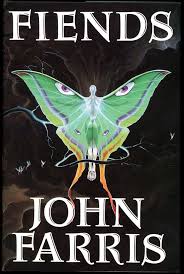
Fiends, by John Farris (1990). A horror novel by an author of whom I know next to nothing. I’ve started reading this book, and it looks intriguing.
Blue Champagne, by John Varley (1986). A collection of short stories by this master of science fiction. I still have a vivid memory of seeing this book in the shelves at Austin Books on North Lamar in the late 1980s/early 1990s. I really wanted it, but back then was unable to afford the cover price. This year I paid a little bit more than cover price for this copy, but it’s in pristine condition and well-worth the price. Dark Harvest switching to SF is almost like Arkham House releasing SF books (oh, wait — they did release a few SF books), but the first story in the collection did make me a little nervous, almost like a horror story.

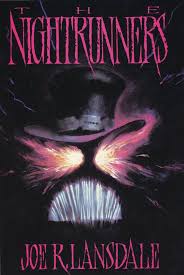
The Nightrunners, by Joe R. Lansdale (1987). An interesting book, and probably the only book that I’ve seen with this warning: “WARNING: Extreme violence, language and sexual situations may offend some readers.” Of course, that’s almost every Lansdale book, but it was strange to see this from one published back in 1987. I guess those were different times. Some of the pieces that make up this novel have appeared elsewhere as short stories or vignettes. One such episode I recently read, but I cannot remember where. I’m not about to hunt through all my books with Lansdale stories to find where I read it, but I do remember it was a disturbing piece, well worth that warning from the Dark Harvest edition.
There’s now a dozen of the 50 or so Dark Harvest books that I don’t own. I’m really only interested in six of these, but I won’t be surprised if I start looking for the rest. After all, they’re all a piece of history, at least in terms of genre fiction.
Silverberg’s Nightwings

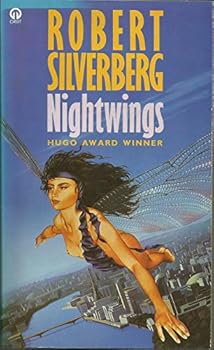
The first Robert Silverberg book I bought was a paperback copy of Nightwings, which I found in some bookstore in Norway in 1987 or 1988. The book I bought was a British edition published by Futura/Obit in 1987. Do I remember anything about it now, even though I still have that book? Not really. Since then I’ve picked up roughly a dozen of Silverberg’s books, mostly paperback editions published a long time ago. The top pages of my paperback ave yellowed over time

I really ought to have far many Silverberg books in my library. Silverberg is a legend in science fiction. Part of my issue is that there are few books by him in new book stores these days, and when I come across them in in used book stores, most copies are battered and broken, and I tend to put those back. I’ve found a copy or two here or there, but I’m always on the lookout for more.

Then there’s Centipede Press… This is a publisher whose books are nearly works of art. Almost always sold out shortly after publication, Centipede Press books are usually quite pricey. They also fetch a premium on the second hand market (I recently saw a set of Gene Wolfe books listed for $45,000!!!!! Their Frank Herbert books start at $600 or more each, while their series of Masters of Science Fiction and Library of Weird Fiction books ratchet up quickly on the second-hand market). I do own a few of their books, usually because I focus on buying specific authors; my edition of a Michael Shea collection, bought for $65 or so, now I see is listed for $1,400 or so online, which is insane.

A couple of years ago I bought the Centipede Press edition of Dying Inside. This was a book I never could find in paperback. My copy is one of 500 signed books (some actual, some facsimile). I don’t care too much about that, but as I wanted this book, I paid the list price. This edition does not disappoint.

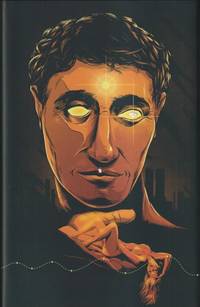
Then, in 2025, Centipede Press published a hardcover edition of Nightwings. Must, must have, I thought, and so I bought the book, also signed. As is almost always the case, the cover is beyond gorgeous, the binding superb. This book is a masterpiece to behold.

It’s a slim book; my paperback copy is 192 pages with no extra material, but the Centipede Press book adds an introduction and interview. The wrap-around cover by Joe Wilson is beautiful. Silverberg’s introduction gives some insight into when and why he wrote the book, which he originally did in three parts. This book embodies exactly what a limited edition should look and feel like.

Books added: Pohl and Turner

When I’m in Half Price Books I glance through the SF section. I rarely find books that I want these days, as I tend to focus on specific authors. I usually already have almost all their books, with rare exceptions. I know that I won’t find those rare exceptions in a used book store, not in the age of the internet, anyway. Still, if I find some nice editions of books from the 1980s and early 1990s, I’ll reconsider. This time, I did see a few books that must have been offloaded from someone’s collection, possibly an estate sale. I honed in on two of these.

Frederick Pohl’s The Years of the City (Timescape Books, 1984). This is the first edition hardback of a book I’d bought in a paperback edition many years ago. The book was in pristine condition, had a nice mylar cover, and was irresistible, especially as my 1995 BAEN paperback pages were already yellowing. The cover is sort of bland, with Pohl’s name and the title of the book dominating a small image. Curiously, some of the fonts in the paperback mirror the hardcover, but it’s nice to read crisp white pages vs. brittle yellowing ones.

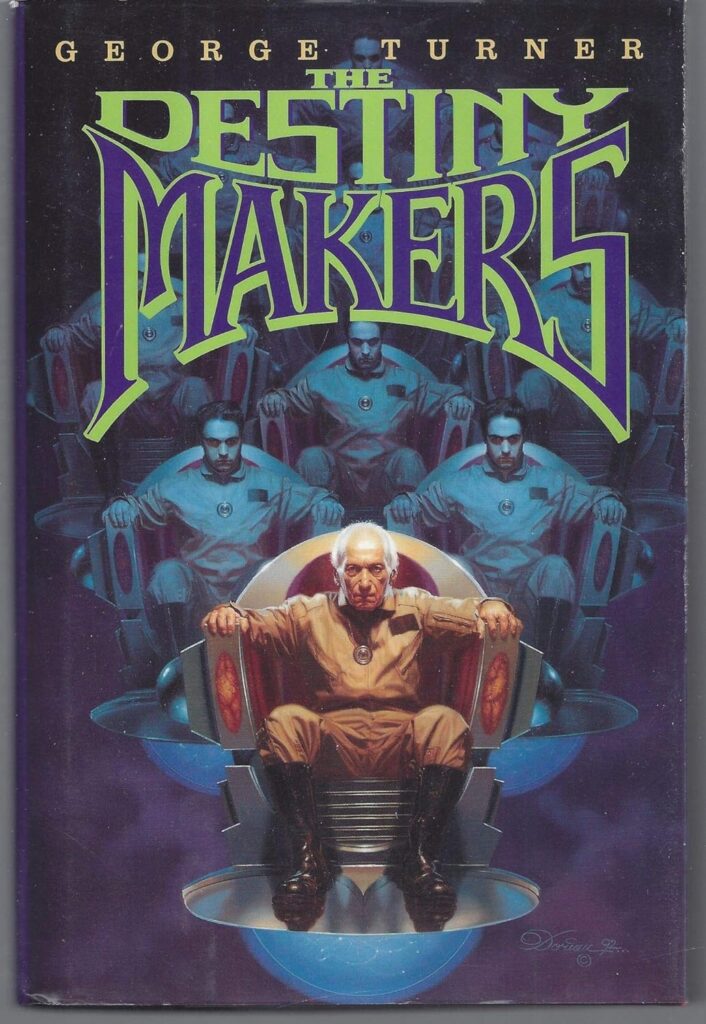
George Turner’s The Destiny Makers (AvoNova/Morrow, 1993). Years ago, a friend of mine—who coincidentally shares the same last name as this Australian author—gave me a couple of George Turner paperbacks. I can’t remember if I’ve read them, but when I come across hardcover editions of his books I feel compelled to buy them, as I rarely see books by this author in my area. Turner died a few years ago. His stories are focused on eco-disasters, but I’ll probably try to read this one some day, and maybe I’ll find his other books at some point.

Hiking in Arizona

Arizona is an interesting state when it comes to geography. From its southern border with Mexico to north of Phoenix it’s a desert environment. An hour north of Phoenix you climb into the “high desert.” An hour or so past that point you reach even higher elevations. Flagstaff, Sedona, and the elephant in the state—the Grand Canyon itself—mark a different environment entirely.

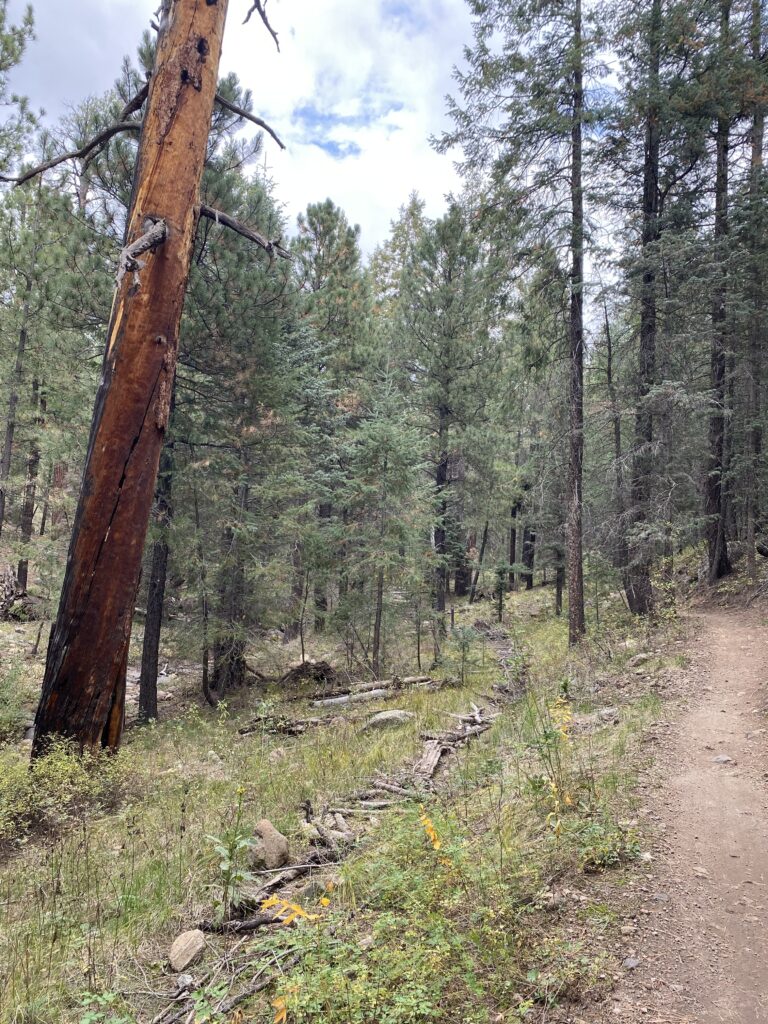
In early October I hiked a few miles in three locations near and in the Grand Canyon. The first foray was along a trail north of Flagstaff, a trail that intersected with and followed the Arizona trail, a trail that runs the length of the state from north to south, or south to north. This well-marked trail seemed more popular with mountain bikers than hikers, at least when I was there. It’s a place I’d like to spend more time exploring, but that day I only had time for a few miles out and back.

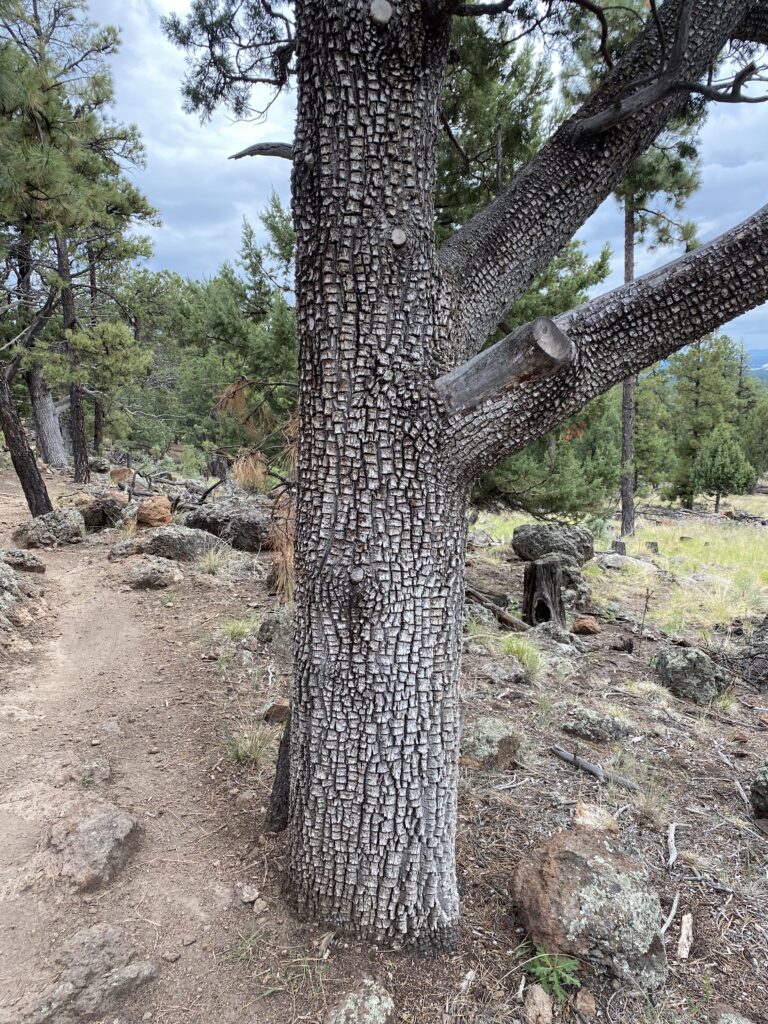
Along the trail we saw tall junipers, aspen, and a few alligator junipers. At least, that’s what I think they’re called. It’s a dry trail, despite following a riverbed, so bring lots of water. Flagstaff has a fair amount of nearby trails, and I picked a couple at random, then went for the northern one.

The following day I drove from Flagstaff to the south rim of the Grand Canyon. The federal shut-down was in full swing. I showed the ranger at the entrance gate my America the Beautiful card, and she waved me through. I picked up a map, though, and found a parking lot close to the Bright Angel trailhead. This was my second trip to GC, although the first one was a short traipse along the south rim in February. Snow littered the ground, and we stuck close to the visitor center that day.

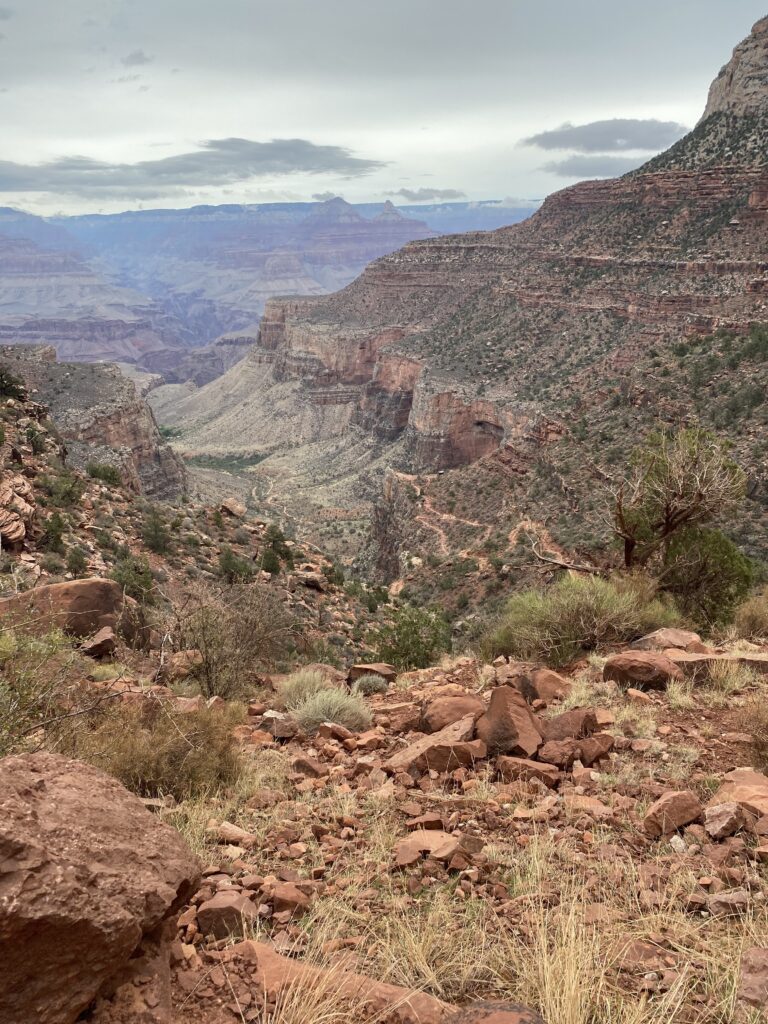
Not today. Loaded up with water and food, albeit with a late start of 9:45am, the trail down Bright Angel beckoned. I figured on a trip of around two hours down, and three hours up, enough time to make it back to the car in order to get on the road and reach the next hotel before dark. Having hiked Mount Whitney two months prior, and many other hikes where you go up first, and then return down, hiking Grand Canyon is a different experience. The switchbacks aren’t too bad. Passed many hikers going only a mile and a half, or three miles. Still heading down. Then, near the fifth mile you reach Havasupai Gardens, a lush a watery respite from the desert and constant downhill. Several people were there, resting or just hanging out. Went past the gardens another half mile, into a canyon with steep walls on one side and a creek on the other. Really wanted to keep going to the river, but turned around at noon.

The trail uphill isn’t too bad, until you get to the last mile. Then you start to feel the elevation and the fatigue in the legs. Still, made it out in good time, and on the road again. Drove down a canyon on the way to and through Sedona. Might have been the best part of the trip, aside from the Bright Angel hike. Past Sedona and into another small town. Checked into the hotel, and drove to dinner. Lots of rain, which I didn’t expect. That week there were lots of floods in that part of Arizona, all the way down to Phoenix.

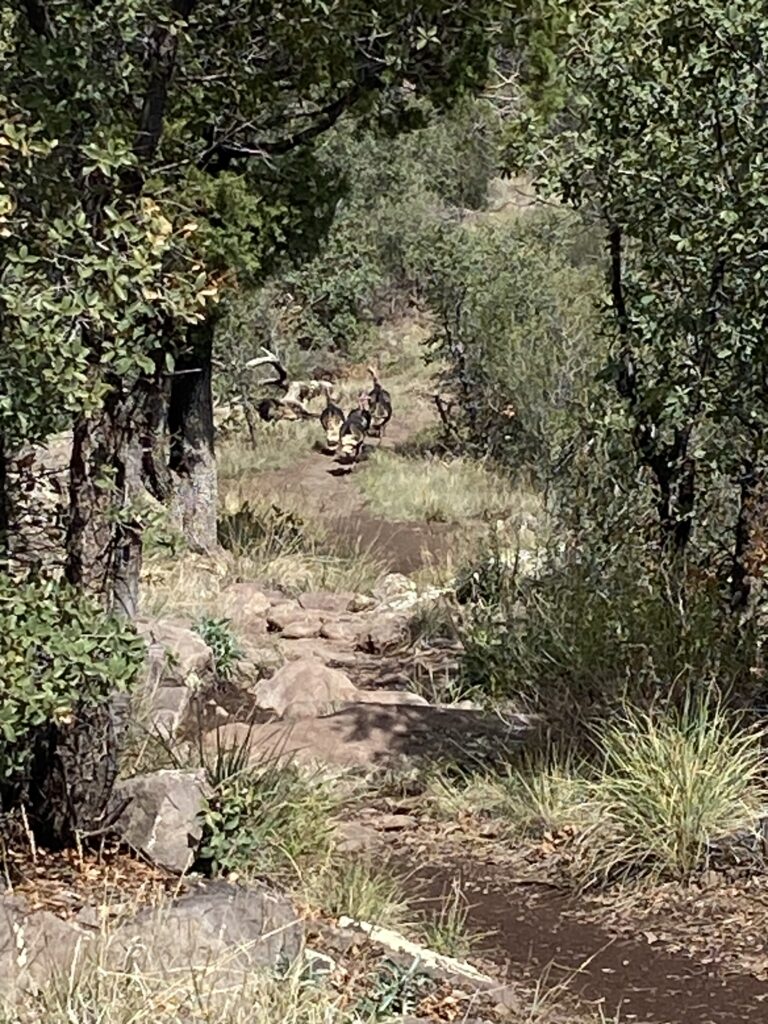
The next day, drove up into the mountains, past the town of Jerome, which is perched on the side of the mountain. Another place I’d like to explore or visit. This time had to keep going. A few miles later, pulled into a recreational area. A short hike in Mingus Mountain, where a group of turkeys trotted ahead. I didn’t make it all the way to the end of this trail, as rain clouds threatened. Still, a neat experience.

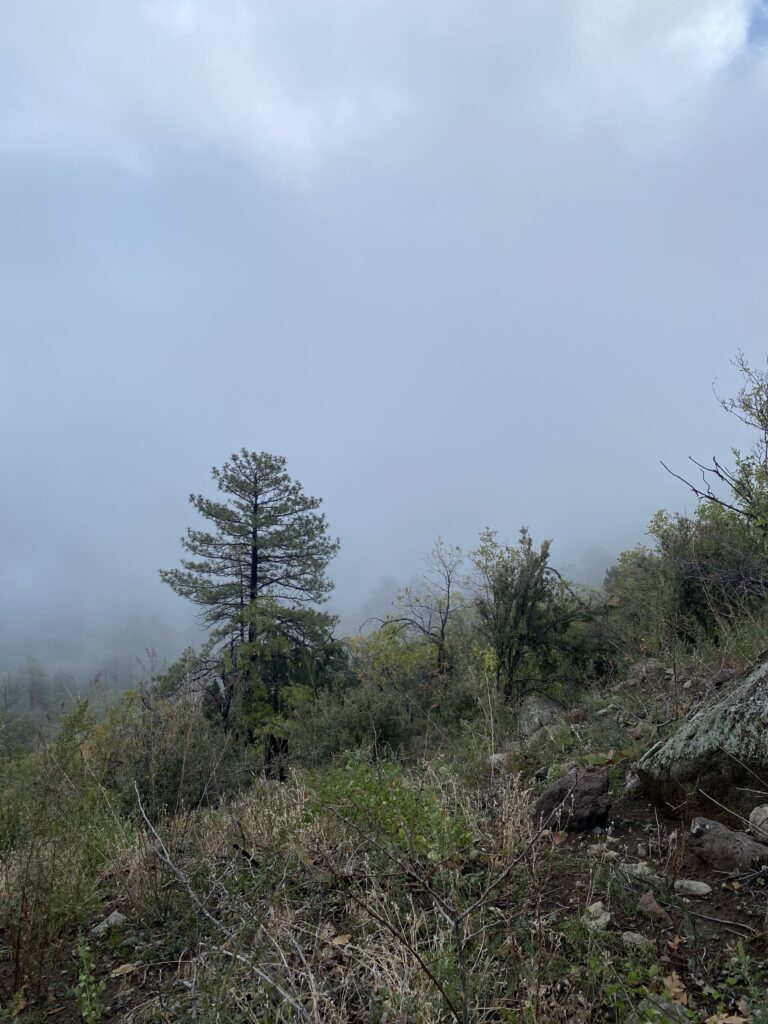
On the way back, fog rolled in. I’d already driven partially in the clouds, but now it seemed more real being above the clouds. In Flagstaff I bought a book on hikes in northern Arizona. This book left out the Grand Canyon, as there are plenty of other trails in this place. One could spend many, many days trying to hike all those trails. What an awesome place. Nothing like the area south of Phoenix. Nothing like the area around Phoenix. Then again, I’ve not seen much to the west of Phoenix, so maybe there’s more to the state than the northern part.

© 2026 Anders Monsen

Theme by Anders NorenUp ↑

css.php