Lost worlds and ports of call

Month: February 2026

The third early Repairman Jack novel

Back in mid-2025 I bought the limited editions of the first two books in F. Paul Wilson’s early Jack series, Secret Histories and Secret Circles, both published by Gauntlet Press.

Though I already had the mass market editions from Tor (published between 2008 and 2011), having these signed books felt almost necessary, since they went with the many Gauntlet Press FPW books that I owned. The third Gauntlet Press book, Secret Vengeance, isn’t as easy to find as the others. Still, I was able to obtain a copy, and now have all but the last two novels that Wilson published, The Uprising and Lexie. Time will tell if I try to obtain those books; I already have the trade paperback editions, but if I do come across the GP books, maybe it will be too hard to resist.

I enjoyed all the three YA Repairman Jack books, despite Wilson shoehorning in some characters into young Jack’s life that appear in later stories. There’s a ton more of stories to mine in Jack’s life, which Wilson did with the three-volume “city” years. Alas, he’s no longer able to write fiction.
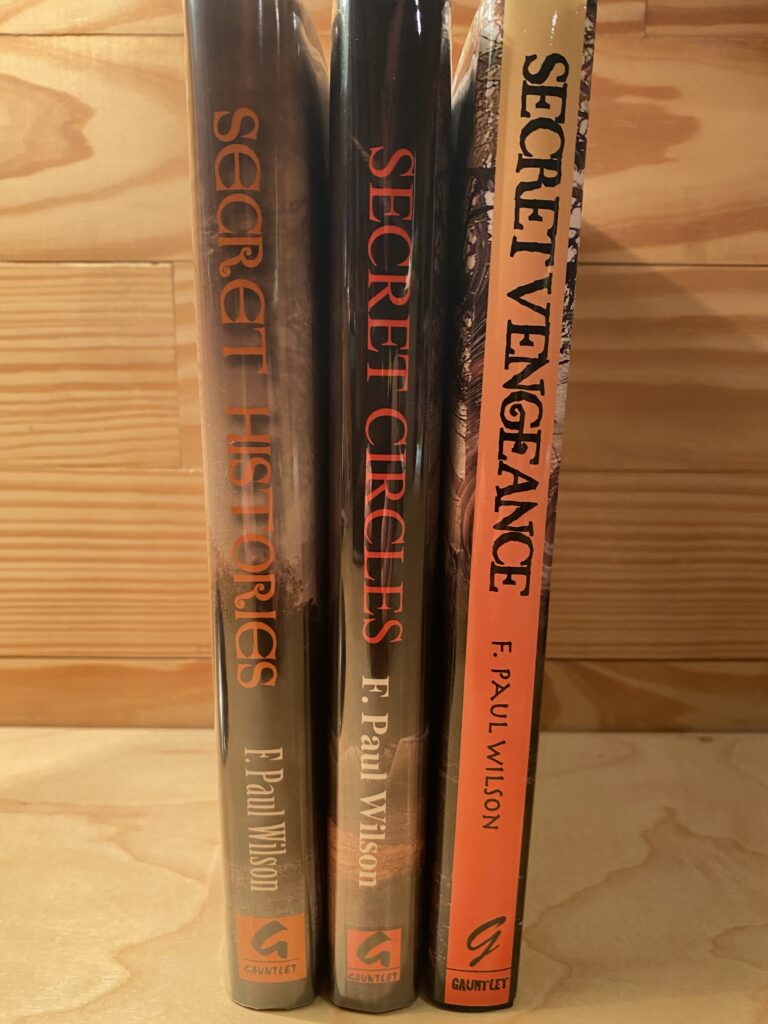
Still, when it comes to the Tor editions, I wish the marketing department had been more consistent. Maybe they thought the first book didn’t sell well, but with the second and third they drastically changed the design of the dust jacket, and they just don’t match.

Then again, Gauntlet tweaked their covers as wel. Strangely enough, they didn’t just change the font on the dust jacket, but also adding a color block on the spine the third book. They didn’t stop there. The first two books were numbered 1-500, while the third, Secret Vengeance, only ran to 475 copies. This might be why it was so hard to find at near-cover price. Only the publishers can explain why they have a different number of books published for the last of the trilogy. This means that 25 people trying to collect the entire set are simply out of luck. With Tor, they went in a different design direction after the first book, while Gauntlet changed the spine design and cover text placement on the third book. Go figure.

Jack London’s Little White Book

The 67th book in Borderlands Press long-running series of short (in size) and slim (number of pages) books is entitled A Little White Book of the Wild. This, of course, is nod to London’s perhaps most famous novel, The Call of the Wild. Aside from the title, the “white” in the Borderlands Press book also alludes to London’s adventures in the icy north of Alaska.

Edited by SF well-known writer, John DeChancie, this book collects five of London’s short stories, including one of most famous pieces, “To Build a Fire.” I read this story and The Call of the Wild many, many years ago. As to the other four stories between the covers of this book, I do not recall having read a single one of them. Also collected here is “A Thousand Deaths,” one of his earliest professional sales. This was a science fiction story sold to the pulp magazine, Black Cat. London (1876-1916) died young. His legacy is somewhat marred by accusations of not just racism, but also plagiarism and eugenics. He was a firm believer in socialism, writing the 1908 dystopian political novel, The Iron Heel. His feeling about socialism did wane near the end of his life. Perhaps current socialist poster-boy (er, poster-geriatric?), Bernie Sanders, drew his crusade against “oligarchy” from this novel? London also cared deeply about animals. All that aside, London will forever be associated with the Alaska gold rush.

At some point recently, Borderlands Press changed their usual print run from 500 to 350 copies of a book (there have been exceptions, but usually the number went above 500, not below). This, of course, means that anyone trying to collect the entire set of books will need to act quickly, or face the issue of buying from specialist book-dealers who buy multiple copies and then charge more than cover price.

As book #67 in the series, there are three more authors to round up this group of five. I wonder, of the writers in that era, who will be next…

Robert Silverberg’s Legends

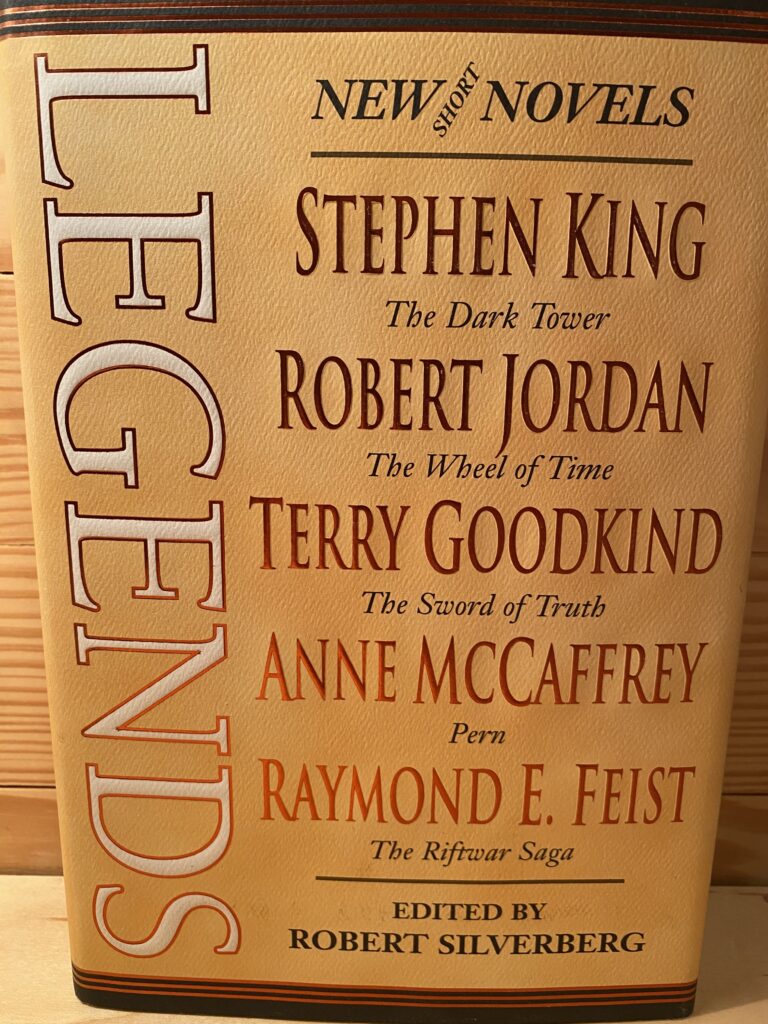
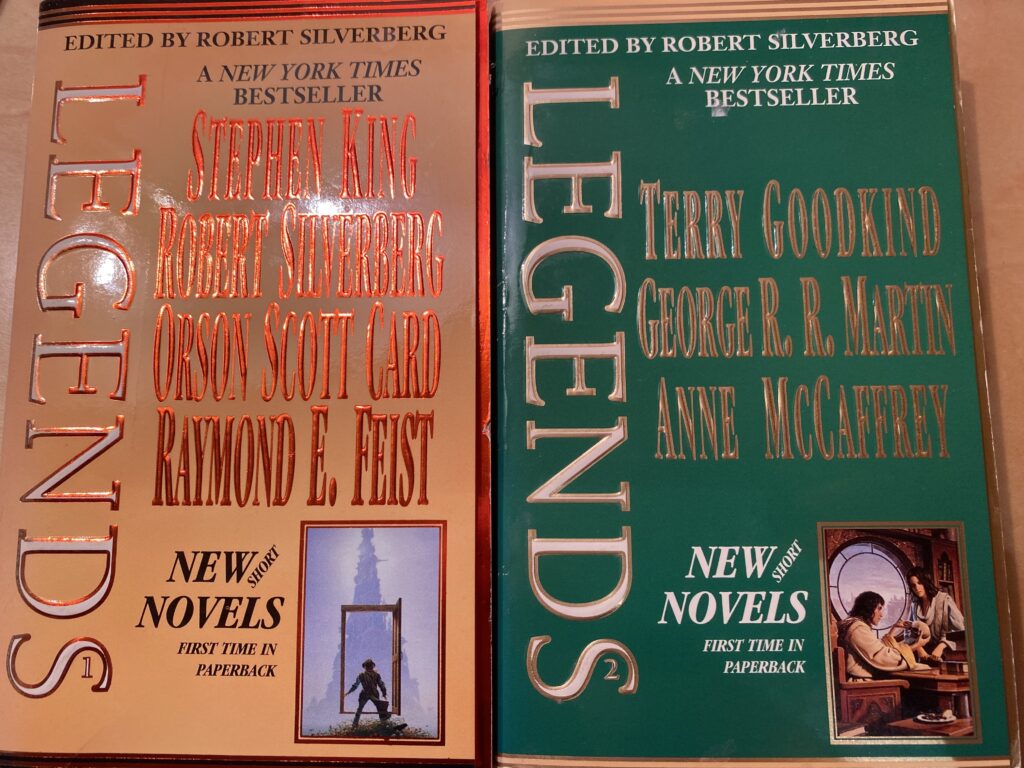
Many years ago (maybe even 25 years ago) I bought a paperback edition of Legends, an anthology edited by Robert Silverberg. This book contained four novellas from noted writers: Stephen King, Robert Silverberg, Orson Scott Card, and Raymond E. Feist. By chance I looked through this book a week or two ago, and saw it was listed as Volume I. The cover is tan-colored, almost golden. Maybe when I bought it I saw the Volume I (though it only appears inside the book, not on the cover), but I never looked for another volume. Or, maybe not, as at the time I think I read maybe one of those four stories. But, I kept the book…

When I hit up some bookstores this weekend, I checked out the SF paperback anthology section. Usually there’s just Star Trek novels or other tie-in books. On the other hand, I’m only on the lookout for older anthologies, especially DAW editions of SF, fantasy, horror. However, in this one instance I came across a green cover with the word “Legends,” and it turned out to be Volume 2 of that series. There were actually two copies, and one was in great shape. When I picked up this book, I thought to myself, “Aha, now I have them both!” That was not the case… I do find it funny that the “New Novels” text has the word, “short” in tiny font, almost tricking the reading into buying the books.

In a funny twist of fate, at the next bookstore I found a hardcover copy of Legends, which contained even more stories, so my two copies were’t the full set. I debated whether or not to try to wait for what I thought would be a paperback copy of volume 3, but bought the hardback anyway. Strangely enough, the next day I came across a battered copy of Volume 3, this one in all black, which I held off buying. Both my two paperback volumes were published in late 1999, so finding a pristine paperback copy of the third edition might be like winning a small lottery, as until this weekend I don’t think I’ve come across any copies anywhere.

The hardback collects 11 novellas: the paperback splits these among three books. At over 700 pages, the hardback is a massive tome, but then the authors all are major names in the field: Terry Pratchett, King, Ursula K. Le Guin, George R. R. Martin, and many others. Each story takes place in familiar fantastical world, unique to the author. What a treasure!

Legends originally appeared in 1998. Martin’s contribution is the first in a series of stories (I think), that now has been made into an HBO series, featuring a pair of characters with the strange names, Dunk and Egg. The story takes place in his Game of Thrones world (aka the novel that started with, A Song of Fire and Ice). I’ve never ready any of those novels, but Game of Thrones has taken on a life of its own since Martin first wrote about that world many years ago. King’s novella takes place in his Dark Tower world, Pratchett’s in Discworld, Le Guin’s in Earthsea, and so on. These writers all truly are “legends” when it comes to fantasy fiction, and I’m thrilled to finally have all the stories in one volume. The question now, is what to do with those two paperback books…?

A Pair of Noir Anthologies

Just when I don’t need another series on my radar, I stumble upon two books in a massive themed series. While browsing a mystery section, I picked up a book entitled Copenhagen Noir. Thinking this was a neat find, as I like Scandinavian crime fiction, I immediately added it to my stack of to-buy-books at that store. Later in the day, while in Austin, Texas of all places, I found a book called Austin Noir. Too much of a coincidence, I thought, and checked the front pages. Yep, there I found a long list of books, almost all with a city in the title, followed by “Noir.” I’d found another series…

According to the end page, the series was started in 2004 with Brooklyn Noir. Each book has a collection of all-original stories, set in a different and distinct neighborhood in that city. While I’ve been to Copenhagen a couple of times, I know next to nothing about that city. Austin, on the other hand, is a place I know well, having lived there for several years. It will be interesting to read this one and see if I still recognize those areas, since I left there 25 years ago.

So much fun, with all these cities. What a great concept. As a bonus, there’s even a story from my favorite Norwegian author, Gunnar Staalesen, in the Copenhagen Noir book. I guess there are too few writers for a Bergen Noir book…Then again, Staalesen’s Bergen detective, Varg Veum, has been to Copenhagen a few times in his investigations.

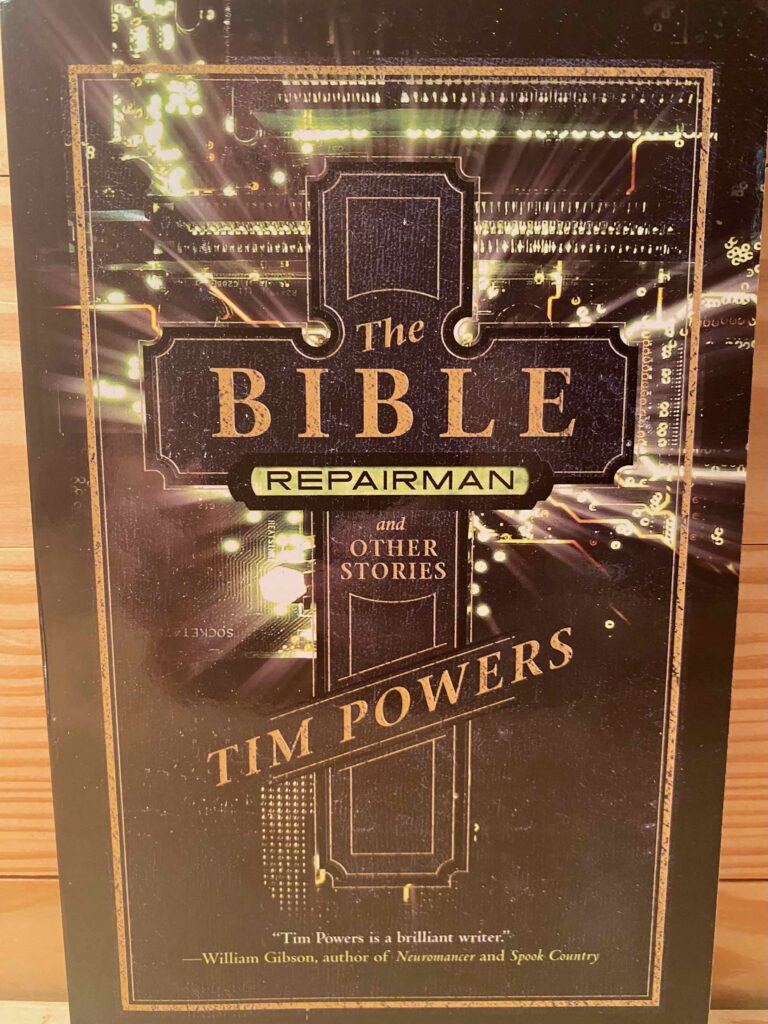
Tim Powers’ Bible Repairman collection

In 2005 Subterranean Press released a chapbook with Tim Powers’ short story, “The Bible Repairman.” At only 26 pages, it also includes interior illustrations by Powers. I have the second printing, which is marked “Signed second printing.”

A few years later (2011) Tachyon Publications released a trade paperback collection of Powers’ stories, under the aegis of The Bible Repairman and Other Stories.

It collects six stories, plus an introduction by Powers. So, that’s enough, right? Maybe not, for last year I learned that Subterranean Press also published an edition of the same set of stories, also in 2011. This was a hardcover signed and limited edition, published with only 500 numbered and 26 lettered copies. I bought a copy of this edition recently, for $35, not knowing that the book originally was listed for $75.

As I own a handful of Subterranean Press editions of Tim Powers books (but by no means all of them), I was thrilled to have a hardcover replace the trade paperback edition.

George R. R. Martin’s Children

There’s a special circle in cell for people who stamp their ownership in books, and then don’t destroy those books before passing them on…

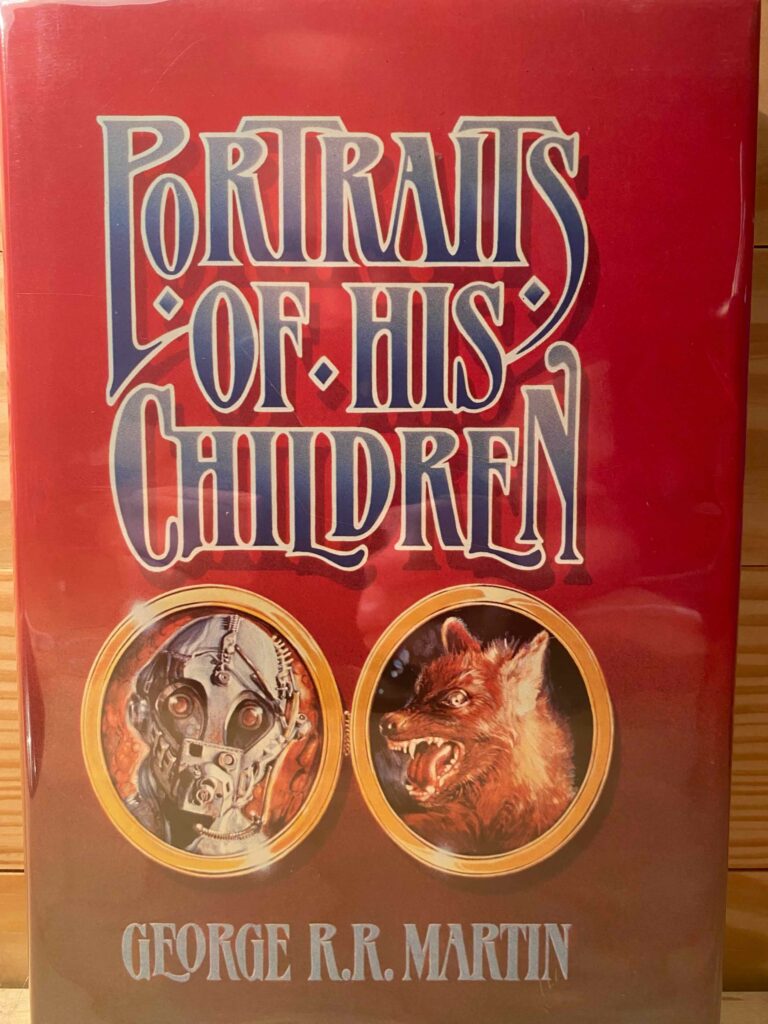
In February, 2026 I acquired a copy of the trade edition of George R. R Martin’s 1987 collection, Portraits of His Children. The book was in pristine condition, but on the first page inside the book some had stamped their name in a way that never can be undone: “Library of [name removed] M.D.” How nice of you, Dr. X, to have your own personal stamp to mar the books that you own. Has Dr. X now shuffled off his mortal coil, and his book then passed to some dealer/seller to push the book along? Possibly so. I’m almost tempted to tear out that page. Instead, I may look for another copy without such a stamp, then foist this book off to someone less finicky.

All grumbling aside, this book collects 11 stories from Martin’s early years as a writer, when he wrote SF stories, and before he ventured into fantasy with the Game of Thrones series of books and TV shows. These were stories published in Analog and Asimov, as well as anthologies. The introduction is from Roger Zelazny, an SF/fantasy writer. The publisher: Dark Harvest—whose first book was by Martin, a book apparently only published in a limited edition (no additional trade edition), and it’s quite expensive on the current used book market. I used to own a couple of Martin novels years ago, and gave them away. I never got into Game of Thrones, so I only have this book because I’m trying to collect all books published by Dark Harvest, a small publisher that existed between 1983 and 1993. Martin’s novella, “The Skin Trade,” is one of the best stories in the Night Vision anthologies.

More Dark Harvests: Brin and Tessier

One of my current goals is to try and complete my collection of books from Dark Harvest. This was a small press publisher active from 1983 through 1993. During that time they published just over 50 books. I still lack a handful of hard to find Dark Harvest books, and was able to add a pair of these recently.

David Brin, The River of Time (1986). Back around 1990 or so, I bought a British paperback edition of this book. Then I bought a bunch more Brin paperbacks, although for some reason I stopped keeping up with his fiction after a while.

The British paperback edition sports a neat cover, but the Dark Harvest book came out one year prior to the paperback edition, and is the true “first edition.” The River of Time collects 11 short stories, grouped under four headings: Destiny, Recollection, Speculation, and Propagation. This Dark Harvest book is the trade edition, not signed by Brin. Still, it’s in great condition, which matters more to me than a signature.


Thomas Tessier, Secret Strangers (1992). I’ve never read anything by Tessier. Last year, while at a bookstore in Mesa, Arizona, I considered buying a copy of this book. Back then I was deterred by the price as I considered it priced a little high. This copy is one of the signed & limited books, #19 of 250 such copies.

Reviews don’t appear to be kind to the book, citing the main character. I’ve just started reading Secret Strangers, and while the main character isn’t very likable, nor seemingly intelligent, she won’t be the first such person in fiction.

Howard Waldrop’s Masters of Science Fiction

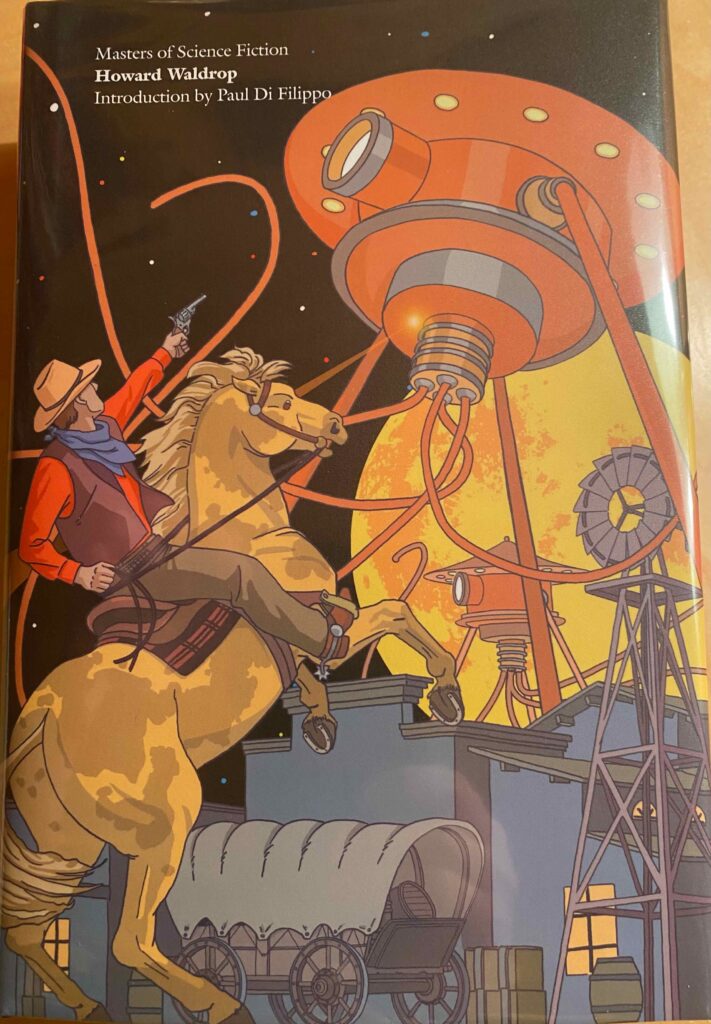
Centipede Press just released the latest book in their series honoring great SF writers, focusing on Howard Waldrop. The books in this series tend to be massive, and the Howard Waldrop edition is no exception. Listed for $85, the book is already sold out from the publisher, just a week after its release. It’s too bad that Waldrop isn’t around to see the reception of this book, as he died just two years ago, on January 14, 2024.

Clocking in at 1040 pages, the book is limited to just 500 copies; my book is number 407. It’s signed by Waldrop, Paul di Filippo, and artists Jim & Ruth Keegan. Paul di Filippo wrote a nice introduction, but then few people have anything bad to say about Waldrop. I met him only once in 2005, when I asked him to sign my copy of Howard Who? even though the book already was signed. All he did was write “I’ve already signed this one,” then added the date, plus “and earlier.” I think that curmudgeonly note almost means more to me than his signature.

As I own most of Waldrop’s books, I may already have read most of the stories in this collection. I think I spotted some that I had not read, so those now are high on my list of next stuff to read. Kudos to Centipede Press for yet another fantastic publication. My wallet shudders at the sight of their forthcoming books this year, as there are several great titles listed.

A pair of Dark Harvest mystery books

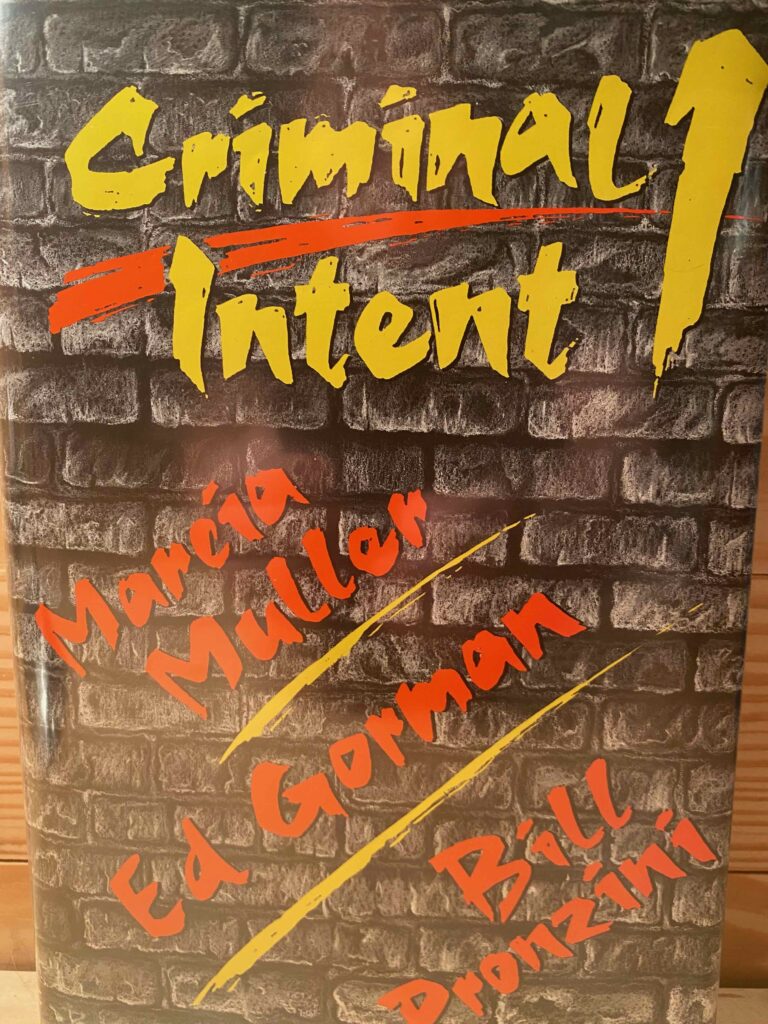
Dark Harvest’s Night Vision series was a masterpiece in horror anthologies from 1984 to 1991. When the publisher switched focus to mystery fiction in the early 1990s, they apparently tried to recreate the magic (and format) with Criminal Intent 1 (1993). Boldly flagged with the number “1,” the venture sadly failed, and Dark Harvest produced no more books after 1993, and thus, no additional anthologies that received the addition of a number after the title.

The format: three writers would submit 100 words of original fiction. Some writers would be established names in the field, others would be new, talented voices. Criminal Intent 1 includes one story each from Ed Gorman, Bill Pronzini, and Maria Muller. All three name, by that time, appear to be established writers. It’s a great concept. Too bad it never went further.


Bill Pronzini contributed another book for Dark Harvest in 1993: Carmody’s Run. This book contains four stories featuring his character, Carmody. All the stories were originally written and published in the 1970s, and there’s an introduction about the character that appears to be written specially for this book.

Sadly, my copy has two tears in the dust jacket, one in the front, and one in the back. That’s what happens sometimes when you buy things online, and actual photographs are not included. Still, for $15 it’s not a bad deal.

According to ISFDB, these were the last two Dark Harvest books published. However, I’ve seen a pair of Lawrence Block books from Dark Harvest listed online, not in the list from that reference site. Ironically, just as the first Dark Harvest book—by George R. R. Martin—generally starts above $200 from current dealers, one of those Block books also appears to fetch a high price. So, the modern collector gets to bookend the cost of acquiring a complete set of Dark Harvest books with a pair that cost more than 10x the price of some books.

Kellerman’s Blood Ties

Jonathan Kellerman’s novel, Blood Ties, was originally published in hardcover in 1986. There’s an interest note in his foreword the Dark Harvest “First Expanded Edition” from 1993, where he states this his publisher of the 1986 book lost all copies, only to find them a few months later. Due to this, sales fell off from his first novel, and that edition become somewhat difficult to find.

Kellerman has a background in child psychology, which he weaves into his fiction. Blood Ties was another book in Dark Harvest’s early 1990s move from horror fiction to mystery fiction. Why this venture failed is up to someone much closer to the publishers, but one could guess that either there was no market for small press mystery editions, or the publishers decided for other reasons just to call it quits. Dark Harvest is far from the first small press publisher with a limited life-span, although their bibliography is quite remarkable.

I acquired a copy of the signed/limited edition in February, 2026. My book is numbered #41 of the 400 limited copies, signed by both Kellerman and Dean Koontz, who wrote a weird introduction. The illustrations are by Phil Parks, who did many Dark Harvest covers (at least nine, as far as I can tell).

© 2026 Anders Monsen

Theme by Anders NorenUp ↑

css.php