Lost worlds and ports of call

Month: August 2025 (Page 1 of 2)

The Jack Vance Lexicon

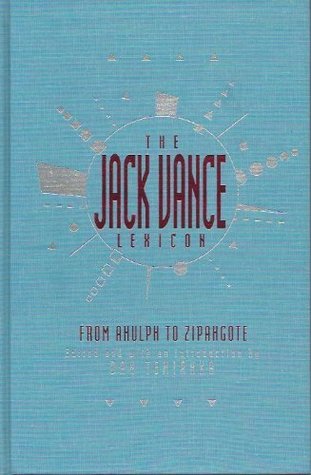
In 1992, while Jack Vance was still writing books (he died in 2013), Underwood-Miller published The Jack Vance Lexicon, compiled by Dan Temianka. Vance, a prolific creator of new words in his fiction, remains my favorite writer to this day. I still remember the first Jack Vance story I ever read. Norwegian SF writer Øyvind Myhre had recommended Vance in a speech that I attended in 1985, and when I came across a DAW edition of The Narrow Land, I bought it, not knowing that it would change my life.
From the moment of the title story, I was hooked. I immediately bought every Vance book I could find. In Bergen and Oslo, Norway in the mid-1980s, this amounted to a small handful of UK Grafton editions (to my great regret, I donated the three Lyonesse Grafton editions, as I’d upgrade to the Underwood-Miller hardcovers).

When I visited the US in 1987, I went to several bookstores, and there I had more luck than in Norway. My carry-on bag was stuffed to the brim with DAW editions of Vance’s books, as well as Vance paperbacks by other publishers. Due to a shuttle mishap, I almost lost that bag, which held other important things. Eventually, I was able to get it back, and returned to Norway with my precious cargo. Little did I know then that the next year I would return to the US, this time permanently. Upon my arrival back in the US, I scoured every bookstore for Vance’s books.

Eventually, I was able to afford hardback copies of Vance’s books, even the Underwood-Miller editions. However, I cared only about Vance’s fiction. In 1992, I saw something about Temianka’s book, but I ignored it, as back then I cared little for reference works. I also ignored the Vance Integral Edition, as the cost then was beyond my means (today a VIE complete set will cost 10 times the original price, or more). On a whim, I bought a copy of the trade edition of Underwood-Miller’s Lexicon today. A more recent edition has been published by Spatterlight Press, but the U-M edition looks better. Glancing through the book just makes me want to re-read several of Vance’s stories, though I’ve re-read most of them at least three to five times. Vance likes to say he only wrote for money, but based on some these words, I think he also wrote for fun. His sense of imagination remains nonpareil.
Owlswick Press: Two books

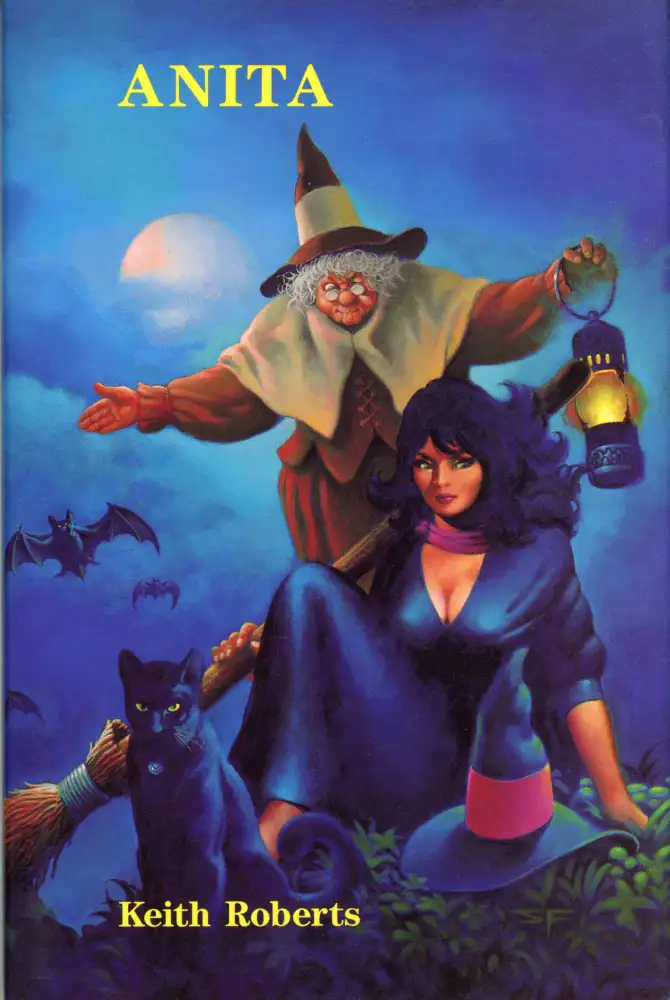
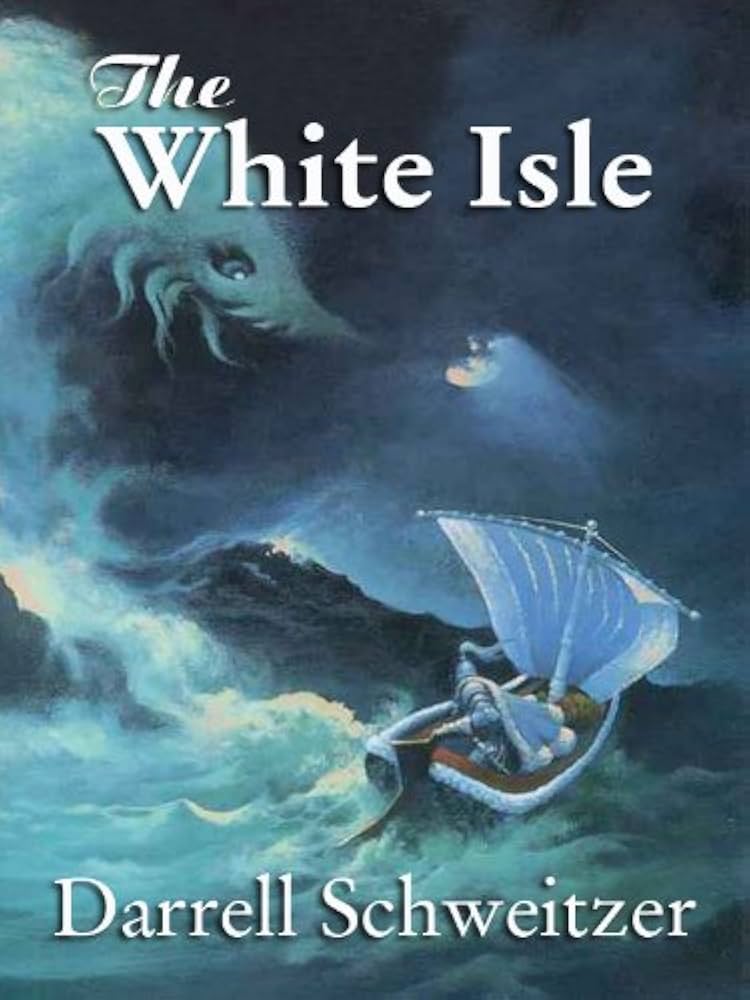
By chance I acquired a pair of books published by Owlswick Press. This was a small press than ran from 1973 through 1993, founded by George Scithers, who at one point also edited Isaac Asimov’s Science Fiction Magazine. These two books are Anita, by Keith Roberts, and The White Isle, by Darrell Schweitzer. I bought two the books from Schweitzer, along with another one of his books.

Anita collects 16 stories about a witch, written years before either Discworld (Terry Pratchett) or Harry Potter (J. K. Rowling). Published in 1990 and illustrated by noted fantasy artist Stephen Fabian (who illustrated many Jack Vance books, ad tons of other fantasy books), the production value of the book is quite stunning. I don’t know the production run, but apparently Schweitzer had a bunch of these books still in his garage and was selling some of them at quite cheap prices.

The White Isle is Schweitzer only debut novel. The Owlswick edition is from 1989, also illustrated by Fabian. The book was signed by Schweitzer, a nice addition, with a gorgeous wrap-around cover. I mainly wanted the Keith Roberts book, but I could not pass up a hardcover book at the price listed, and as the cover looks interesting I hope the book will match it.

Lone Pine Lake hike

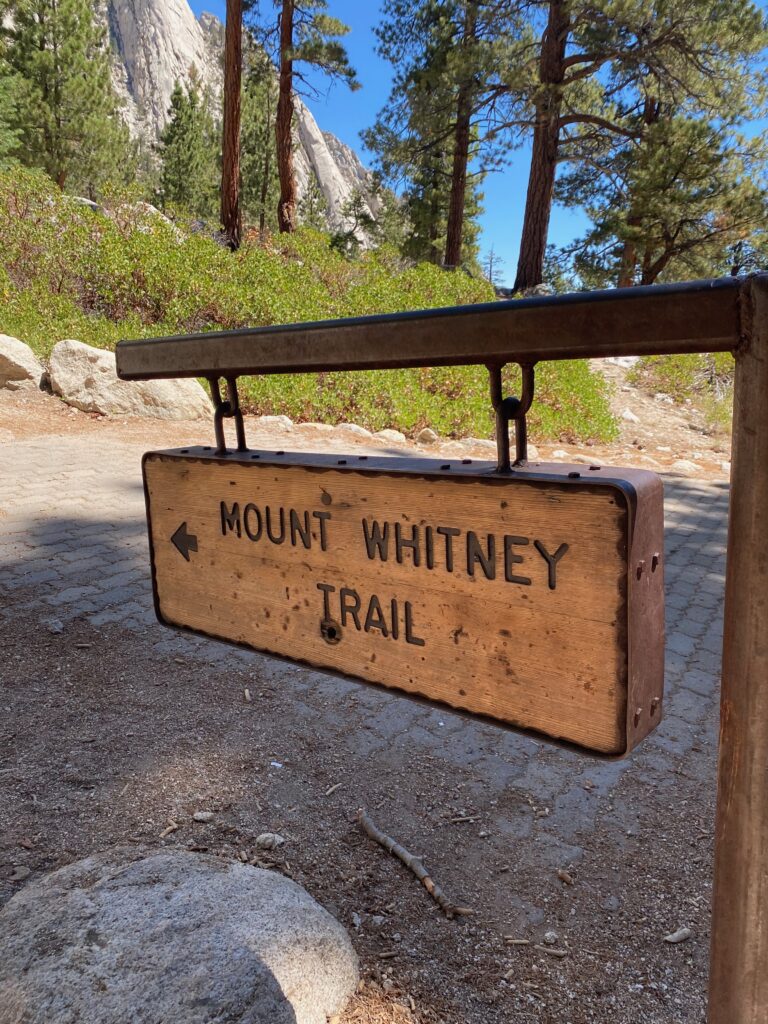
This was our second acclimation hike prior to attempting Mount Whitney, and our introduction to the trail toward the summit. The first three miles of the trail are open to the public. But, shortly thereafter you cross into the Whitney Zone, where you need a permit. We had secured a permit for August 5th, and so two days prior we hiked up the trail to Lone Pine Lake, just outside the Whitney Zone. To get to the trailhead from Long Pine, you drive ca. 30 minutes up a winding road into the mountains. Our GPS decided we needed a tour of the camp site first, and so we ended up slowly winding our way through that location before continuing upward. There was no parking near the trailhead, as we arrived in the middle of the day on a Saturday. We ended up parking as the second to last car in a long line of cars along the road, roughly a quarter of a mile from the trailhead.

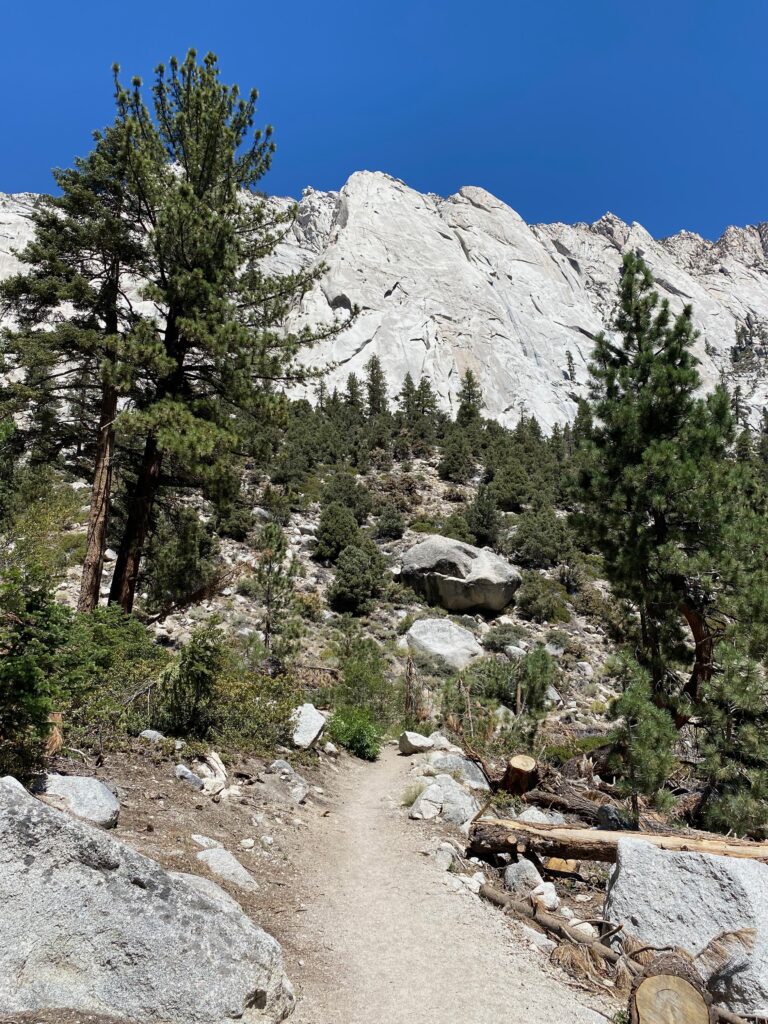
We walked up the road, then found the trailhead. This was our initiation to the many switchbacks up the Whitney trail. It was a warm day, middle of summer, and the sun beat down on us. Along the trail we encountered a large group of backpackers, possible heading to Trail Camp with plans to summit the following day, possibly starting along the John Muir Trail from Whitney. We forgot to ask, even as we leapfrogged each other a few times. We did pause to ask a couple heading downhill about the ideal time to start, and they suggested 10pm, which would let us cross into the Zone around midnight. That became our plan.

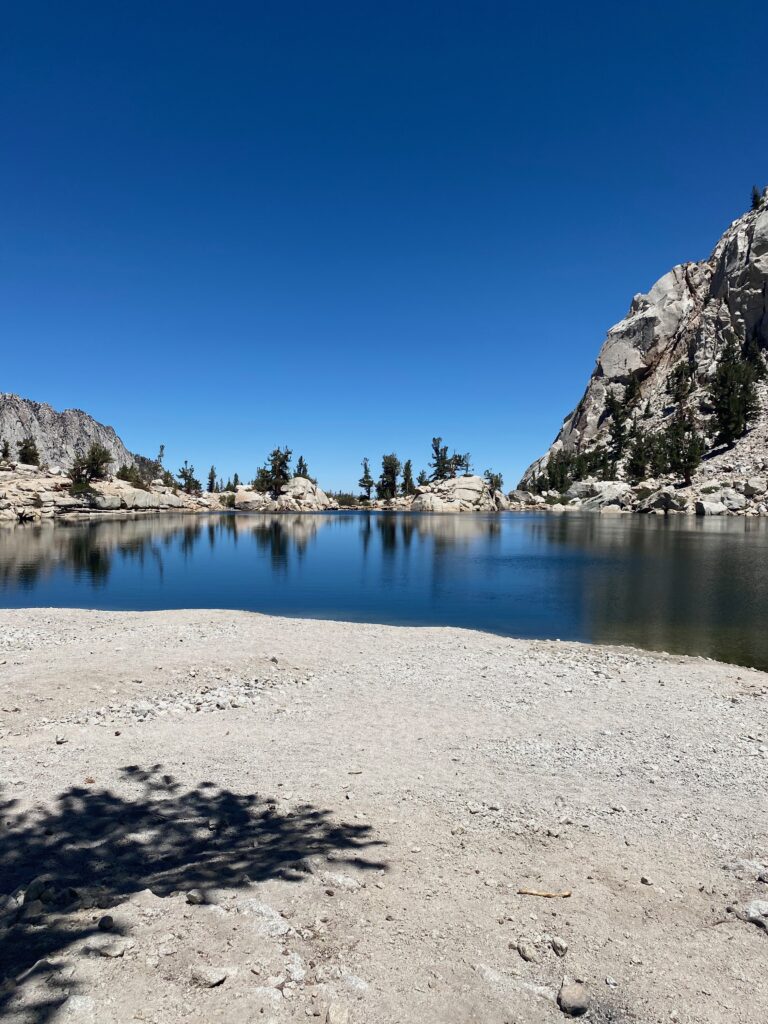
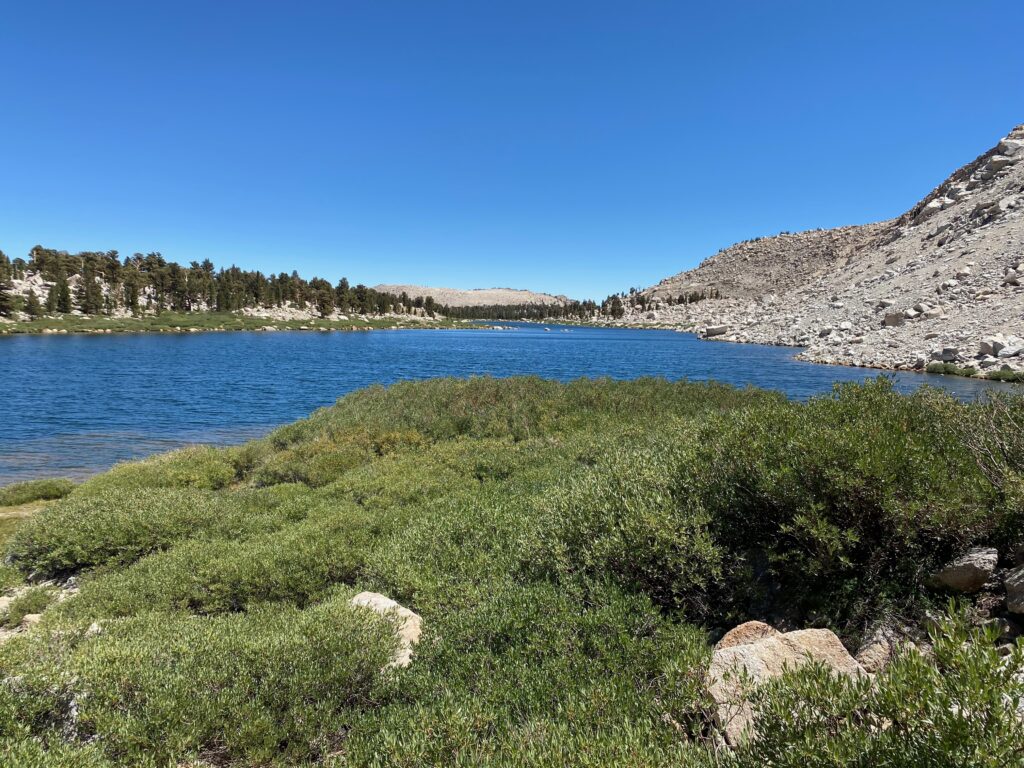
Ahead of us towered the mountains. The path was dusty, with three creek crossings, each wider than the last. After a mile or so, we passed a side trail going straight up a hill, which takes you to the Mountaineering Route to Mount Whitney. Few people probably use this trail during the summer. The most interesting feature for hikers might be the log crossing, where multiple flat logs lead you across a wide creek. Some of the logs need to be replaced, but we made it across. Shortly afterward we came to the intersection leading to either the Whitney Zone or Lone Pine Lake. We turned left and walked downhill to the lake.

Several people were hanging out by the lake. Some actually went swimming in the water, and a couple tried their hand at fishing. I think they gave up quite quickly, and went back to lounging by the water’s edge. After a short break for lunch, we headed back up the short hill, then down the trail again. With less than a mile left, we met a person heading uphill who asked us if we’d seen a cell phone. We had not, and continued to the trailhead. After a break near the store to drink a well-deserved cold soda, we headed back to the car. Not far from where we’d sat drinking out sodas, we saw the same person again. He and his wife asked if we could give them a lift to Lone Pine. They’d just finished the John Muir Trail from the north, covering the distance in 19 days. We said sure, and dropped them off in town, where I think they were planning to celebrate their journey with friends, and possibly some bottles of wine.

At this point we still felt confident about the Whitney hike. We’d be returning the next day, but around 10pm, when it would be pitch black, to begin the actual hike to the summit. We’d covered the three miles to near the Whitney Zone with no issues, so we figured it would take us maybe an hour and half the following day. Now it was time to rest, and maybe get a pizza to celebrate stepping onto the Whitney Trail.

Cottonwood Lakes Hike

In preparation for a Mount Whitney hike, my son and I hiked from Horseshoe Meadows to Cottonwood Lakes #4 and 5. As an out and back trip, this was close to 13 miles, with around a thousand feet of elevation gain. This doesn’t sound like much, but the trailhead was already at 10,000 or so feet above sea level.

Starting from Lone Pine, the nearest town, most of the elevation gain up to that 10,000 foot level was done via car. From Highway 395, we drove down narrow roads until we began the ascent. The road winds up multiple switchbacks, many of them visible from the highway. After around 40 minutes of driving we reached the campground. Here we found a single parking spot open. There were multiple signs about bear activity. Many of the campsites were taken, but this is also a staging area for people hiking northbound along the John Muir Trail to Mount Whitney (or beyond, though I suspect many hikers on that trail get a shuttle from Lone Pine).

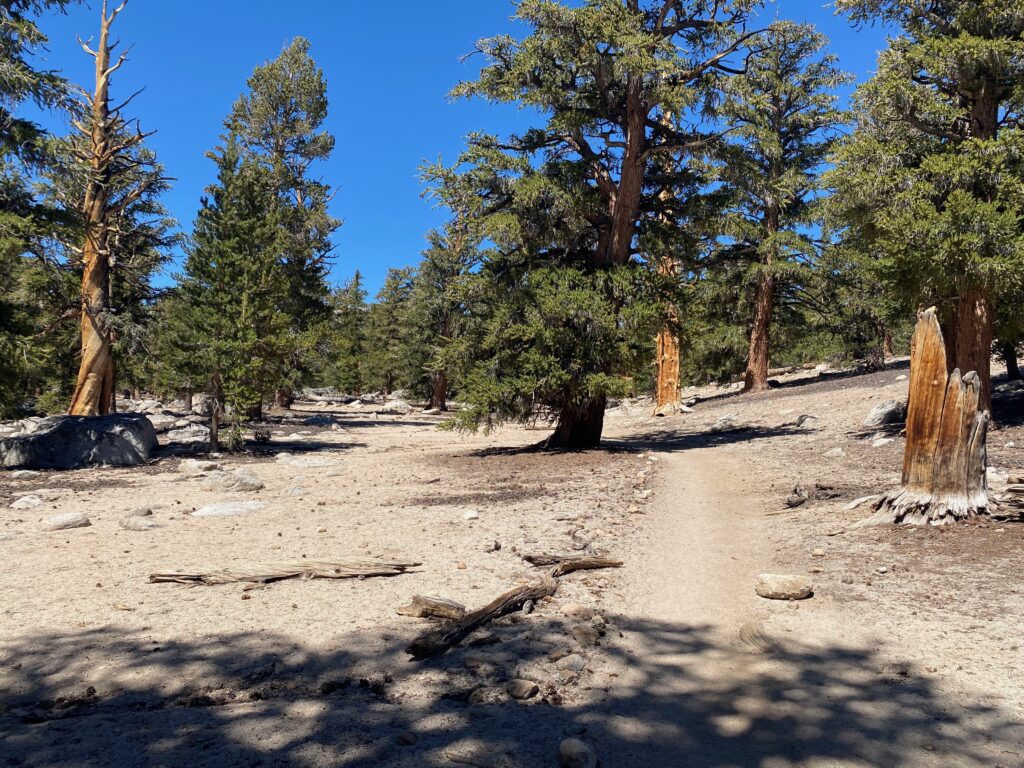
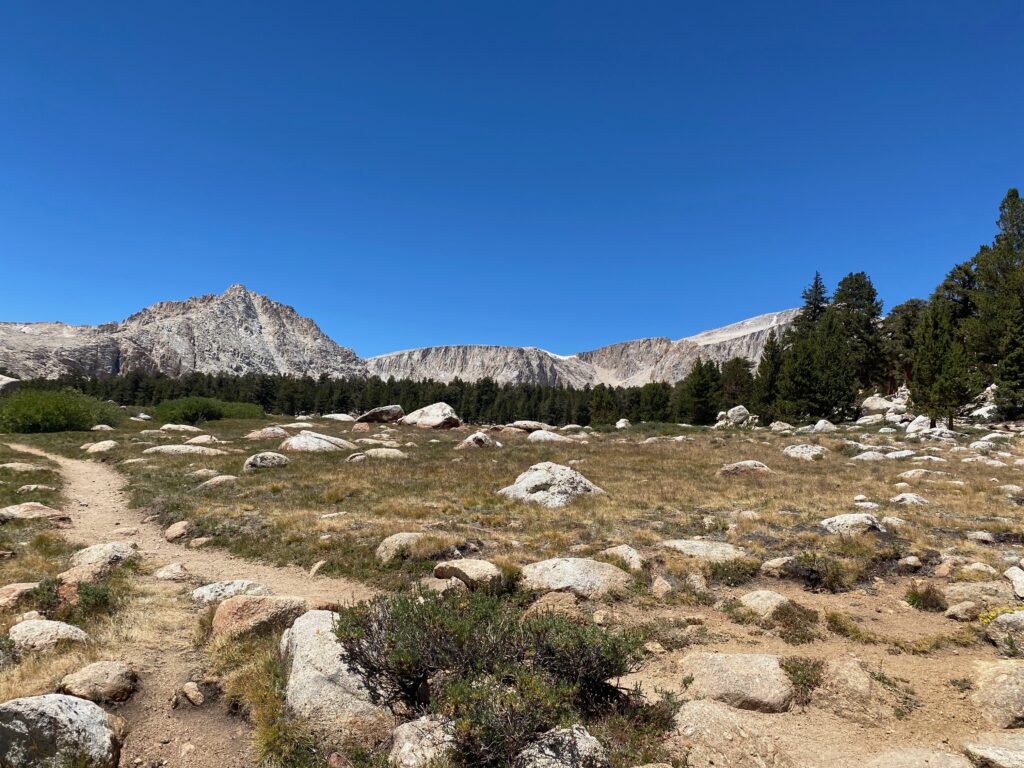
The terrain is mostly flat for the first couple of miles. There are trees, and the ground is dusty, gray. In early August the temperature was already in the 80s F, with almost no cloud cover that day. We started our hike around noon, after getting our Whitney Permit signed and looking around the visitor center (as well as dealing with a battery issue on the nearly brand new rental car). Along the way we passed many people returning from caping or hiking. We also ran into a group that was planning to hike the New Army Pass and then onward to Whitney. They planned to summit the same day as our Whitney Permit, and we left them with a “see you at the top” hail, being then full of confidence.

Slightly after two miles, the ascent begins. It’s only a short one, and we reached the top after a few short breaks, all cut short due to mosquitos. Along the way we marveled at the many meadows and wonderful scenery. Yes, it’s rocky and dusty, but the Eastern Sierras are a marvel to behold. The trail is well-marked and appears quite popular.

At the top of the climb, the trail is fairly flat. We passed the first couple of Cottonwood Lakes, then saw the wonder of Cottonwood Lake #3, the largest of the five such named lakes. At the far end there’s a small waterfall. Near the trail as it approached the lake, we founded a shaded spot and rested for lunch. We saw several people walking back from the lake, or continuing along the trail beyond the waterfall.

After our break we walked over to the waterfall, then walked up a short distance to the final two lakes. The Old Army Pass trail lies between lakes #4 and 5. We stood there and saw no trail, so we wondered how anyone would make it up that pass. On the way back, we did speak to someone who planned to camp near those two lakes and go up the Old Army Pass, so I guess it’s still possible.

Going downhill is so much better, and we quickly passed groups of people that we’d seen leaving half an hour or more before our walk to the last two lakes. We reached the trailhead in daylight, but figured some of the people that we’d passed likely would arrive there after dark, based on their pace. For our first day at altitude, this seemed like a great hike. Mount Whitney lay three days in the future, and as we drove back down the switchbacks we thought it would be just as easy as Cottonwood Lakes. Reality would prove different.

A Fedogan & Bremer book, at last

For many, many years I’ve owned just three Fedogan & Bremer books, all of which I bought in an actual brick and mortar bookstore: Adventures in Crime and Space in Austin, Texas (RIP the book store and owner Willie Siros). This bookstore closed in 2002, so that means over two decades have passed since I last bought a book by this publisher. I don’t think the publisher still is in business, but I’ve not really looked for any of their books online. That may change.

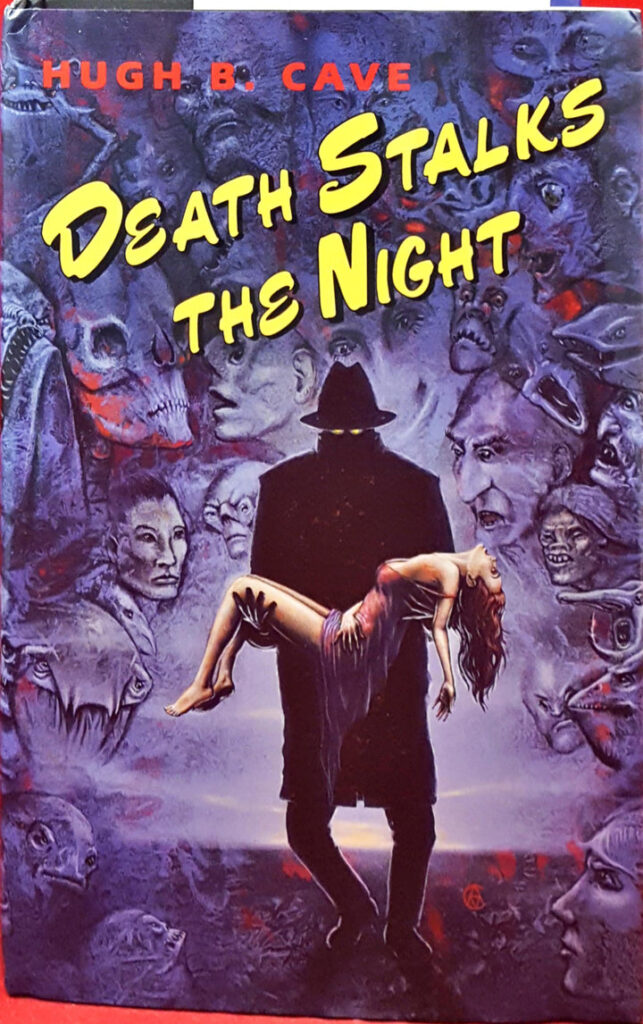
This month I found one of their books listed at a decent price, and picked up Hugh B. Cave’s Death Stalks the Night. This book was meant to be published by Karl Edward Wagner’s Carcosa imprint, but that publishing venture collapsed after four books, and F&B picked up the book many years later. With 17 stories and nearly 600 pages, this book will take some time to read and digest. Published in 1995, I’m surprised I didn’t get this title from Adventures in Crime and Space, but the hesitation might have been due to budget reasons at the time, as I think I was hoping to get F&B Carl Jacobi title first and never found it. Anyway, now I have this one.

Jacobi’s Disclosures

It’s almost funny to see bid after bid that I make for Arkham House books on a noted auction internet site take hit after hit and fall by the wayside. Since I’ve imposed a hard limit on any book, once that limit is reached I bow out, and thus miss out on countless books that I want.

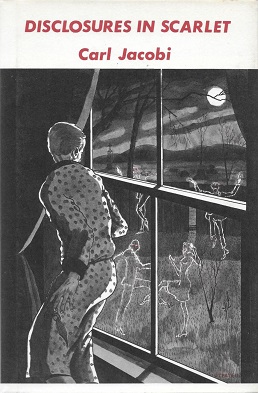
In this case, by some strange surprise, I managed to secure Carl Jacobi’s 1972 Arkham House book, Disclosures in Scarlett. Apparently the people I’m bidding against on a slew of other AH books already have this one. I think I’ve managed to get three out of 30+ books so far this way, which means that if I want any of those other titles I’ll need to go the set price route, and find dealers with acceptable prices, vs. going against ardent collectors.

Bond. Nelson Bond

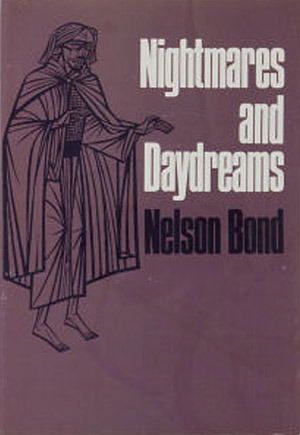
Until recently I don’t think I’d heard of Nelson Bond. Last month I bid on a few Arkham House books. As I have a hard limit, I was outbid on around 20 or 30 of them, but, by some strange twist of fate I managed to secure two or three books at reasonable prices. One of the books that I acquired was Bond’s Nightmares and Daydreams, published in 1968 for the low price of $5 (though by 1968 standards, that may have seemed like a pretty penny), collecting within its pages 14 short stories and one poem. Apparently Bond was a major writer of fantastic tales from the late 1930s through the 1950s. He then took a long break before writing fiction once more.

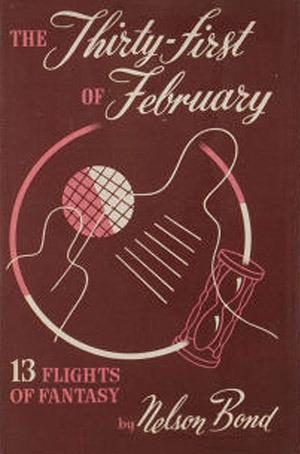
Fast forward a few weeks, and I’m in Bookmans, a used bookstore (and exchange of all sorts of things, from ceramic figurines to guitars) in Phoenix, Arizona. The store is vast, with shelves of books in various genres, all used, but few that I wanted. By chance, question about collectible fiction resulted in a store clerk directing me to an area near the check-out counters. There, a handful of sad looking “collectible books” leaned against each other in a tiny glass bookshelf. And I mean tiny. But, tucked in between what appeared to be some book club editions (but probably weren’t), stood another Nelson Bond book: The Thirty-first of February. This Gnome Press edition was published in 1949, and for a book going on 76 years, it wasn’t in bad shape, and for $20 it seemed a steal.

Arkham House: Into the 40s

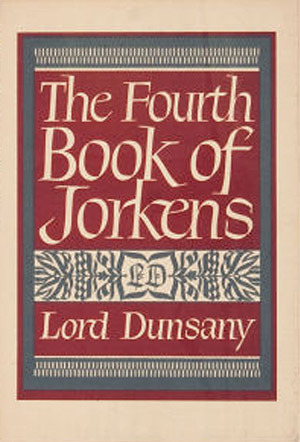
Perhaps it’s only fitting that the first Arkham House book from the 1940s that I own is called The Fourth Book of Jorkens. Despite being nearly 80 years old, this book, published in 1948, is in pretty decent shape. There are a few tiny bumps in the dust jacket, at the top and bottom, and the book has a dusty, antiquarian smell. Yet otherwise the pages are clean, and the binding tight.

Written by Lord Dunsany, heir to one of the oldest Irish peerages, and one of the greatest fantasy writers of the 20th century, The Fourth Book of Jorkens contains a slew of short (tall) tales. It was first published by Jarrolds in the UK in 1947, and by Arkham House the following year.

It’s amazing to see a publication price of only $3, and yet, on the back page there are advertised books from the publisher for $1.50 and $2.00, with most the others listed for $3. Today, a hardcover book, even as slim as this one, would not be listed for less than $25. And yet, there you have legends in the field with their books for sale at such a low price. At least, one thinks so, but $3 in 1948, right after WWII might have seemed like a fortune to many people.

Book added: K.W. Jeter

According to ISFDB, Morrigan Publications in the UK released 11 titles, most of them in both hardcover and trade paperback editions (plus one chapbook), between 1987 and 1991. I consider myself lucky enough to have the three James P. Blaylock books in hardcover editions; I believe these were published as trade and limited editions, with extra material in the latter, but I only have the trade editions.

One of the tiny minority of book auctions that I recently won included the trade hardcover edition of K.W. Jeter’s In the Land of the Dead. I have the paperback edition by Onyx from back in 1989, but the pages are yellowing in that copy, and a nice clean hardcover edition is always easier to read. It’s been several decades now since I read it for the first time, so I’m sure when I re-read it I won’t remember a single thing. But, that makes it all the more special, I think.

Cast a Cold Eye

Back in the 1980s and 1990, small press publisher Dark Harvest published a fair amount of horror fiction, from novels, to anthologies and collections. At the time I bought a handful of these, but back then hardcovers were a premium in my eyes. I’ve recently started to look for their books that I failed to get, with Alan Ryan’s novel, Cast a Cold Eye the latest find. Originally published in 1984, this is a horror novel set in western Ireland.

I don’t often bid for books on eBay, but recently I’d seen several books there listed a low starting prices, and tossed my hat in for a few of them. In most cases the subsequent bidding exceeded my budget for any book, and I bowed out when that limit was reached. Cast a Cold Eye, to my surprise, was one that I ended up winning (alas, I missed out on another Dark Harvest book, not to mention many, many Arkham House books…).

My copy arrived today, and to my second surprise, this copy was not the trade edition, but the signed/limited edition in a slipcase. My copy is #92 of 200, signed by Alan Ryan, as well as illustrator Jill Bauman. For $15 plus tax and shipping, that’s probably the third surprise. (I will note, to my annoyance, that the copy-reader missed Brain for Brian on the second page, which does not bode well.)

« Older posts

© 2026 Anders Monsen

Theme by Anders NorenUp ↑

css.php