Not even halfway up the trail to Mount Whitney, disaster struck. Shouldering my Gregory Zulu 30 backpack after a short break, the sternum strap snapped, sending two pieces flying into the night. In the darkness I managed to find both pieces, but there was nothing I could do except pocket them. For the rest of the hike I would be forced to occasionally grip my shoulder straps or continually adjust them, as they constantly cut into my shoulders. At least this effort took my mind off the endless switchbacks.
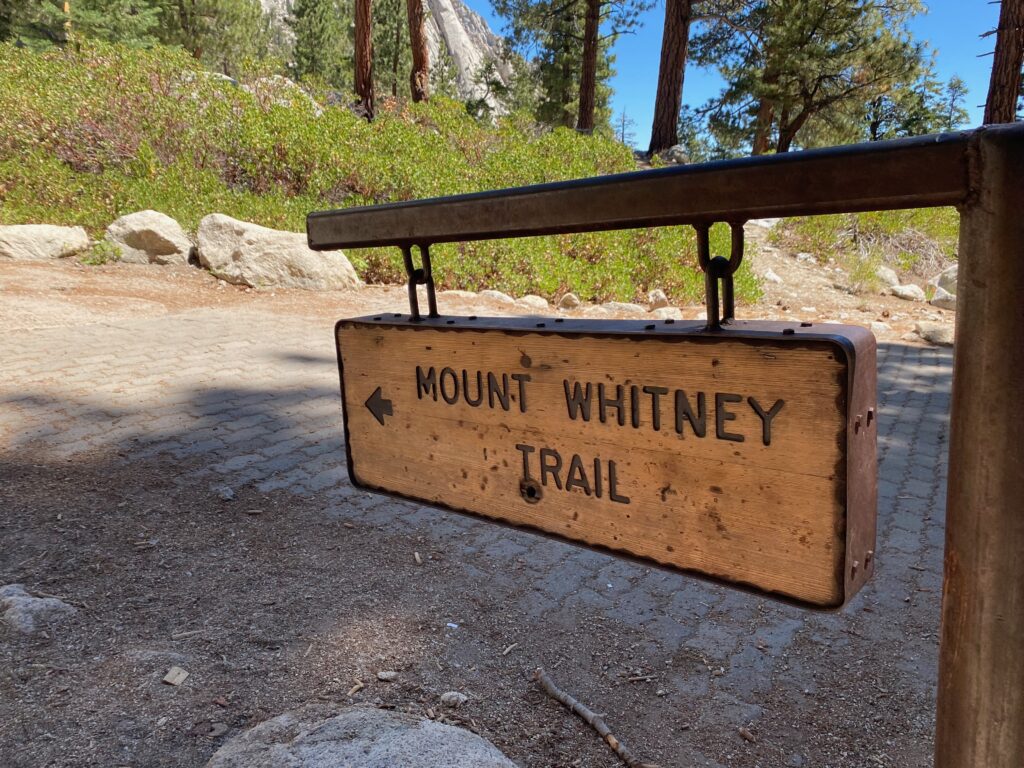
We’d started our hike, as planned, around 10pm Sunday night. Along the trail we’d met a few people heading downhill. The two or three people who were friendly enough to chat said they’d summited around 2pm that day. They’d then made the perilous descent from Trail Camp in the dark, while we would do the reverse. They trudged in silence past us, maybe too tired to care at that point. At 11:30 we reached the Whitney Zone sign. There, we sat for half hour in the quiet dark waiting for our moment.
At a few seconds after midnight, we stepped into the Whitney Zone. The first mile or so to Outpost Camp and slightly beyond is an easy hike. A short distance past Outpost Camp we crossed a creek, where we met a solitary figure on the other side. It was nearly 1am at this point. The lone figure, a man, asked if this was the path to the trailhead, and we assured him that he was only four miles away. He sighed, gestured at his feet, and said that with his sore feet he hoped he’d be able to make it. We wished him good luck. Our path took us onward, and from here it was almost all uphill.
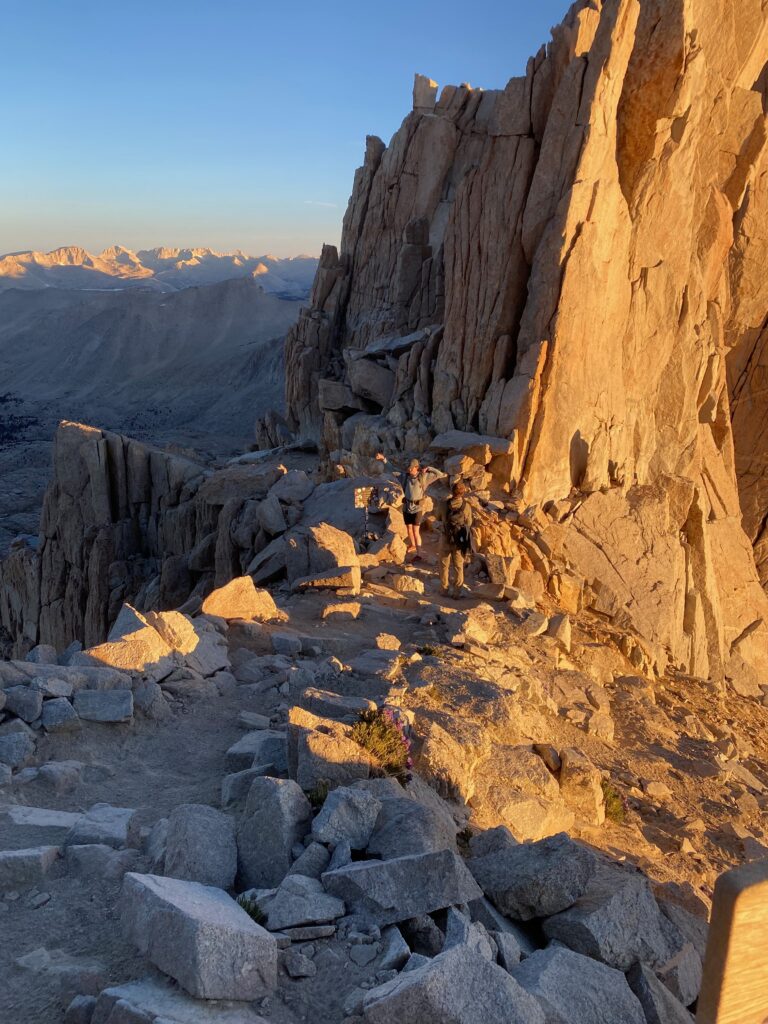
In the darkness we made our winding way up, up, up, for what seemed like the entire night. We took several breaks, including one where my sternum strap met its sad fate. For a long time it seemed that we were the only people on the trail. At last, we reached Trail Camp. It was still dark, and we tried to not make too much noise as we walked past the tents. At the far end of camp we encountered two groups of hikers as they emerged from their campsites. Together we started the infamous 99 switchbacks, and then spent the next hour plus leapfrogging each other. At the sun struck the horizon to the east, we arrived at Trail Crest, a pass that lay around 13,000 feet above sea level. Here we paused for a longer break, then walked down to the intersection to the John Muir Trail. Past this intersection stood a sign warning people of lightning danger. As it was around 6:30am, we didn’t think this would be an issue for us. From here, however, the summit is still nearly two miles away, and pur pace would slow.
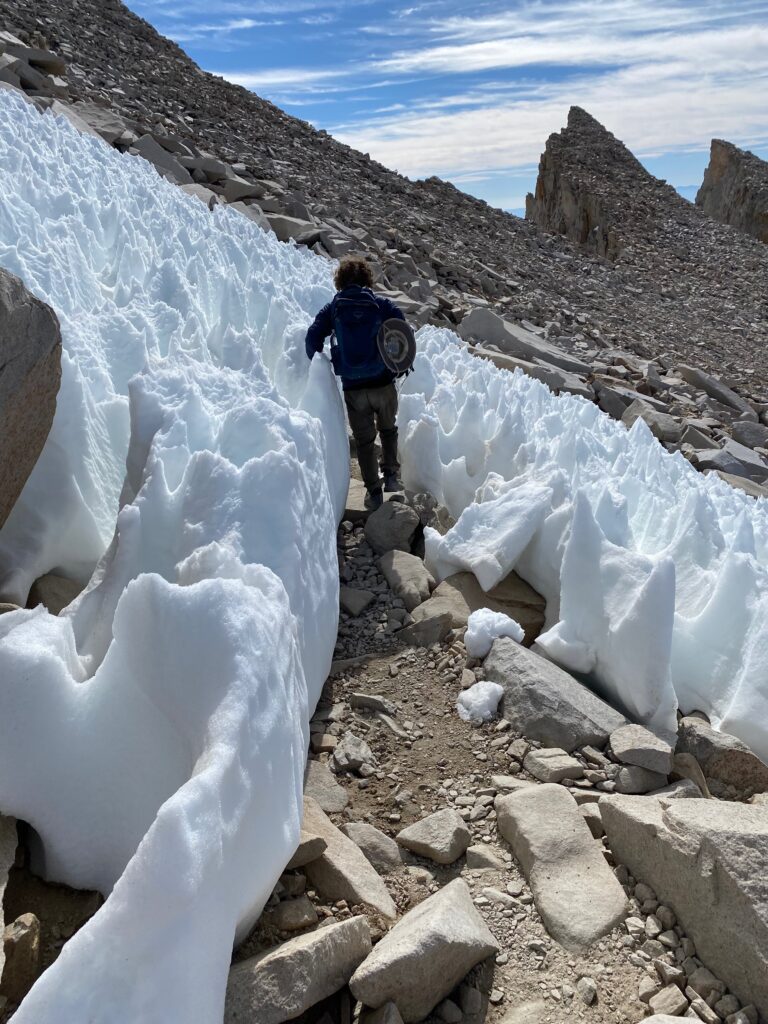
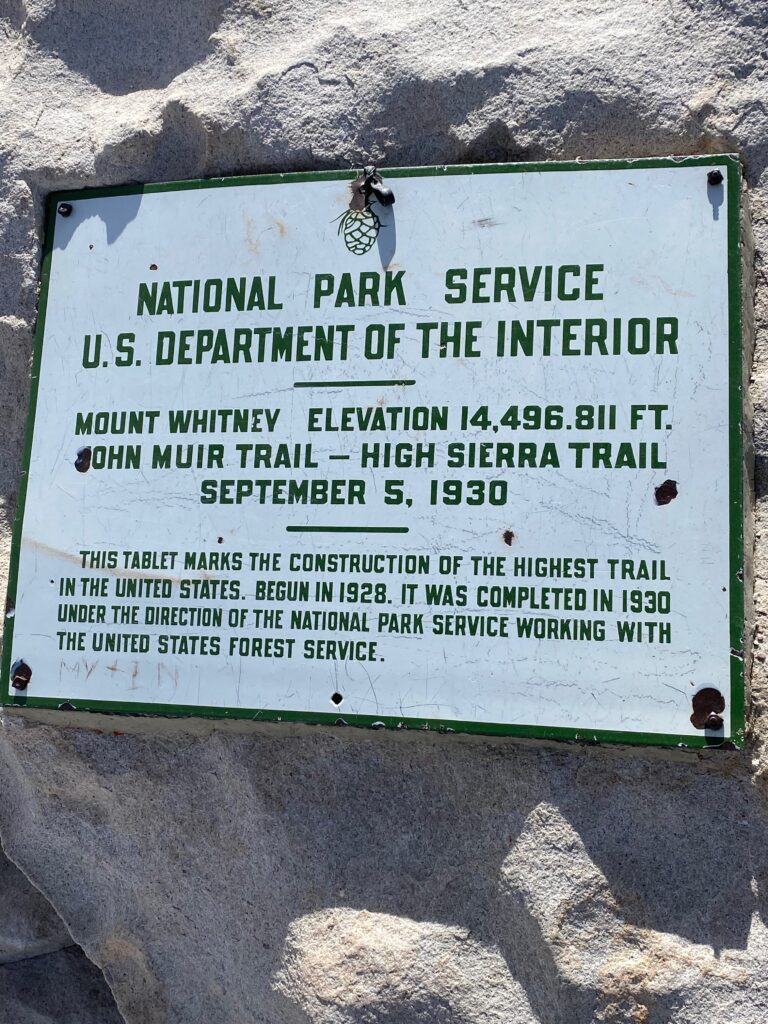
Those next two miles were almost the toughest miles of the trip. The trail hugged the mountain side. Occasionally we scrambled ove boulders, where one wrong step would send you plummeting many hundreds of feet below. We passed a couple of windows between more solid paths, then walked along some dagger-like smaller peaks. At last, we were on Whitney proper. The summit at this point still seemed distant. We crossed a small ice-field; no need for micro-spikes here. Then, it was a matter of surviving the final push. We took many breaks the last half-mile, then finally reached the Smithsonian hut at the summit. Here we rested for a while, before making our way back.
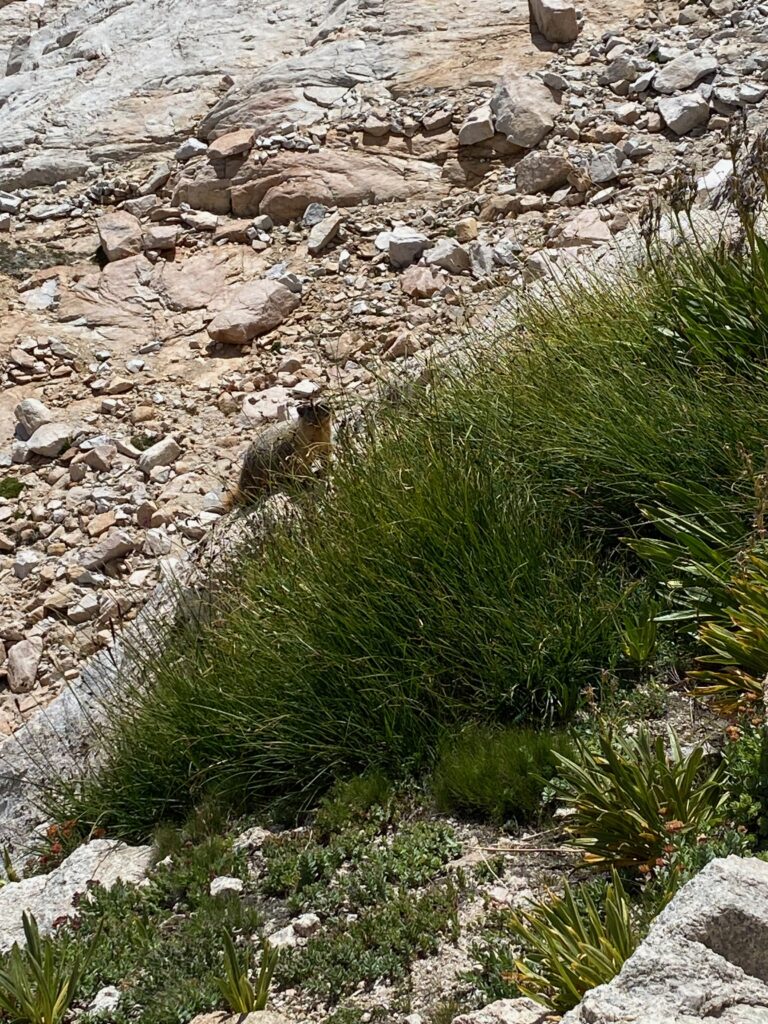
Getting to Trail Crest from the summit was still tough, but the 99 switchbacks in daylight was nothing short of torture. The sun at this point was out, and no shade was to had for many miles. We staggered back and forth along endless 180 turns. As we made our way down toward Mirror Lake, we thought we were on the wrong trail. I kept checking my GPS, which showed us on trail, and we even stopped and asked people if it was the right trail. We’d walked up here in the dark, so nothing looked familiar. I can only imagine how the hikers who walked through this part of the trail at night must have felt. Did they go off trail? Some people have fallen here, several have died. So close to the end, and yet such a lethal place. Here we saw our first and only marmot, a curious little fellow.
We walked through Outpost Camp, crossing creeks and dusty plains. Then, more switchbacks, and finally exited the Whitney Zone. No one asked for our permit, which was somewhat disappointing. The last three miles from Lone Pine Lake to the trailhead took forever; we finally reached the trailhead at 3pm. We’d been awake for close to 40 hours at this point, and headed back to our car and Lone Pine consumed only by thoughts of food and sleep.
Hiking Mount Whitney in one day is no joke. I’m glad we started at night, especially in the Summer. Afternoon thunderstorms would mean that people summiting past noon would be exposed to lightning, rain, hail, and also would have to hike from Trail Camp to the trailhead in the dark. To me that doesn’t sound like fun, especially when tired. I’ll never do the trip in a single day again. That said, if I were to hike Mount Whitney again, I would plan a multi-day trip from Horseshoe Meadows instead. Take three or four days, enjoy the lakes and meadows, even though it would mean going down the endless switchbacks again.
Now, if only there was an easy way to slide the replacement sternum strap back on my backpack…
