Lost worlds and ports of call

Tag: Borderlands Press (Page 1 of 2)

Three Little Books

I’ve arrived relatively late to the party when it comes to the series of tiny hardcover books from Borderlands Press (BP). And so, I’ve missed out on a quintet of hard-to-find entries in this series. They’re now up to 69 (I think) books, ranging from modern writers to classic writers. The current series focuses on early twentieth century writers (yet, where is Clark Ashton Smith, I wonder?), and they just announced the next book, featuring W. W. Jacobs (!?).

Also, Borderlands Press recently announced plans to feature present writers of horror/dark fantasy at the same time as they reduced the number of copies from 500 to 350 for each book. Their past master series has featured some well-known and some relatively unknown writers, and this trend continues.
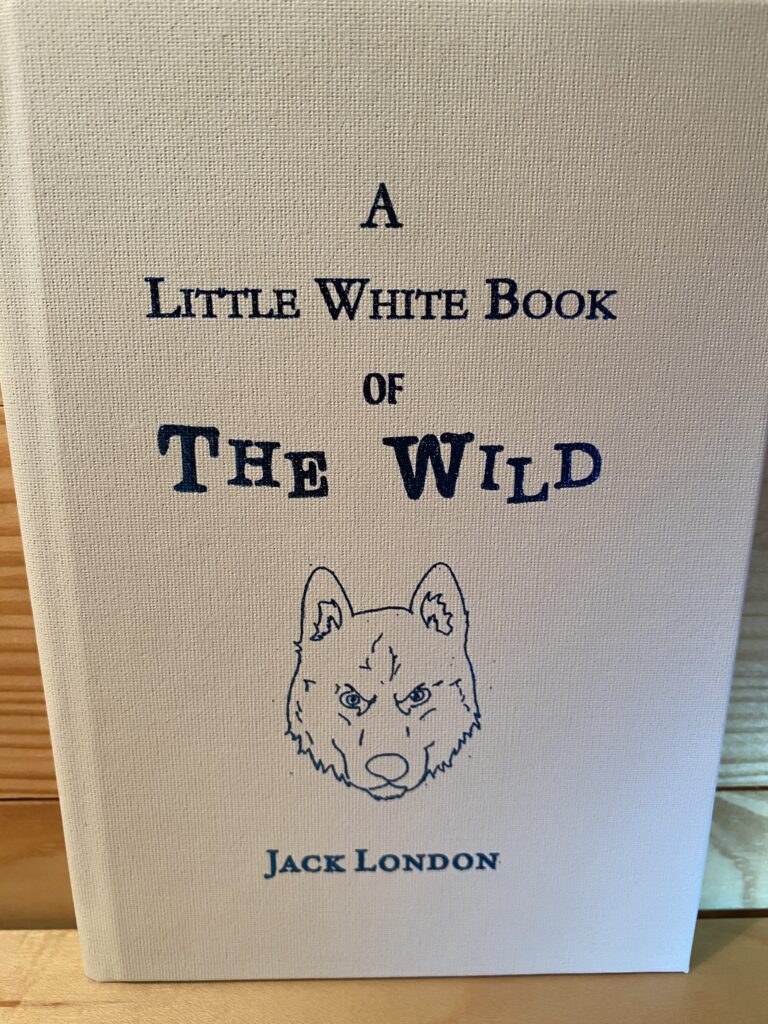
A Little White Book of the Wild, by Jack London (2026). Edited by John DeChancie, signed and numbered, my copy is #54 of 350 copies. Five stories are collected here, including perhaps London’s most famous short story, “To Build a Fire.” London is well-known for his novels set in Alaska – White Fang and The Call of the Wild. His dystopian novel, The Iron Heel, has largely been forgotten. DeChancie writes a crisp introduction, covering London’s life and politics, with a powerful final paragraph that cries out for more research and illumination. Regardless, London’s fiction is memorable and important. He was a force in American literature in the early twentieth century, and well-worth reading to this day.
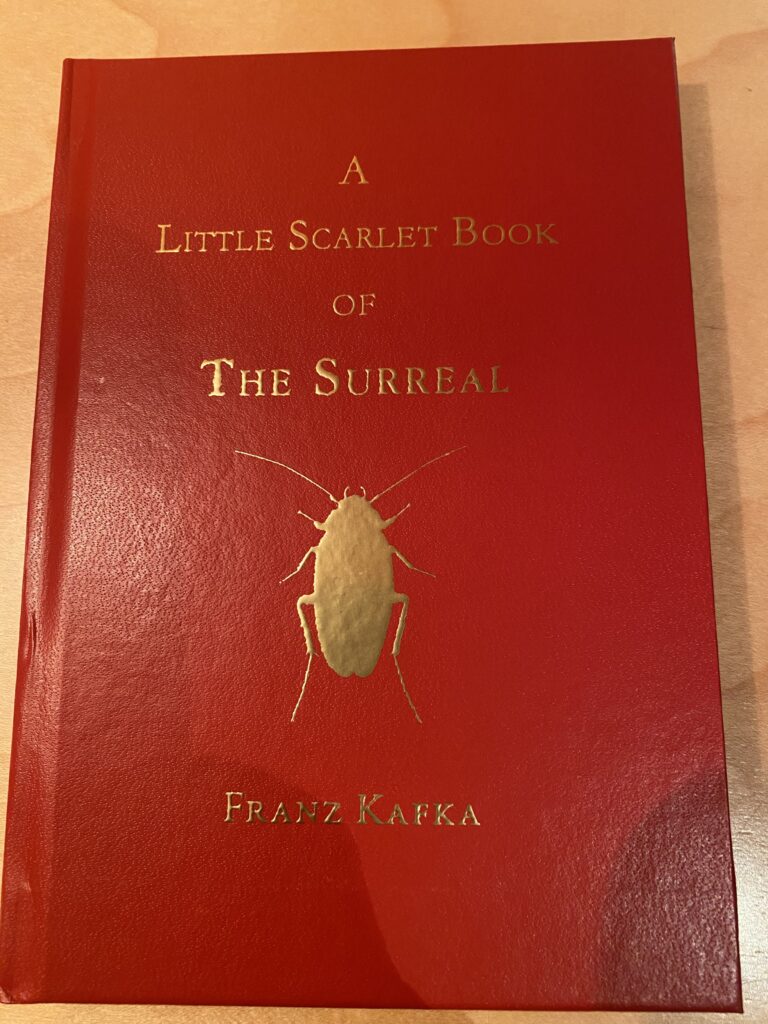
A Little Scarlet Book of the Surreal, by Franz Kafka (2026). Edited by Ben Keefe, signed and numbered, my copy is #65 of 350 copies. I was traveling when this book was released. It sold out quickly, and so I had to wait until it was listed by a dealer, in this case someone who had several copies for sale at a price just slightly above the original publisher’s price. Kafka is best-know for his cockroach story, “The Metamorphosis” (1915) as well as the novels The Trial (1924) and The Castle (1926). The term Kafkaesque is well-known, and I used it myself a few years ago in an essay or book review when I edited Prometheus, the Journal of the Libertarian Futurist Society. Kafka was a tortured person, and thankfully his works were not destroyed after his early death, as he wished. This collection gathers eight stories, including the memorable story he wrote shortly before his death, “The Hunger Artist.”
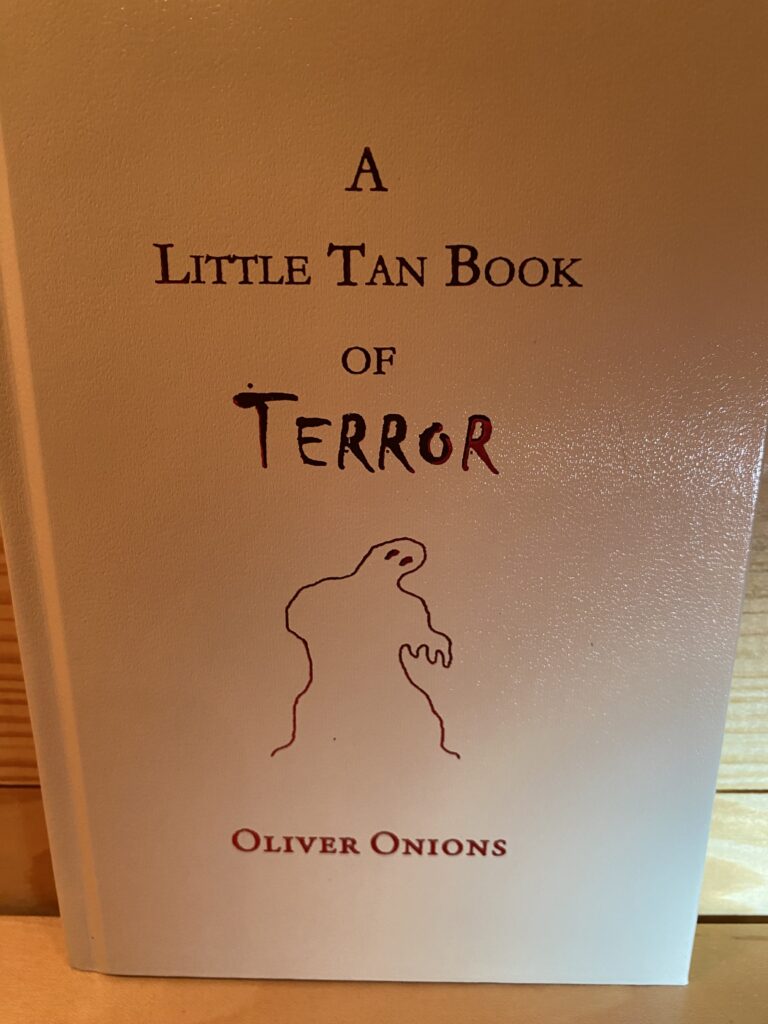
A Little Tan Book of Terror, by Oliver Onions (2026). Edited by Thomas F. Monteleone, signed and numbered, my copy of #33 of 350 copies. The cover’s ghost illustration is a near-duplicate of Rick Hatula’s book, A Little White Book of Ghost Stories, published in 2015, though the image is shrunk down from that book’s full-size image down to a modestly sized one that fits between the title and author. Only six of Onion’s stories appear here, and just one of his most famous one tales. Onions died in 1961, now largely forgotten. If recall, he’s mostly remembered for a handful of quiet ghost stories, such as “The Beckoning Fair One,” a tale of slow madness. Is “terror” the right word here? I’m not sure. “The Beckoning Fair One,” as an example doesn’t convey terror to me, but then I’ve read far darker horror than readers who first encountered Onion’s stories nearly a century ago.

As Borderlands Press wraps up it’s series on classic writers, it will be interesting to see who they feature from modern writers of horror. This would harken back to the days when they first started this series of Little Books, which featured writers such as Joe R. Lansdale, Peter Straub, F. Paul Wilson, and others. That was more than twenty years ago, and by then those writers were already famous. It’s a shame, though, that BP dropped the number of copies down from 500 to 350. For collectors and aficionados of horror and dark fantasy, one has to act quickly to get these books before they sell out. Maybe that’s the goal. Maybe there are other reasons. Anyway, as they say, “stay tuned.”
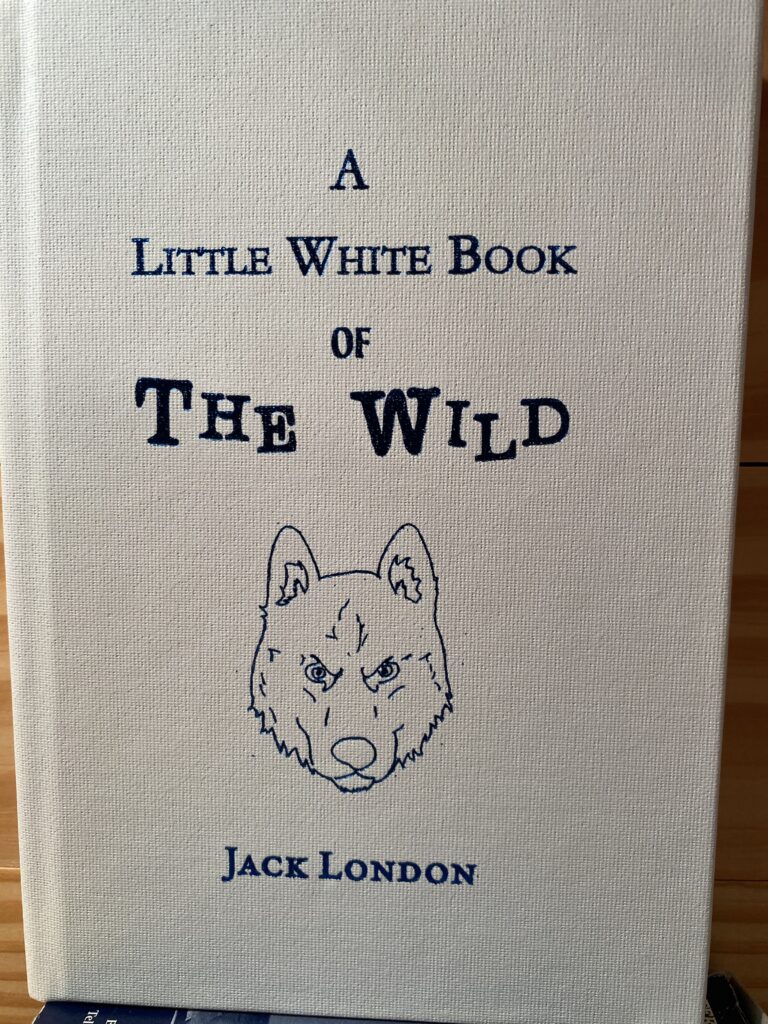
Jack London’s Little White Book

The 67th book in Borderlands Press long-running series of short (in size) and slim (number of pages) books is entitled A Little White Book of the Wild. This, of course, is nod to London’s perhaps most famous novel, The Call of the Wild. Aside from the title, the “white” in the Borderlands Press book also alludes to London’s adventures in the icy north of Alaska.

Edited by SF well-known writer, John DeChancie, this book collects five of London’s short stories, including one of most famous pieces, “To Build a Fire.” I read this story and The Call of the Wild many, many years ago. As to the other four stories between the covers of this book, I do not recall having read a single one of them. Also collected here is “A Thousand Deaths,” one of his earliest professional sales. This was a science fiction story sold to the pulp magazine, Black Cat. London (1876-1916) died young. His legacy is somewhat marred by accusations of not just racism, but also plagiarism and eugenics. He was a firm believer in socialism, writing the 1908 dystopian political novel, The Iron Heel. His feeling about socialism did wane near the end of his life. Perhaps current socialist poster-boy (er, poster-geriatric?), Bernie Sanders, drew his crusade against “oligarchy” from this novel? London also cared deeply about animals. All that aside, London will forever be associated with the Alaska gold rush.

At some point recently, Borderlands Press changed their usual print run from 500 to 350 copies of a book (there have been exceptions, but usually the number went above 500, not below). This, of course, means that anyone trying to collect the entire set of books will need to act quickly, or face the issue of buying from specialist book-dealers who buy multiple copies and then charge more than cover price.

As book #67 in the series, there are three more authors to round up this group of five. I wonder, of the writers in that era, who will be next…

A Pair of Borderlands Press Little Books

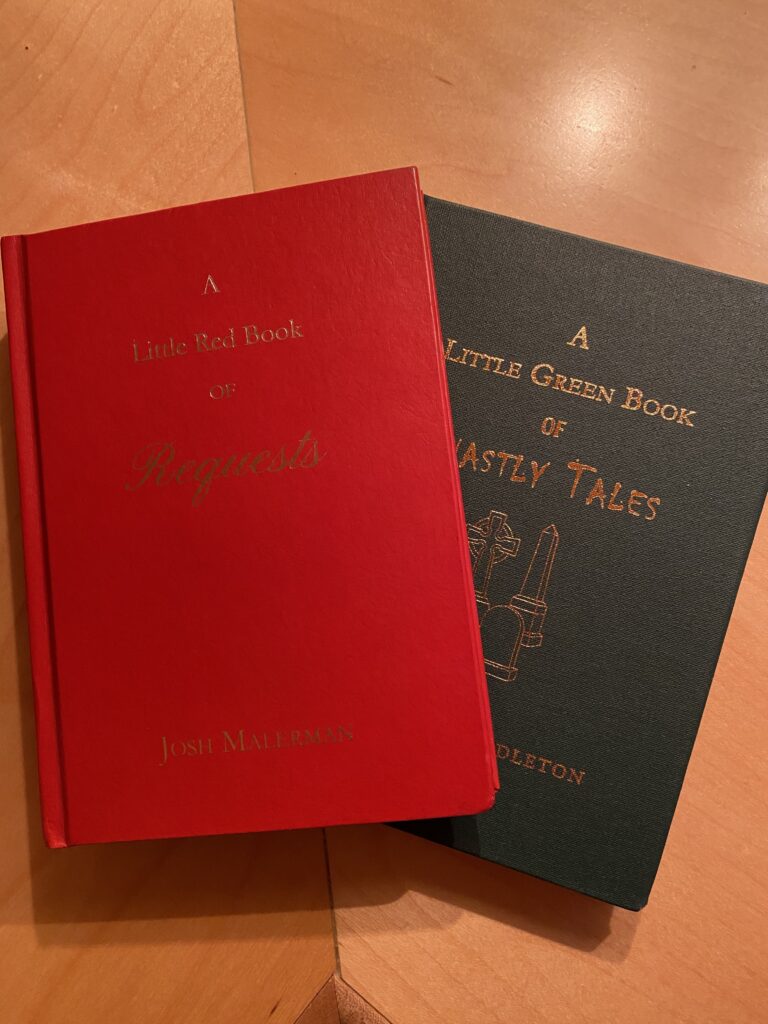
Adding new books in this series from Borderlands Press now has become a slow process of trying to hunt down rarities. Recently, I acquired one new and one old book at the same time. Also, based on the latest two books in the series, it looks like Borderlands Press has dropped the number of copies per book from 500 to 350, so anyone looking to collect all the books may have a hard time going forward, even with some of the more obscure authors.

Josh Malerman, A Little Red Book of Requests (2019). I did not expect to acquire this book. Whenever I’ve seen it listed for sale it’s been for $100 or more, and as high as $250. An opportunity arose, however, and I took a chance, ending up with a lucky find. There was a nervous moment when I received an email confirmation that the package had been delivered, but no package was on the porch. Then, an hour later, the package showed up. The slim book collects three of Malerman’s short stories, plus a brief one-page introduction from the author.


Richard Middleton, A Little Green Book of Ghastly Tales (2025). The latest book in the series, at least for now. This collection of 19 stories is edited by Nicholas A. Psaltos. I’ve never heard of Middleton, which is neat, as discovering writers from bygone times is always an interesting venture. Middleton committed suicide quite young, at age 29. He never achieved any fame in his lifetime (nor much so thereafter) aside from a story or two, but made a great impression on other writers.

With these two books, I’m now down to five in this series that I don’t have. Those five include three of the hardest and most expensive ones out there: books by Neil Gaiman, Joe Hill, and Thomas Ligotti. The other two (Brian Keene and Douglas Winter) aren’t quite as expensive, but also show up only infrequently on the second-hand market.

Another Little Book

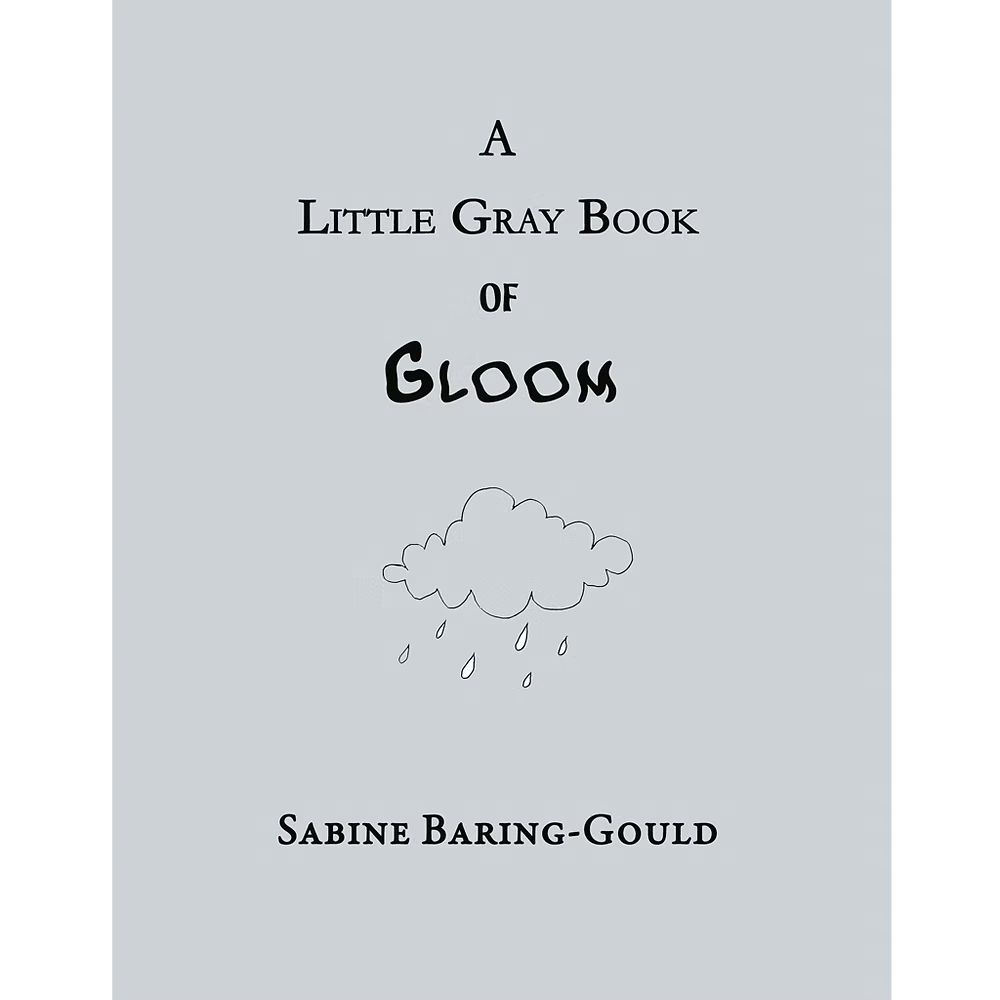
I picked up the latest copy in the series of Little Books from Borderlands Press. A Little Gray Book of Gloom, by Sabine Baring-Gould. This was another unknown author, at least to me, and collects eight short stories, plus a brief introduction by editor John Maclay, who once authored his own little book in the series.

My copy is signed by Maclay, and there’s a statement inside the cover that it’s number 378, with this edition limited to 350 copies. Either the limitation is a mistake, or this is one of those “extras” that gives a lie to the limitation number. Regardless, it’s a collection of stories by a bygone writer of fantasy, and I look forward to see what he wrote.

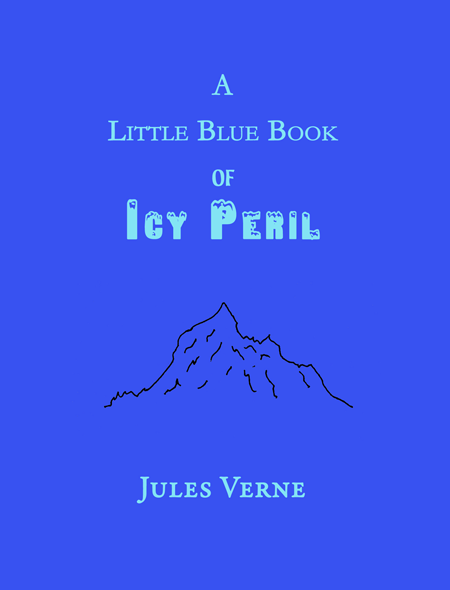
Book added: Jules Verne’s Little Blue Book of Icy Perils

Jules Verne (1828 – 1905) was a French writer. His most famous stories are Journey to the Center of the Earth (1864), Twenty Thousand Leagues Under the Seas (1870), and Around the World in Eighty Days (1872), all classic “science fiction” books. Back then, the term science fiction didn’t exist, but he’s since been hailed as one of the first science fiction writers. I’m not sure if I’ve ever read the orignal books, though I know the stories well. Somehere in my library I do have a copy of A Journey to the Center of the Earth.

Borderlands Press, continuing it’s mission to publish stories from past masters of horror, fantasy, and science fiction, recently published A Little Blue Book of Icy Perils, which collects three of Verne’s stories, plus a (bonus) sonnet. Edited by Tom Connair, and limited to 500 signed and numbered copies, it joins the ever-growing stack of such books in my library. The copyright date states 2024, but I believe it was offered for sale in early 2025. At least, that’s when I saw it offered for sale, and then bought a copy.

I much prefer the rougher cloth bound versions of these books, at least compared to the smooth bindings. The various bindings and sizes means that these books aren’t 100% uniform, but it is what it is. The series continues, at least for now. If I were the editor in charge, I might pick other writers, but the fact that I’m not the editor in charge means that I’m always surprised, and that’s a good thing!

I also learned from the introduction, that there was no balloon ride in Around the World in Eight Days. My perception of this book had been clouded by various movie versions, where balloon rides were de rigeur. It was strange, then, to read in the first paragraph of the first story about balloon rides. C’est la vie. Verne these days, then, is more well known for cinematic interpretations than his actual words. Quelle surprise.

Book added: David Silva’s Little White Lies

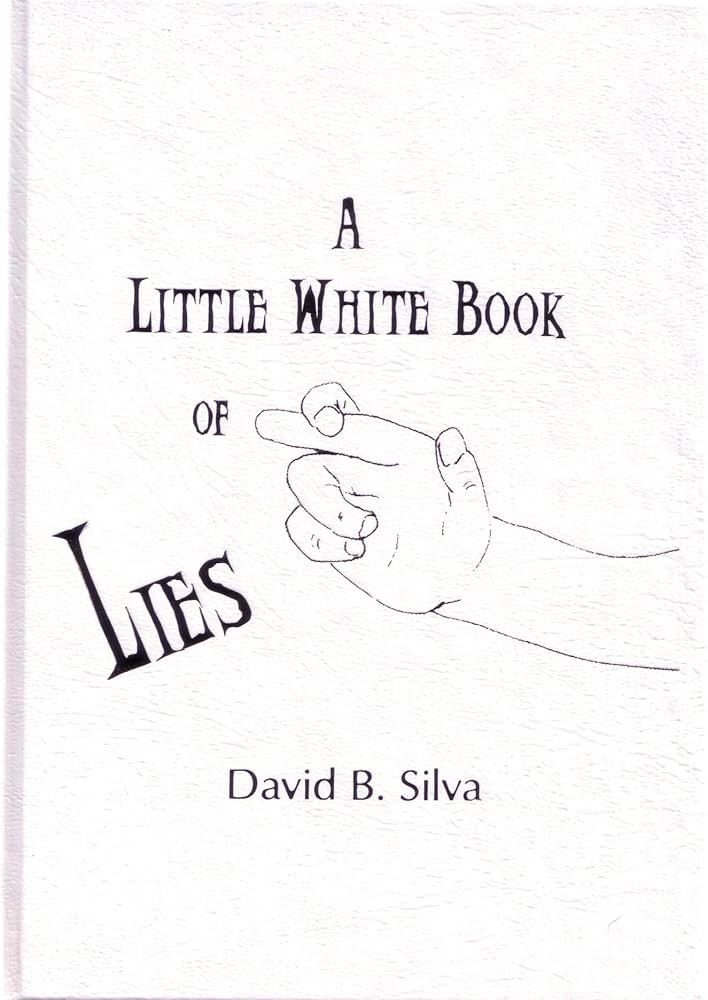
David B. Silva’s entry in the Borderlands Press little books series, A Little White Book of Lies, was until recently one of seven books in that series that I lacked (now down to six!). Originally published in 2005, this slim book is quite hard to find (I think I’ve seen it listed only once or twice in the past three years). Then again, that’s the fate for almost all the early Borderlands Press little books, ie. those published before 2006.

I found a copy online many months ago, but at that time considered it outside my budget. However, with a recently acquired gift card in hand, I secured the book for around $6 of my own money. Cheapskate? Opportunist? Maybe a bit of both. In my defense, I do buy the most recent ones direct from the publisher, and so they actually get my money, vs. dealers and resellers who bump up the prices to whatever the market can bear.

Silva’s books contains five stories, each centered around a lie, plus a brief introduction. Four of the stories have been published elsewhere, and one seems original to this collection.

This is first time (I thinkcorrection: see below) that I’ve read anything by Silva. [Edited 1/2/2025: apparently I have read some of his stories before, as I found three anthologies in my book shelves with Silva stories: Night Visions 10 (Subterranean Press) with five stories, and one story each in Cold Blood (Ziesing) and Obsessions (Dark Harvest) and possible there are others.] From what I can tell, there is no Wikipedia entry on Silva, but Locus Magazine has an obituary, listing his death in 2013—eleven years (!) ago as I write this brief entry. According to that brief obituary, Silva died at the relatively young age of 62. Perhaps best known as the editor of The Horror Show (1982-1991), he also wrote a few novels and short stories.

Now, only six books in the series remain out of my grasp, and all are of the “insanely pricy” variety: Thomas Ligotti and Neil Gaiman I can understand; Joe Hill, maybe a rarity by association, although he’s been making a name for himself as well; Brian Keene and Josh Malerman, not sure why, but maybe I missed that bus; Douglas Winter, on the low end of the scale, yet still a worthy editor/writer. Prices for these books when they appear for sale (which is rare) range from $70 to $700. Quite a range there. Then again, I recently saw a copy of F. Paul Wilson’s book listed online for nearly $800. If ever there was a spit-take moment, that would be the time for one, as I bought it for a fraction of that price when it first was published. Still, with only 500 copies (for the most part) of these little books, and each numbered and signed, they’ll only get rarer. Unless I get lucky, this might be as fast as I go in the past, which is annoying, but acceptable.

Books added: A pair of little yellow ones

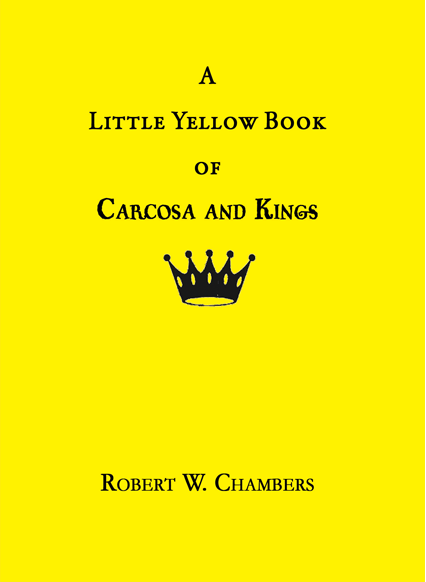
A Little Yellow Book of Carcosa and Kings, by Robert W. Chambers was published in 2022 by Borderlands Press. Limited to 500 copies, it quickly went out of print. I found a copy online recently for a decent price vs. the usual “twice the going rate or far higher” prices usually listed for out of print books.

This book is numbered and signed by editor Lisa Morton, as Chambers died quite a few years ago. I’ve read a couple of Chambers’ short stories in paperback collection that contains more of his stories than the Borderlands Press book. Those stories weren’t as gripping as some other writers from the same time period, but apparently he has a strong core of fans. It contains the four stories related to the King in Yellow: “The Repairer of Reputations,” “The Mask,” “In the Court of the Dragon,” and “The Yellow Sign.”


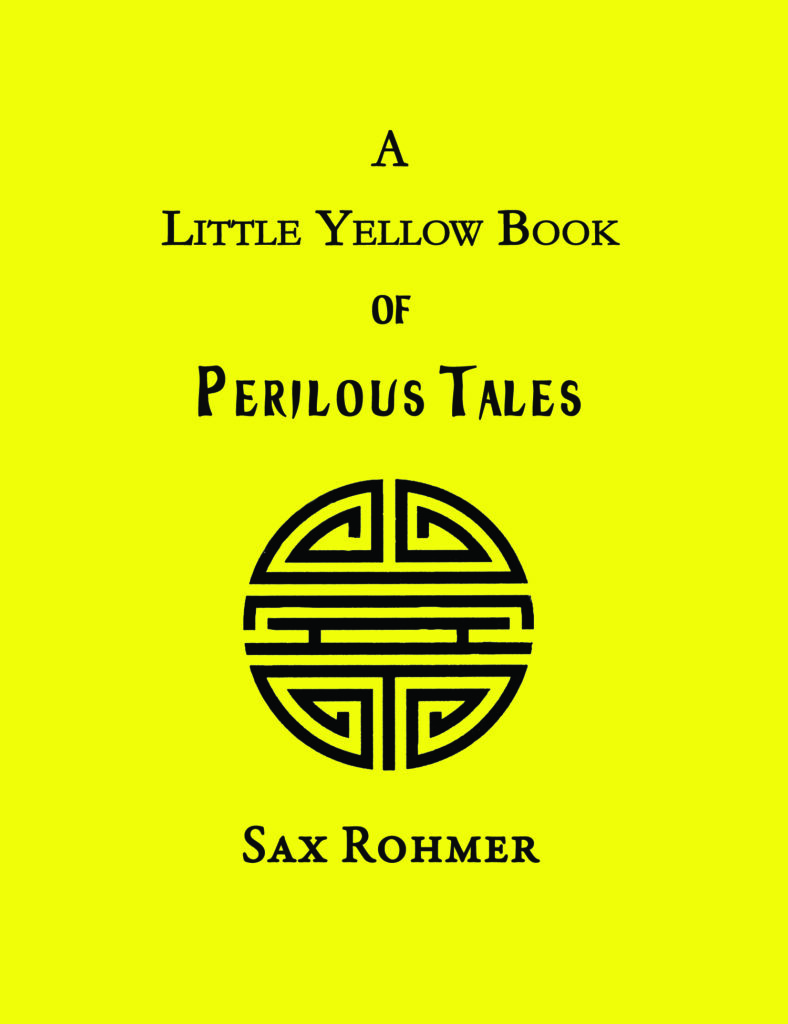
A Little Yellow Book of Perilous Tales, by Sax Rohmer (2024). This latest entry in Borderlands Press’ little books series is edited by one of my favorite writers, F. Paul Wilson. Wilson’s written his own imitations/pastiches of Rohmer’s Yellow Peril tales. So, what better writer to bring out a new collection of Rohmer than someone familiar with Rohmer’s work, someone who lacks all fear in the publishing world? Also limited to 500 copies, and signed by Wilson, it’s the fourth “yellow” books in this series. (In both this case, and for Chambers, the “yellow” in the title certainly applies).

I’ve never read anything by Rohmer, but I’m familiar with the name. Born Arthur Henry Ward, Rohmer was a English novelist whose first published story appeared in 1903. Rohmer died in 1959, succumbing (ironically) to Asian flu. Noted for his “Fu Manchu” tales, Rohmer’s work first arose in the aftermath of the Boxer Rebellion. This makes sense, given the “yellow peril” nature of his tales.

Perilous Tales collects four stories, three of which feature another Rohmer character, Madame de Medici. Wilson’s made his own spin on this character in his Repairman Jack novels, plus a couple of short stories. “The Zayat Kiss,” a non-Medici tale, features an early appearance of Fu Manchu. There’s a great introduction by Wilson, which covers his interest in and literary relationship to Rohmer. He also wrote brief prefaces to each story. Such small details are highly valued, at least by me.

As far as the series of Little Books from BP goes, I now only lack seven books. All of those seven are in the hard-to-find or damned-expensive variety. All of those seven are long out of print, so finding them at “acceptable” prices will be a matter of luck. It will be interesting to see where this series goes, as there are many possibilities, both in terms of the past and the present.

Books added: More F. Paul Wilson

Over the years, Gauntlet Press has published many of F. Paul Wilson’s books, often (but not always!) limited to 500 copies, and usually priced at $60 (or higher, if lettered vs. simply numbered and signed). I own the complete set of the main “Repairman Jack” novels from Gauntlet, but at some point I drew the line with the two trilogies of “Young Jack” and “Jack’s Early Years.” The first trilogy was centered around Jack as a teenager living on the edge of the Jersey Pine Barrens. The second trilogy picked up a few years later, as Jack arrived in New York as a college dropout, and before he picked up the “Repairman Jack” monicker.

However, as a result of recent impulsive actions and approachable prices, I now have all three books in one the Gauntlet Press “early years” trilogy, Cold City, Dark City, and Fear City (published between 2012 and 2014). All three are signed books, and fit in nicely with my other Gauntlet Press books. For some strange reason the second book in the trilogy is limited to 400 copies, while books one and three are limited to 500 copies!

Another trilogy, under the monicker “ICE,” includes the novels, Panacea, The God Gene, and The Void Protocol. When I first heard of these books, I went the Tor hardcover route. Then, I found a copy of Panacea online for a bargain price. When I recently stumbled across the Gauntlet Press edition of The God Gene, I submitted a bid and ended up the winner. This copy is marked “M” as part of a lettered edition, vs. the typical numbered editions that I’ve owned of the Gauntlet Press books. Now that I have two of the three books in Gauntlet editions, the third volume beckons.

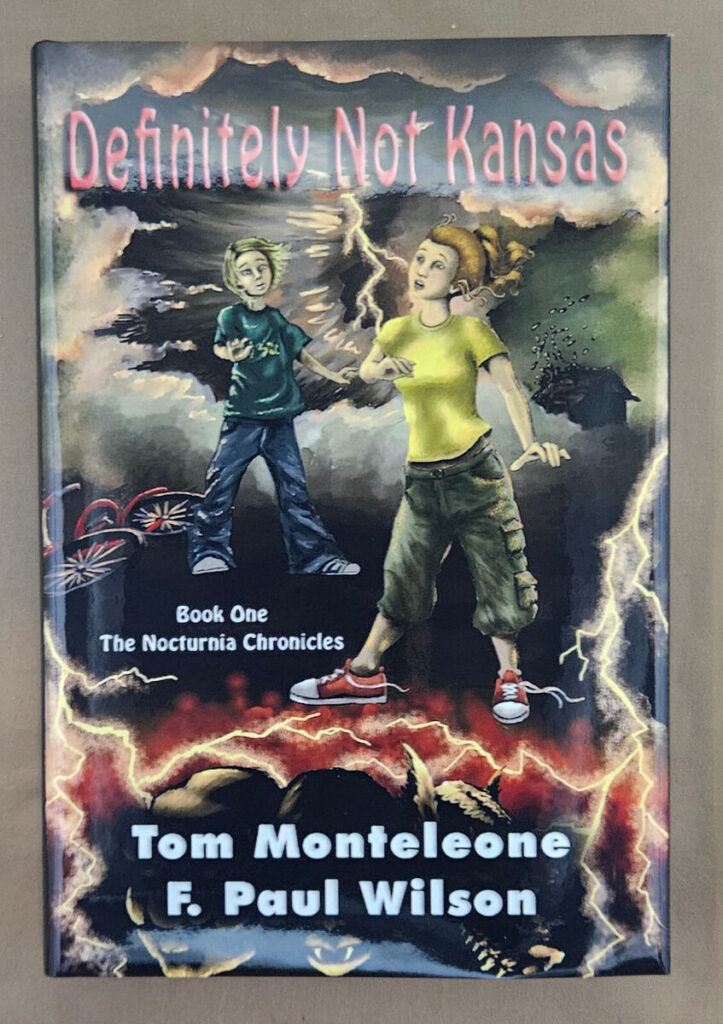
I also bought, at what I consider a reasonable rate, the first book in a(nother) trilogy, one that was a collaboration between FPW and Tom Monteleone, published by Borderlands Press. The trilogy is called the Nocturnia Chronicles, aimed at the young adult market. The first book in this series is called Definitely Not Kansas (published in 2013).

The title seems to be a play on a line from the famous movie, The Wizard of Oz (“Toto, we’re not in Kansas anymore,” if I remember it correctly). The books were published as a collaboration between two small press publishers, Borderlands Press and Gauntlet Press, with the hardcover edition limited to 350 copies, and signed by both authors (paperback editions also were published). The signature sheet is slightly smaller than the book, which is a bit of a head scratcher. The book contains an afterword section by Wilson and Monteleone where they describe how they conceived of the series (FPW’s comments also appear in the third volume of his short story compilation, The Compendium of F). The next two books in this series—Family Secrets and The Silent Ones—now are on my radar.

Lastly, Double Threat and Double Dose were a pair of linked books published by Gauntlet in partnership with Borderlands, in 2022 and 2024. I recently won an online auction for the Gauntlet/BP editions., and read both books over the course of a weekend. They fit into Wilson’s “Secret History” world. While most of the Secret History books take place on the East Coast, these two books take place in the Southern California desert. They’re also a riff on one of his earlier books, Healer, switching the gender of the main character, and placing her in the present vs. somewhere in space in a future history. There are some loose ends in the book that probably never will get resolved, but on the whole they were an enjoyable read. Aside from the link to Healer, there’s also a link to his novella, Wardenclyffe, the ICE trilogy, and maybe some other Easter eggs that I didn’t catch.

As an aside, I have some quibbles with the design team at Gauntlet Press, as well as Borderlands Press. First, there is no consistency with the “City” books in the covers. Neither the spine nor the front cover use a consistent font, with Cold City on the spine in massive bold white text, and Dark City and Fear City in smaller text but one in all caps and the other in title case. When all three books are side by side, aside from the word “city” in the title, they look like they’re published by different companies. Second, why publish two books limited to 500 copies, and one limited to 400? This makes absolutely no sense, but then Gauntlet was never consistent with the Repairman Jack novels. Although most are limited to 500 copies, four are limited to 475 copies, one to 450, and one just to 375. Maybe there are no more than 375 completist collectors…

The same criticism of design consistency could be said for the Nocturnia books; although I only have the first one, I have seen images of the second and third books. If a publisher knows they’re going to have a trilogy on their hands, maybe keep the design somewhat consistent? This isn’t just an issue with these books. The Tor hardcovers of the teenager Repairman Jack started out one way, then completely changed. Maybe that was a marketing move; the person in charge of the first book left, or someone decided they weren’t moving fast enough. In the case of small press publishers, unlike someone like Tor Books, you’re likely not seeing your book in the local Barnes & Noble, so please make it a point to come up with a plan for all the books in that series.

At least Double Dose and Double Threat are somewhat consistent in design, although whoever printed the cover of the first one, clearly didn’t measure the book, as the red border of the spine bleeds at least a quarter of an inch onto the front cover. As far the font used for Wilson’s name on the books, the designer should be ashamed, as certainly they had far better fonts to pick from than a Courier wannabe? Also, the lettered edition of Double Threat apparently merits a bonus “afterword,” which is frustrating. Then again, maybe that was the incentive to shell out more money for that edition.

Books added: McCammon, Wilson

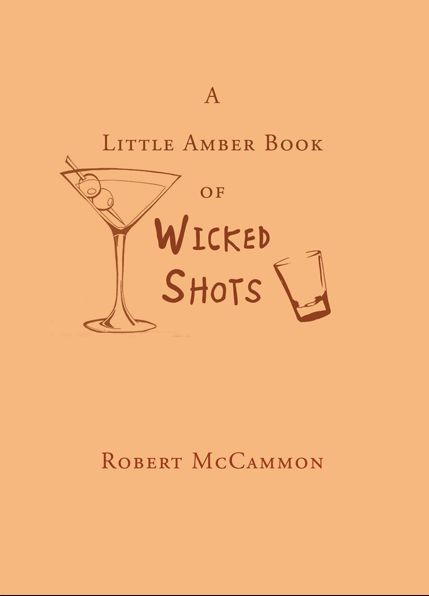
I went slightly above my hard budget for this entry in the Borderlands Press little book series, Robert McCammons’s A Little Amber Book of Wicked Shots. Although most of the “little books” are limited to 500 copies, in this case they splurged and went up to 750. I’m not quite sure why exceptions to the 500 number rule have been made in a fairly small number of cases.

Whenever I’ve seen this McCammon book for sale, it’s usually been for over $100. In this case, two books popped up around the same time and for the same amount–each for $75. When I expressed interest in one of these books, and the seller enticed me with a slight discount, I went ahead and bought it. As a McCammon fan, I dove into the book right away.

McCammon’s book contains three short stories, each preceded by a recipe for a unique drink mix—hence the title of “Wicked Shots”. The drink itself appears in each story, but isn’t an integral part of it. The first story is about a serial killer of children who encounters a ghost, with drastic results. Set in the late 1950s in Alabama, it’s a chilling tale set in a particular time, but featuring a type of killer who knows no bounds in time. The second, about a former professional hockey player in New York, bleeds into fantasy and alternate realities. The third, about the dog-eat-dog corporate world, lacks a little power compared to the other two stories.

With this book, I’m now down to eight out of the 60 plus books in the Borderlands Press little book series that I lack. Of course, those remaining eight books are the hardest and most expensive books to find (four are from Series I alone). Twice I’ve missed out on bids for one particular author. As far as the others, each copy that I’ve seen for sale has been outside my budget. All save one of these books are early in the series. For some unknown reason, the one that’s more recent is either hard to find, or it’s priced far beyond other books published around the same time. De gustibus, I guess.

F. Paul Wilson’s novella, The Peabody-Ozymandias Traveling Circus & Oddity Emporium, published by Necessary Evil Press, has eluded me in a couple of attempts to buy the book. When I found it for sale online at Half Price Books for $50, I gritted my teeth and paid the sum. Published back in 2007 and limited to 500 signed, numbered copies and 26 lettered copies, of which this is #133. From what I’ve experienced, this book usually sells for $100 for more. This copy has some faint spotting at the top, but otherwise looks in good condition.

TPOTCOE, to shorten the title, is comprised of material originally published in the HWA anthology, Freak Show, with added material to flesh it out and make it a coherent story. As it’s not included in The Compendium of F, Wilson’s three book set of collected short stories, I had to get this book. Also, I used to own a paperback copy of Freak Show, but lent it out years ago and it was never returned.

The story fits into Wilson’s wide-ranging Secret History of the World, in this case about a traveling circus of “freaks,” all touched by the Otherness, all apparently eager to see it take over the Earth.

Books added: Conan Doyle and de Lint

I can’t stop now.

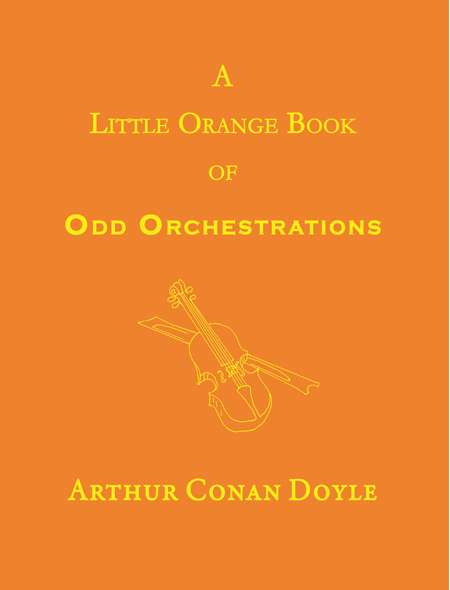
Even though there are nine Borderlands Press little books that I don’t have, all of which are either insanely hard to find, or far beyond prices that I’m willing to pay, I continue to buy new books in their series. The latest book in their “Past Masters of Horror & Fantasy Series,” of which this is their first in “Series V,” is a collection of stories by Arthur Conan Doyle. Entitled A Little Orange Book of Odd Orchestrations and limited to 500 copies, their choice of authors continue to surprise me.

I bought this copy from the publisher, who charges a premium for shipping the book in what’s basically a padded envelope mailer. C’est la vie. Still, I’d rather support the publisher, whenever possible, since that will help them to keep publishing books in this series.

My copy is numbered #17 of 500, and signed by the editor. With four more books in Series V before they either switch to a different theme, or decide to continue with “Past Masters” one wonders who is next on the list. Kipling, maybe? I expected Clark Ashton Smith (CAS), since they’ve published H. P. Lovecraft and Robert E. Howard, but so far that hasn’t happened. Hello, BP, I’m willing to edit any Jack Vance or CAS collection…


Between 2003 and 2008, Subterranean Press published three books by the noted fantasy writer, Charles de Lint, collecting many of his early stories. These books, A Handful of Coppers, Quicksilver & Shadow, and Woods & Waters Wild, were a few of the many de Lint books published by Sub Press around that time. Until recently, I’d remained ignorant of these books (strange, given the fact that I was a huge de Lint fan since the early 1990s). Over the years, I’d picked up only a couple of de Lint’s Sub Press books: Triskell Tales (2000) and The Road to Lisdoonvarna (2001), probably because the price at the time was “right,” of I found them in person at a convention (at that time I didn’t really buy books online). More than two decades passed before I bought any other of de Lint’s Sub Press books.

All of de Lint’s Sub Press books went out of print fairly quickly. Checking their web-site after the fact resulted only in regret and envy. Recently, as I’ve started looking more at the secondary market to find some out of print books, I’ve become aware of the other Sub Press de Lint books, copies of which now are available to purchase from online resellers. In some cases, the prices are beyond the original cover price, and a choice must be made. In other cases, I “go for it” and hold my breath as I await the shipment to see if the books matches the online description.

I bought the first two “early stories” books last year (2023), inspired as I was while in the midst of re-reading some de Lint novels. For many years I bought any paperback or hardcover de Lint book I could find in local stores (when that was an option, before the internet and bad business decisions killed several physical stores), then I took a break from SF and fantasy books. In the past couple of years I’ve looked back at favorite authors and tried to find books that I missed. Hence, the search for some de Lint books. Then, a few days ago, tempted by a huge discount, I bought Woods & Waters Wild, the last of the three collections of early tales.

All three books in this series that I now own are signed by de Lint. They’re not “limited” in the sense that they are numbered or granted some special format. The “signed, lettered editions” were listed at $175, $200, and $200, respectively, as stated inside the covers of my books.

Who pays such a price, I thought? Is a number in a book worth far more than $20, or the then original cover price of $40? To someone, sure. To me? Not so much. I have no idea how many copies were published in these states. They do say “signed, limited edition” in the jacket flap, but there’s no indication as to the limitation number. It would have been nice to see something, maybe on the last page of the book, stating that it was limited to X number of copies, whether that was 1,000 or 2,000 or other.

There are still quite a few of de Lint’s Sub Press books that I don’t own. Some are less tempting than others. I’ve already acquired Eyes Like Leaves and Promises to Keep. Some of these books appear to be aimed at the juvenile market. If the right opportunity arises, maybe I’ll try to get more of his books. There’s a measure of regret in any current purchase actions, as I’m not benefitting either the author or publisher. Either you jump right away and buy what the publisher offers, or you look for a dealer who bought books at a discount who now sells them at a premium, or a prior buy offloading their copies. Sometimes you get lucky and the seller offers the book at a discount. Buy it then, reader, buy it then.

My only quibble is that the publisher wasn’t consistent in their font and format used for these three books. This is a pet peeve of mine: if a publisher knows they are planning a series of books by the same author, don’t freakin’ change the format, especially on the spines, of the books in that series! Even the font inside the books is different. You’d think that different artists, editors, typesetters were hired with each book, and every one of them said, “let’s do something different!”

« Older posts

© 2026 Anders Monsen

Theme by Anders NorenUp ↑

css.php