There’s a special circle in cell for people who stamp their ownership in books, and then don’t destroy those books before passing them on…
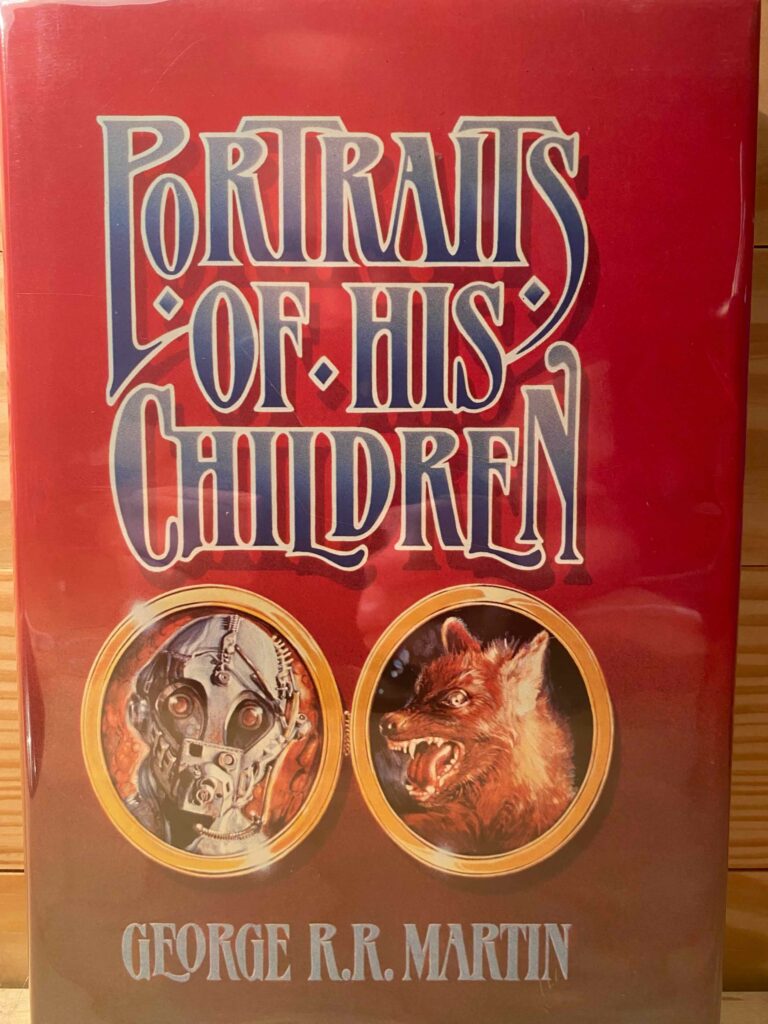
In February, 2026 I acquired a copy of the trade edition of George R. R Martin’s 1987 collection, Portraits of His Children. The book was in pristine condition, but on the first page inside the book some had stamped their name in a way that never can be undone: “Library of [name removed] M.D.” How nice of you, Dr. X, to have your own personal stamp to mar the books that you own. Has Dr. X now shuffled off his mortal coil, and his book then passed to some dealer/seller to push the book along? Possibly so. I’m almost tempted to tear out that page. Instead, I may look for another copy without such a stamp, then foist this book off to someone less finicky.
All grumbling aside, this book collects 11 stories from Martin’s early years as a writer, when he wrote SF stories, and before he ventured into fantasy with the Game of Thrones series of books and TV shows. These were stories published in Analog and Asimov, as well as anthologies. The introduction is from Roger Zelazny, an SF/fantasy writer. The publisher: Dark Harvest—whose first book was by Martin, a book apparently only published in a limited edition (no additional trade edition), and it’s quite expensive on the current used book market. I used to own a couple of Martin novels years ago, and gave them away. I never got into Game of Thrones, so I only have this book because I’m trying to collect all books published by Dark Harvest, a small publisher that existed between 1983 and 1993. Martin’s novella, “The Skin Trade,” is one of the best stories in the Night Vision anthologies.
One of my current goals is to try and complete my collection of books from Dark Harvest. This was a small press publisher active from 1983 through 1993. During that time they published just over 50 books. I still lack a handful of hard to find Dark Harvest books, and was able to add a pair of these recently.
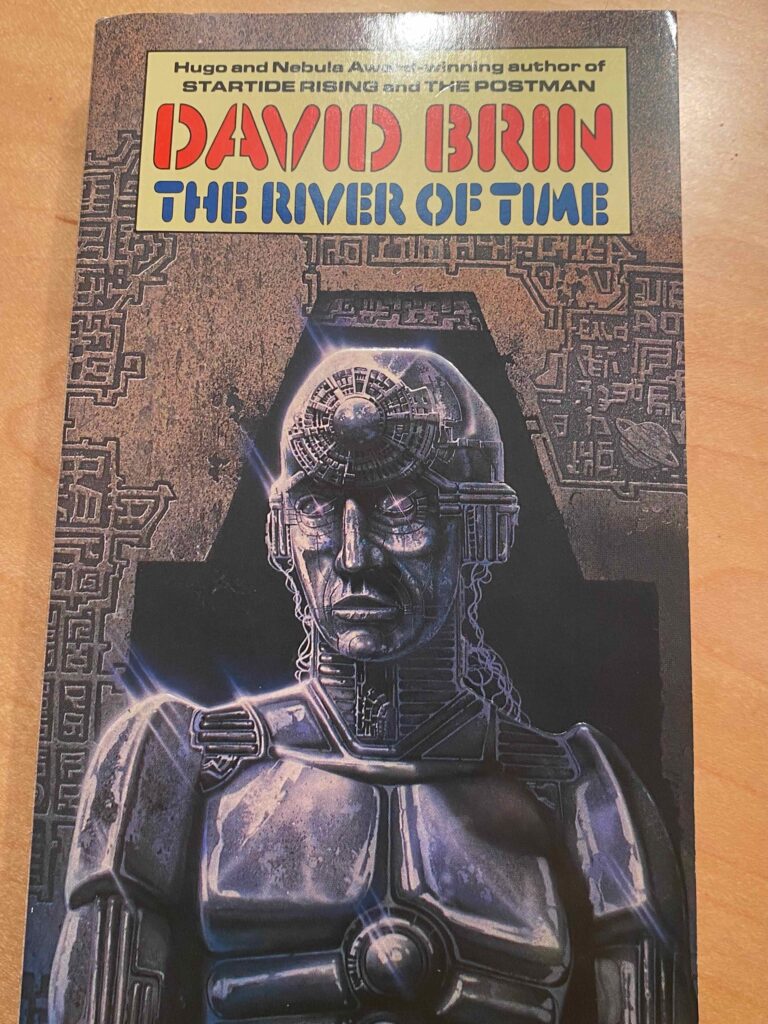
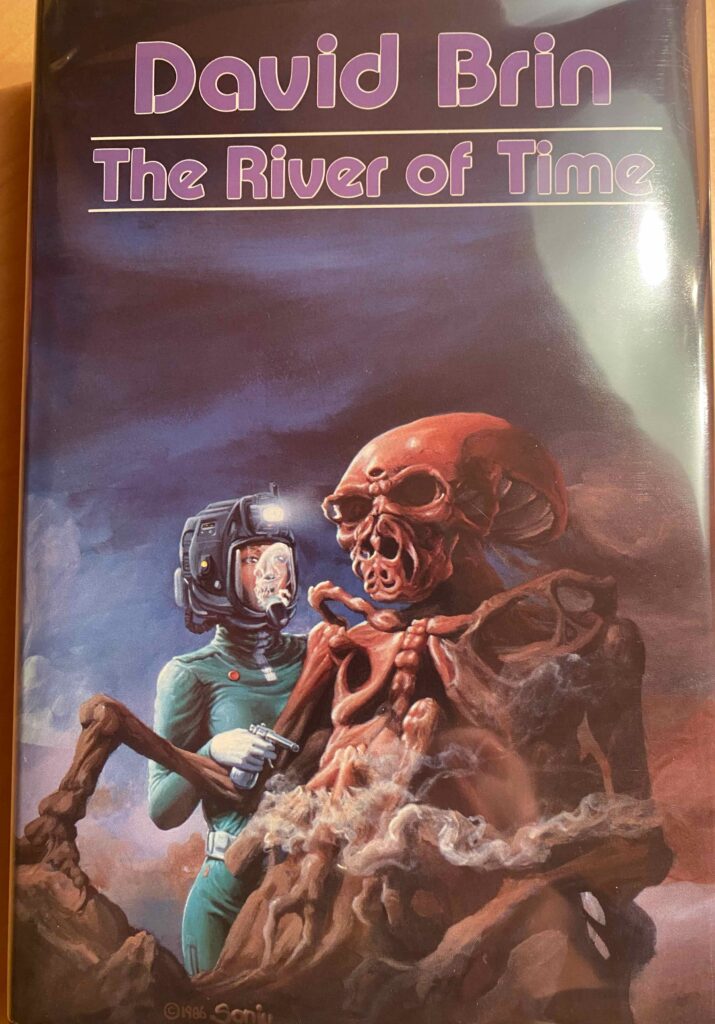
David Brin, The River of Time (1986). Back around 1990 or so, I bought a British paperback edition of this book. Then I bought a bunch more Brin paperbacks, although for some reason I stopped keeping up with his fiction after a while.
The British paperback edition sports a neat cover, but the Dark Harvest book came out one year prior to the paperback edition, and is the true “first edition.” The River of Time collects 11 short stories, grouped under four headings: Destiny, Recollection, Speculation, and Propagation. This Dark Harvest book is the trade edition, not signed by Brin. Still, it’s in great condition, which matters more to me than a signature.
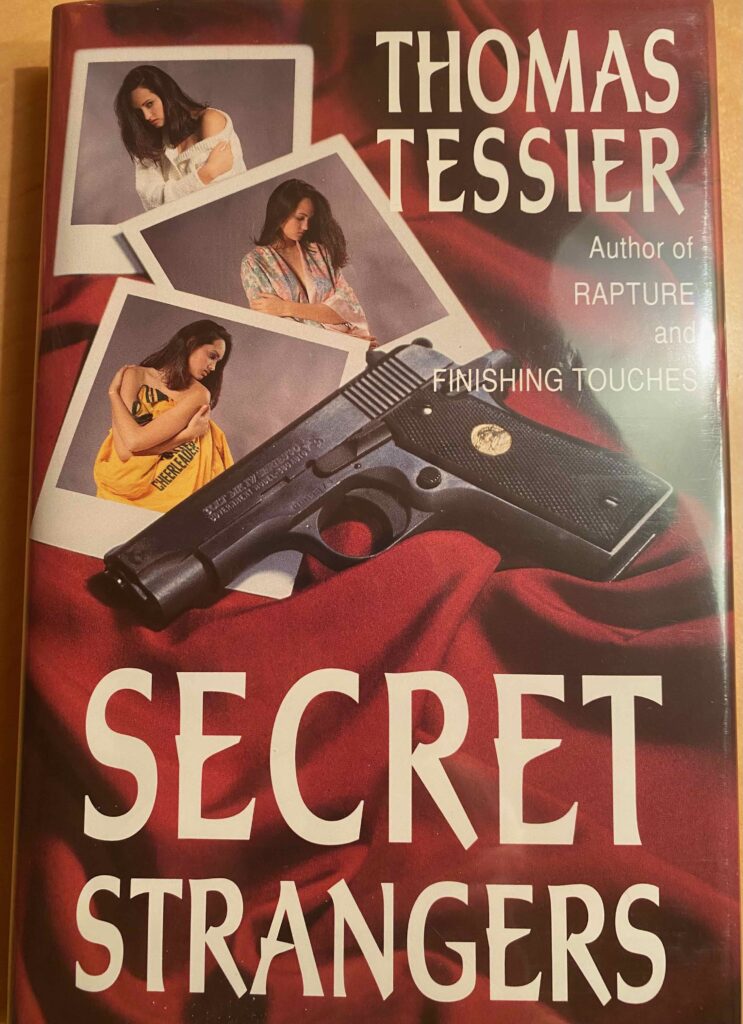
Thomas Tessier, Secret Strangers (1992). I’ve never read anything by Tessier. Last year, while at a bookstore in Mesa, Arizona, I considered buying a copy of this book. Back then I was deterred by the price as I considered it priced a little high. This copy is one of the signed & limited books, #19 of 250 such copies.
Reviews don’t appear to be kind to the book, citing the main character. I’ve just started reading Secret Strangers, and while the main character isn’t very likable, nor seemingly intelligent, she won’t be the first such person in fiction.
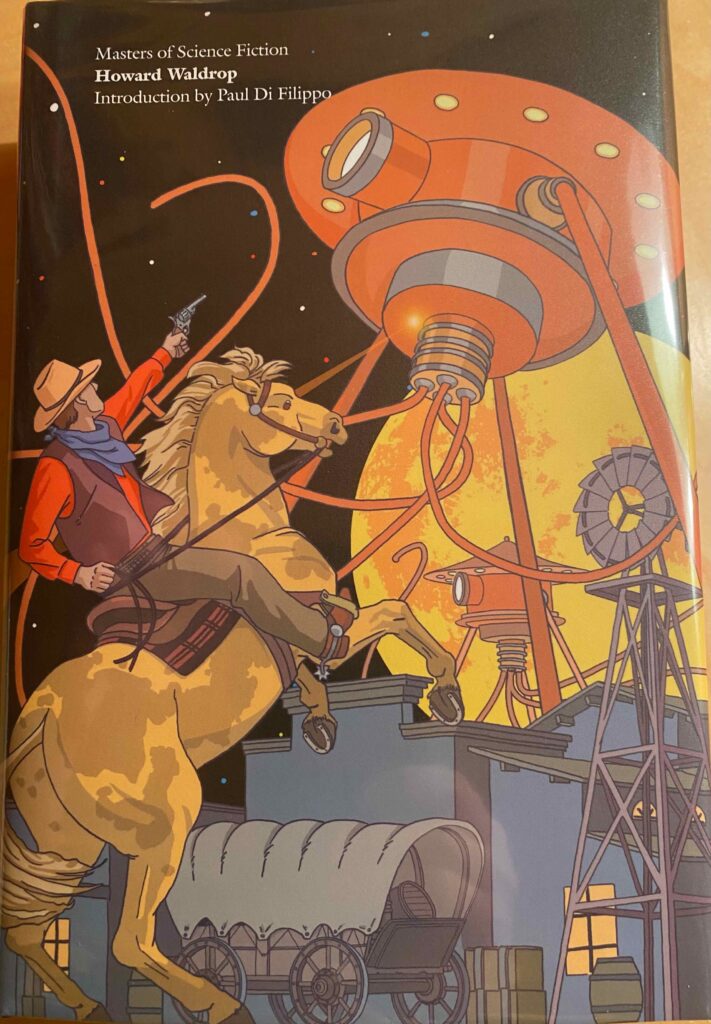
Centipede Press just released the latest book in their series honoring great SF writers, focusing on Howard Waldrop. The books in this series tend to be massive, and the Howard Waldrop edition is no exception. Listed for $85, the book is already sold out from the publisher, just a week after its release. It’s too bad that Waldrop isn’t around to see the reception of this book, as he died just two years ago, on January 14, 2024.
Clocking in at 1040 pages, the book is limited to just 500 copies; my book is number 407. It’s signed by Waldrop, Paul di Filippo, and artists Jim & Ruth Keegan. Paul di Filippo wrote a nice introduction, but then few people have anything bad to say about Waldrop. I met him only once in 2005, when I asked him to sign my copy of Howard Who? even though the book already was signed. All he did was write “I’ve already signed this one,” then added the date, plus “and earlier.” I think that curmudgeonly note almost means more to me than his signature.
As I own most of Waldrop’s books, I may already have read most of the stories in this collection. I think I spotted some that I had not read, so those now are high on my list of next stuff to read. Kudos to Centipede Press for yet another fantastic publication. My wallet shudders at the sight of their forthcoming books this year, as there are several great titles listed.
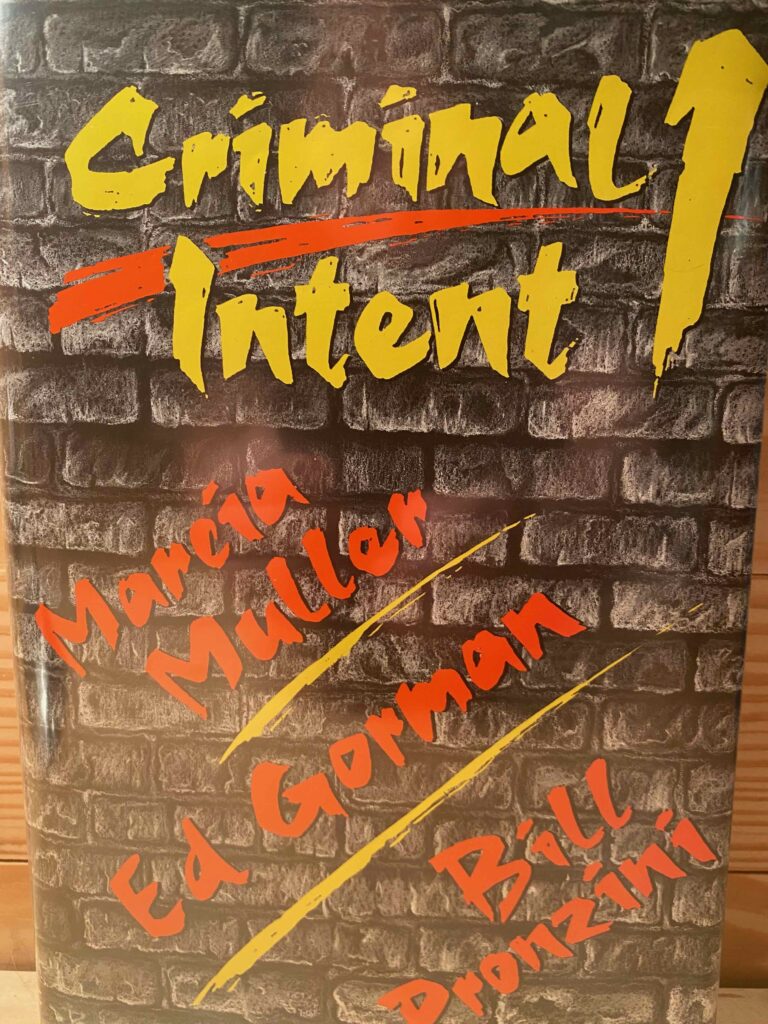
Dark Harvest’s Night Vision series was a masterpiece in horror anthologies from 1984 to 1991. When the publisher switched focus to mystery fiction in the early 1990s, they apparently tried to recreate the magic (and format) with Criminal Intent 1 (1993). Boldly flagged with the number “1,” the venture sadly failed, and Dark Harvest produced no more books after 1993, and thus, no additional anthologies that received the addition of a number after the title.
The format: three writers would submit 100 words of original fiction. Some writers would be established names in the field, others would be new, talented voices. Criminal Intent 1 includes one story each from Ed Gorman, Bill Pronzini, and Maria Muller. All three name, by that time, appear to be established writers. It’s a great concept. Too bad it never went further.
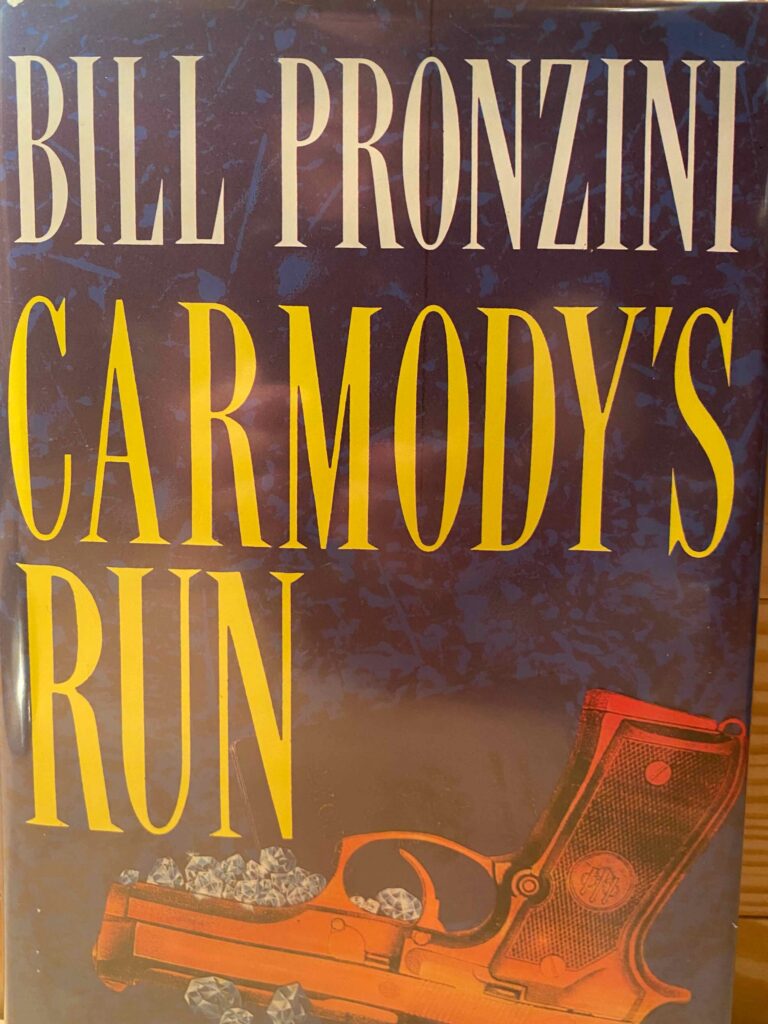
Bill Pronzini contributed another book for Dark Harvest in 1993: Carmody’s Run. This book contains four stories featuring his character, Carmody. All the stories were originally written and published in the 1970s, and there’s an introduction about the character that appears to be written specially for this book.
Sadly, my copy has two tears in the dust jacket, one in the front, and one in the back. That’s what happens sometimes when you buy things online, and actual photographs are not included. Still, for $15 it’s not a bad deal.
According to ISFDB, these were the last two Dark Harvest books published. However, I’ve seen a pair of Lawrence Block books from Dark Harvest listed online, not in the list from that reference site. Ironically, just as the first Dark Harvest book—by George R. R. Martin—generally starts above $200 from current dealers, one of those Block books also appears to fetch a high price. So, the modern collector gets to bookend the cost of acquiring a complete set of Dark Harvest books with a pair that cost more than 10x the price of some books.
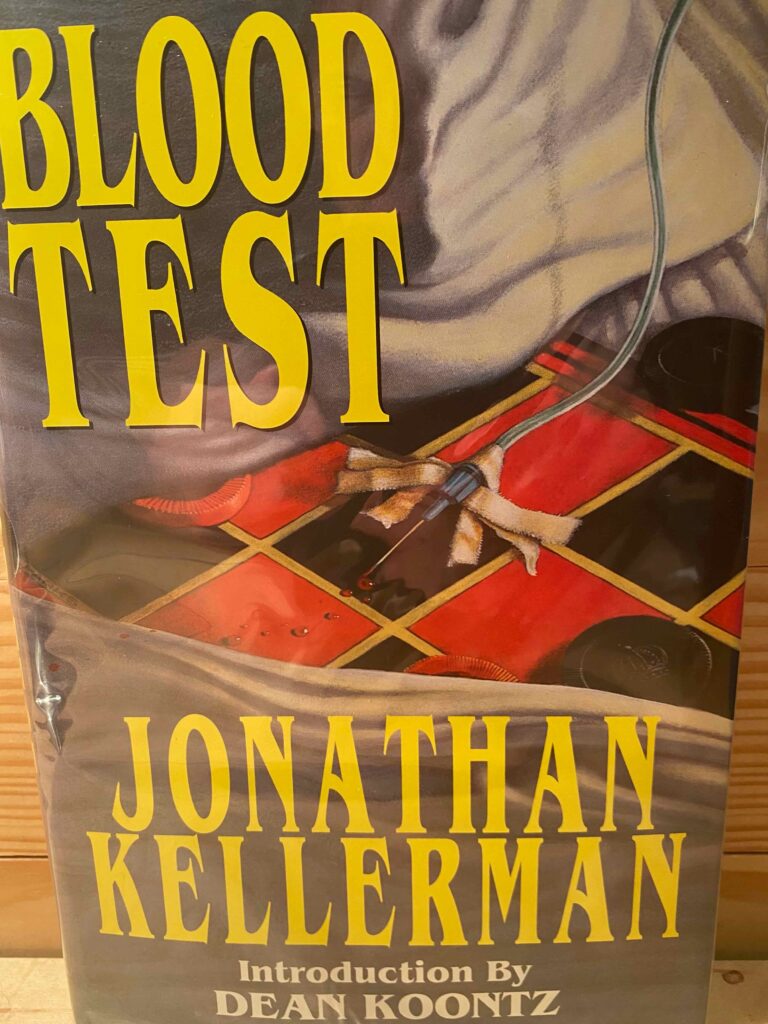
Jonathan Kellerman’s novel, Blood Ties, was originally published in hardcover in 1986. There’s an interest note in his foreword the Dark Harvest “First Expanded Edition” from 1993, where he states this his publisher of the 1986 book lost all copies, only to find them a few months later. Due to this, sales fell off from his first novel, and that edition become somewhat difficult to find.
Kellerman has a background in child psychology, which he weaves into his fiction. Blood Ties was another book in Dark Harvest’s early 1990s move from horror fiction to mystery fiction. Why this venture failed is up to someone much closer to the publishers, but one could guess that either there was no market for small press mystery editions, or the publishers decided for other reasons just to call it quits. Dark Harvest is far from the first small press publisher with a limited life-span, although their bibliography is quite remarkable.
I acquired a copy of the signed/limited edition in February, 2026. My book is numbered #41 of the 400 limited copies, signed by both Kellerman and Dean Koontz, who wrote a weird introduction. The illustrations are by Phil Parks, who did many Dark Harvest covers (at least nine, as far as I can tell).
Recently, I was in Phoenix for a few short hours, and while there I made a trip over to Book Gallery in Tempe. The store is vast, and really needs many hours to appreciate. In addition to the general public area, the owner has a blocked off section with interesting books, though you only can get to them by asking for specific ones. This is strange, as the ones I want to look at are twenty feet away, and I only can glimpse a few titles among the massive shelves. Nonetheless, I asked about some Robert McCammon books, on the off-chance that the one I wanted was within my budget. It was not. I also learned that all the books in that section are over $100, which tends to be above my budget almost on principle. The McCammon book in question was marked at $225, which I guess is a fair market price for that title, but far more than I had hoped.
There’s a small science fiction section in the general public area. Having gone through it once before, I know that I’ll always find something I good. The last time I was there I found a Tim Powers Subterranean Press edition of Expiration Date. This time I passed on several titles, all marked at $50. However, I did pick up a pair of books.
The Sand Dwellers, Adam Niswander (Fedogan & Bremer, 1998). I’d vaguely heard of Niswander, possibly as a short-story writer. I’ve started collecting books from the publisher (if and when I come across them), and for $15 there was no doubt I’d get this book. Published in an edition of 1,000 copies, both trade and limited, my copy was signed by Niswander, but as the trade edition. The owner of the store told me an interesting story. Niswander lived in Phoenix and was a book seller. He sold a book to the current owner of Book Gallery, and their friendship eventually led him to open his own store. Adam Niswander died in 2012, long before I’d ever heard of his name.
Passage, by Connie Willis (Bantam, 2001). I’ve only read a couple of books by Willis, but lately I’ve searched specifically for her books in stores. Passage marks only the third such acquisition in almost the same number of years, and it was published a quarter of a century ago. This copy also only cost me $15. At almost 600 pages, it’s a hefty investment of time and effort, but I hope to start reading it soon, after I get through a few other books on the top of my To Be Read stack.
On January 18 I ran the inaugural Austin International Half-Marathon. This used be called the 3M Half-Marathon, but a new sponsor took over, though as a San Antonio resident I won’t mention that sponsor’s name. Between 2018 and 2022 I didn’t run a single mile, due to a lingering Achilles issue. I started running again in mid-2024, and probably did too much, too soon; I ran the 3M Half back in 2018, signed up to run it again in 2024, but an injury two weeks prior to the race derailed that attempt. Still, with three half-marathons under my belt in 2025, I felt ready. Those three all were 10 minutes slower than most of my half-marathons through 2018. I figured for this one that I would aim for 1:50 and see what happened. It’s billed as “Downhill to Downtown,” but are a handful of nasty hills the last four miles.
It was 30F at the start line. The skies were clear, and there was a slight breeze from the north-west. Since the race is mostly north to south, that was better than the gusty conditions the day before. The start was chaotic. There are no corrals based on previous finish times. Instead, you line up in sections based on your predicted finish time, and not everyone places themselves in the right group. I placed myself at the edge of the 1:50 group. There were supposed to be pacers for each section. I saw the pacer far off to the left, but in the chaos of the start lost sight of him quickly. The first mile included a slight uphill. I ran through that mile at 8:17, which was on pace for a 1:50 finish. However, despite not trying to push the pace, I ran the next few miles close to 7:45 minutes per mile, which worried me. Would I be able to sustain that pace? If so, for how long? Last time I ran this course I lasted until mile eight, and then limped home. It was still a decent time then, mind you, but the memory lingered.
Over the next few miles, I tried to slow down, as I needed to run smart, knowing the hills were up ahead, when fatigue would already have set in. I missed some water stops due to people blocking the way. As it was quite cold, I never removed my gloves, and so I failed to fuel properly. The left turn up 45th Street signaled the first hill. To my surprise, this was an easy hill, but the next four were tougher, even though they were short ones. The last two miles was simply a case of hanging on, and I finished in 1:45:14, far better than expected. This was over nine (!) minutes faster than my half marathon just one month ago. Conditions in Austin were almost perfect, crisp and nearly free of any humidity, unlike the December San Antonio half. In that event I also aimed for 1:50 and ran with a pacer through the first eight miles. However, temps then were higher, the humidity caused me to wilt, and I lost sight of the pacer. There also was a long, long gradual hill after mile 8 that sapped all my energy and I never fully recovered.
If I run the Austin International Half again, I need to fuel better, especially near the end, but overall it was a great race. If you want to run a fast half-marathon, this is the one for you.
In February I’m set to run another half, also in Austin, but this one has killer hills and I plan to ease off and simply enjoy the event. After that one, back to pounding the rock. The half-marathon is my favorite distance, but even after more than a dozen of them I’m still figuring out pacing and fueling.
While in Austin I hit up some bookstores. I came away with 16 books. Most of these were trade paperback mysteries by authors or publishers that I collect, with the goal of reading them all someday. I also found a 1980 edition of the “best of” SF paperback from DAW Books in great condition. As a bonus, I picked up three hardcover books, all a surprise.
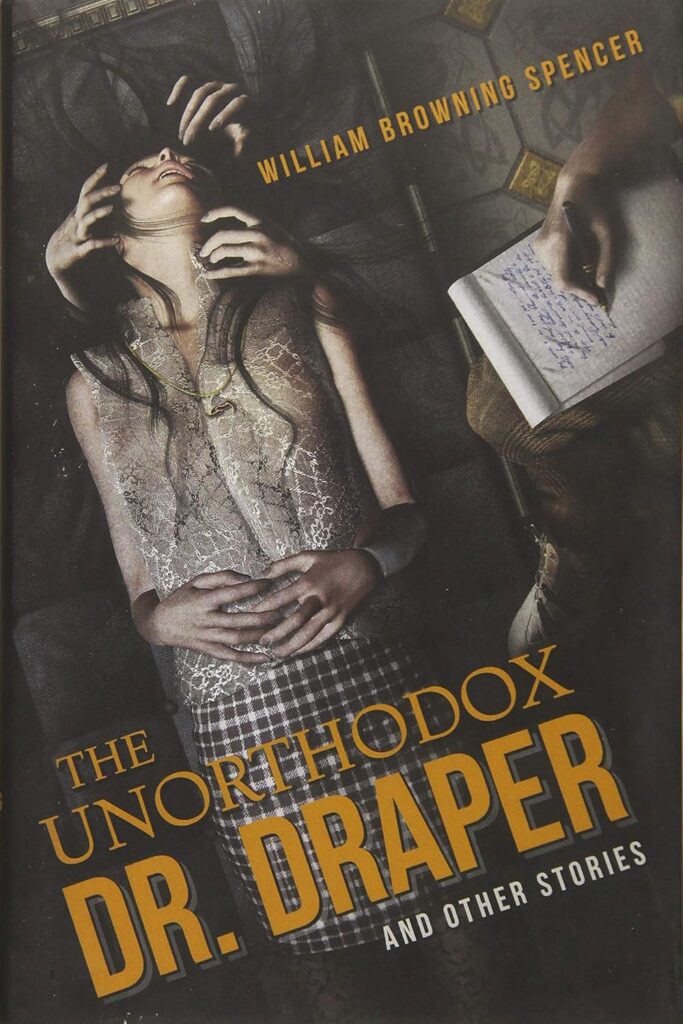
The Unorthodox Dr. Draper and Other Stories, by William Browning Spencer (Subterranean Press, 2017). Seeing this book gave me a thrill. I’ve read a couple of Spencer’s books, but it’s been a long time since the last one. This is a collection of dark short stories, in a signed and numbered limited edition. I still lack one of his collections, but his books are quite hard to find. Maybe this book will be the last one published in his lifetime. I paid $25, which is a lot less than prices I’ve seen online.
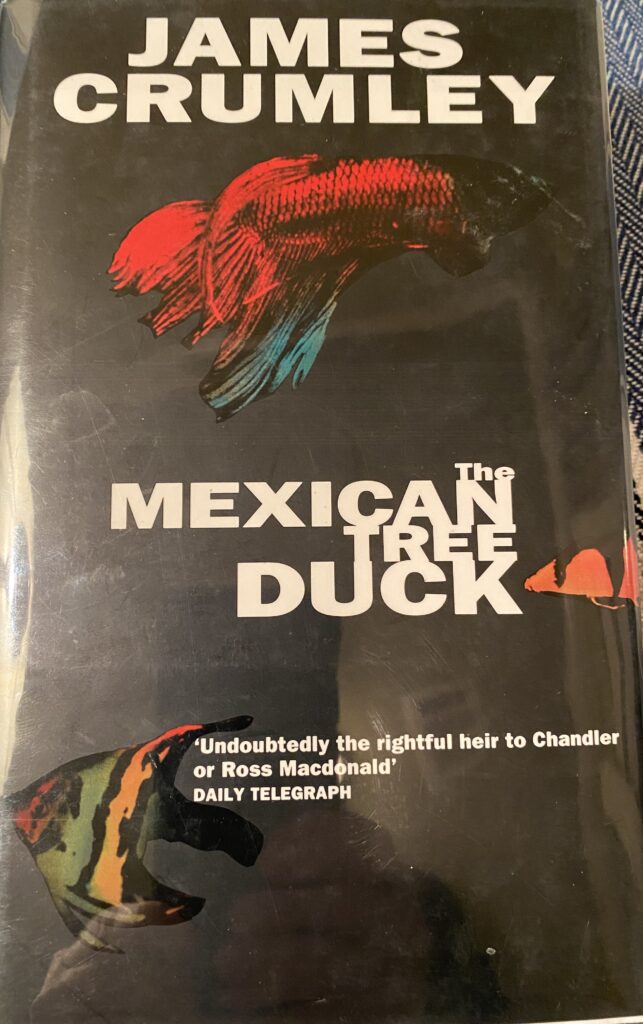
The Mexican Tree Duck, James Crumley (Picador, 1994). This appears to be the UK first edition, originally published by Mysterious Press in 1993. It’s signed by Crumley, and Half Price Books had marked it down from $30 to $10. I actually had to ask someone to confirm the price, as it surprised the heck out of me to see it listed for such a low price. I’ve seen similar books listed online for close to $200. Crumley’s a hard-boiled writer, in the tradition of Dashiel Hammet and Raymond Chandler. I look forward to reading this one.
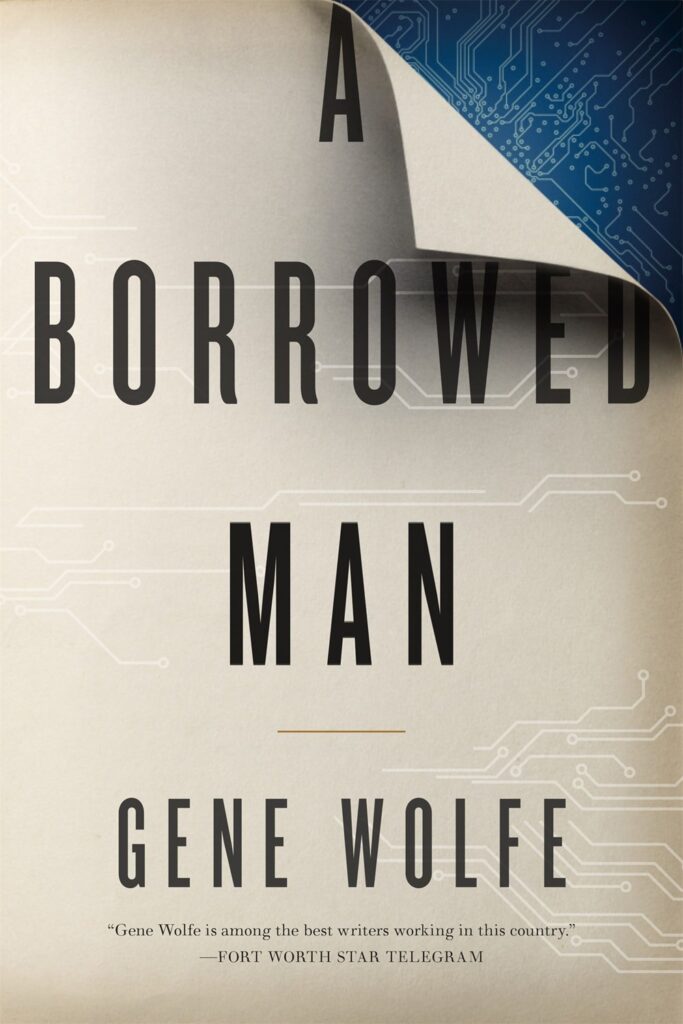
The Borrowed Man, Gene Wolfe (Tor, 2015). I’ve tried to read Wolfe’s fiction a couple of times, without much luck. I’m hoping this is an exception. I think I have the sequel as a trade paperback, and I have vague recollection of owning this book years ago, but giving up on it and giving it away.
I passed up a couple of other signed/limited books that I saw, as I wasn’t ready to pay what HPB was asking. I also was quite disappointed in the “rare and collectible” section at the North Lamar Half Price Books store. The selection was anemic, and they listed a trade paper back GRRM book for $750. Sure, it was signed, but it looks ratty. I heard other people comment the same about it as I was scanning the books. I walked away from that store with a few trade paperbacks out of the mystery section, and that was it.
Adding new books in this series from Borderlands Press now has become a slow process of trying to hunt down rarities. Recently, I acquired one new and one old book at the same time. Also, based on the latest two books in the series, it looks like Borderlands Press has dropped the number of copies per book from 500 to 350, so anyone looking to collect all the books may have a hard time going forward, even with some of the more obscure authors.
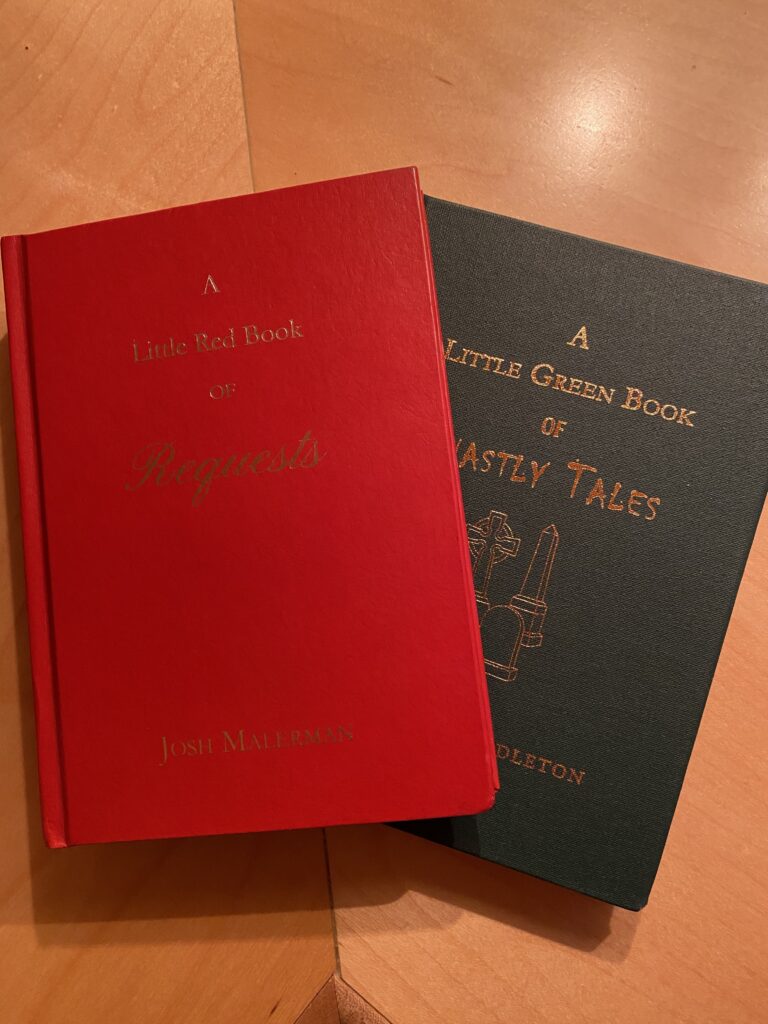
Josh Malerman, A Little Red Book of Requests (2019). I did not expect to acquire this book. Whenever I’ve seen it listed for sale it’s been for $100 or more, and as high as $250. An opportunity arose, however, and I took a chance, ending up with a lucky find. There was a nervous moment when I received an email confirmation that the package had been delivered, but no package was on the porch. Then, an hour later, the package showed up. The slim book collects three of Malerman’s short stories, plus a brief one-page introduction from the author.
Richard Middleton, A Little Green Book of Ghastly Tales (2025). The latest book in the series, at least for now. This collection of 19 stories is edited by Nicholas A. Psaltos. I’ve never heard of Middleton, which is neat, as discovering writers from bygone times is always an interesting venture. Middleton committed suicide quite young, at age 29. He never achieved any fame in his lifetime (nor much so thereafter) aside from a story or two, but made a great impression on other writers.
With these two books, I’m now down to five in this series that I don’t have. Those five include three of the hardest and most expensive ones out there: books by Neil Gaiman, Joe Hill, and Thomas Ligotti. The other two (Brian Keene and Douglas Winter) aren’t quite as expensive, but also show up only infrequently on the second-hand market.
I’m a huge fan of Tim Powers, and a sort-of fan of Joe R. Lansdale. Both authors released new books near the end of 2025, and I bought ’em shortly after they were published.
Hatchet Girls, by Joe R. Lansdale (Mysterious Press, 2025). The latest Hap and Leonard novel, where almost half the plot consists of retirement talk. Both of these two characters, first introduced back in 1990 with Savage Season, have appeared now in a dozen or so novels, various short stories, and made it onto the screen with their own TV show. I have all the novels, but only some of the short story collections, and never watched the show, as I prefer to see these characters in my own mind.
As with most of Lansdale’s books, Hatchet Girls is a quick read. Set in the fictional town of LaBorde in East Texas, where people tend to die hard and painfully, it seems that it might be the last or soon to be last of the Hap and Leonard books. Leonard is trying to ease out of his previous life, looking toward marriage and owning a gym. Hap still clings to his old life, but also might quit, which means no more dead bodies and fighting various East Texas mafia, drug dealers, or weird killers. Not as intense as previous books, it also seems that maybe it’s time for Lansdale to move away from these two characters and find something with more life. Still, if he publishes more of these books, I know I’ll end up buying and reading them.
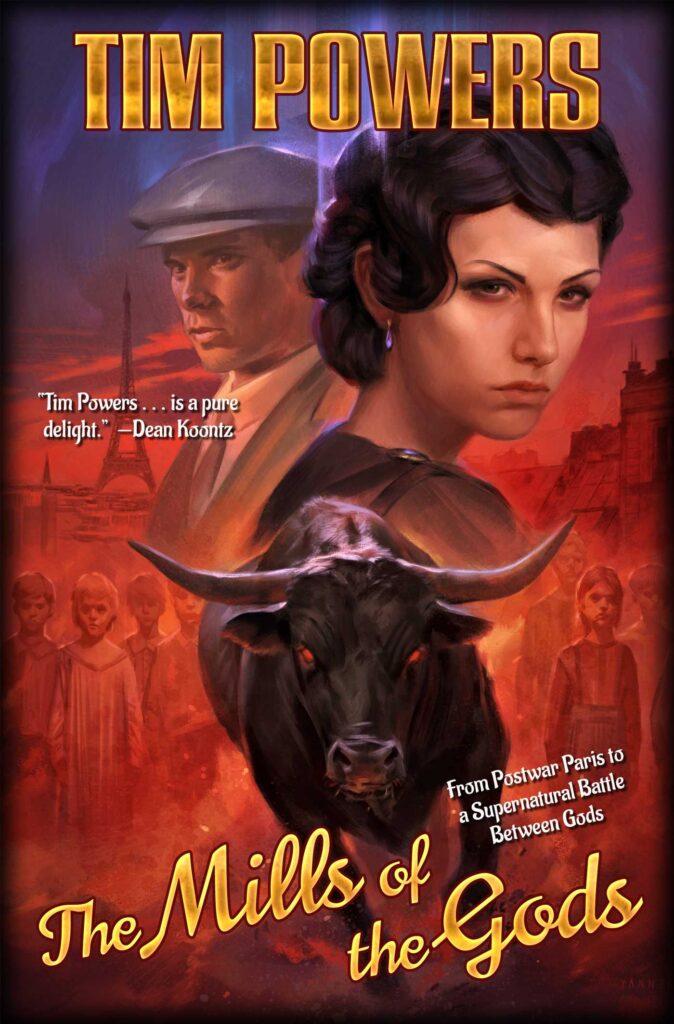
The Mills of the Gods, by Tim Powers (Baen Books, 2025). Powers is back with another alternate history novel, this time in a new setting: Paris in the 1920s. This means Ernest Hemingway, of whom I know a fair amount. I haven’t yet cracked open this book, but I’m looking forward to with great expectations. Powers’ last few books have been with Baen, which seems a step down from prior publishers (SF vs. more mainstream). This isn’t a knock on Baen, but I find it weird why other, less talented writers get more readers and publicity that Powers. His books are original, challenging, and unique. I guess that’s not enough, these days.
The cover captures the essence of Hemingway’s Fiesta (or, The Sun Always Rises), and the first few pages draw you right into the story. It’s always thrilling to read a new Powers story, and I hope this one will be no different.
John D. MacDonald. As a young teenager I absorbed quite a few books on my parents shelves: among these were books by Jack Higgins, Ed McBain, Alistair MacLean, Desmond Bagley, Len Deighton, Dick Francis, John D. MacDonald, Wilbur Smith, and others.
I vaguely remember the MacDonald books: the main character lived on a houseboat in Florida and undertook some assignments to get money back from people who’d been foolish enough to get defrauded in various ways. Along the way, many women were bedded and then shunted off, so that in the next book there would be new characters, new women. It was sort of like Ian Fleming’s James Bond, but without the international spy stuff.
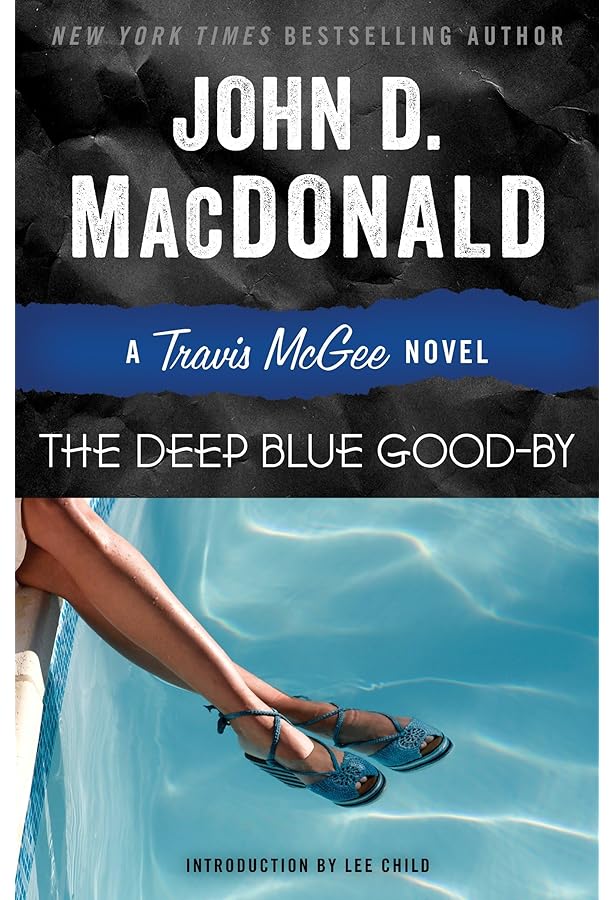
Random House recently released all of the the Travis McGee books in matching trade paperback editions. By chance, I came across a copy in a used bookstore of one of these books in early 2024, and the memories flooded back. Since then, I’ve slowly been trying to acquire the books in this series. In actual physical bookstores they appear to have all but vanished, even in a couple of specialty mystery bookstores that I visit now and then. I’ve found a couple in used bookstores, but to complete the set, alas, I’ve had to look online.
Of the 21 books in the Travis McGee series, at the conclusion of the year 2025 I now have 11. That means the clock is ticking to acquire the last ten books in the series, before a different marketing exec decides to change up the design or the rest go out of print and become impossible to find (or someone decides to edit out certain parts to make the books less “problematical” in newer editions, like what’s happened to Agatha Christie books and others).
Each of the Travis McGee books include a color in the title. This might have been the first time a series of books featuring the same character that did this; an inspiration to many later series, no doubt. MacDonald weaves the title into each story. Sometimes this is obvious, sometimes only alluded to, such as in Nightmare in Pink and The Scarlet Ruse.
According to Wikipedia, “Following his 1945 discharge from the army, MacDonald spent four months writing short stories, generating some 800,000 words and losing 20 pounds (9.1 kg) while typing 14 hours a day, seven days a week.” He eventually sold 500 (!) short stories to various fiction magazines. In 1964 he published the first Travis McGee novel, The Deep Blue Good-by. This became his gold mine, and he wrote 21 novels in the series. He died in 1986 at the age of seventy, before he could finish the 22nd in the series. A rumor posits that “for years that MacDonald was planning a 22nd book to be titled A Black Border for McGee” where McGee would die. I doubt that would have happened, but who knows. I’m happy that the estate has refused offers from other writers to continue the series.
McGee is an interesting character. His history changes slowly over time, from a Korean war veteran to a Vietnam veteran. He’s a cynic and opportunist, a determined womanizer, yet with certain morals about who he beds and why. He moves from Florida to New York, to Arizona, to Hawaii, to Mexico, yet he’s always anchored to his boat. Various friends of his and women that he loves almost all seem to die in spectacular or sad ways. He gets shot, drugged, and beaten up, yet always seems to bounce back. According to MacDonald (orMcGee), sex and boat trips tend to cure a lot of hangups.
I’m currently trying to re-read (and read) all the books. So far I’ve have not been able to do so in perfect order, which isn’t a a requirement for the casual reader. The Random House editions contain introductions from other writers, such as Lee Child (whose name appears on almost all my books so far). This is a testament to MacDonald’s influence. There’s a sense that some of his attitudes towards women won’t work in today’s environment, but the tension and skill in terms of plotting and location is undeniable. The books are undeniably a product of their times, a product of MacDonald’s worldview. Still, what an interesting time it was, and how long ago it seems now, even though the books were written between 1964 and 1986, years in which I grew up and experienced, although not in the same sphere as Travis McGee or John D. MacDonald. I’ve got 10 more to find, as I’m almost through reading my current stack of titles.