Centipede Press publishes a variety of high quality books. These may be one-off titles, series by certain writers (i.e Fritz Leiber, Frank Herbert, others), or collections in SF, fantasy, and horror genres. One of their series is their “Library of Weird Fiction.” Their latest book in this series is a collection of stories by Carl Jacobi (1908-1997). Jacobi is considered as a minor writer in H.P. Lovecraft’s circle, but is so much more (see this appreciation by D. H. Olson, reprinted in this collection). He published multiple stories in horror/SF magazines such as Weird Tales during the 1920s and 1930s, as well as in mystery magazines. A classmate of Arkham House’s Donald Wandrei, he attended the University of Minnesota in the late 1920s. He published three collections with Arkham House and one with Fedogan & Bremer.
This new collection from Centipede Press is huge. At almost 1,000 pages it’s one of their thickest “Library of Weird Fiction” books, and an instance classic. Upon publication this book is priced at $65, but I’m sure it soon will sell out and you’ll need to pay a premium in a year or more. The book includes an introduction by John Pelan from 2013 (Pelan died in 2021), a brief note from Robert Bloch, and the aforementioned appreciation by D. H. Olson.
Recently I picked up three mystery books by small press publisher, Dark Harvest. This publisher was active from the late 1980s to the early 1990s. I now have 40 books by this publishers, with maybe a dozen more left in order to collect all of their books. Most of these I have as their “trade” editions, with a handful of the “signed/limited” variety.
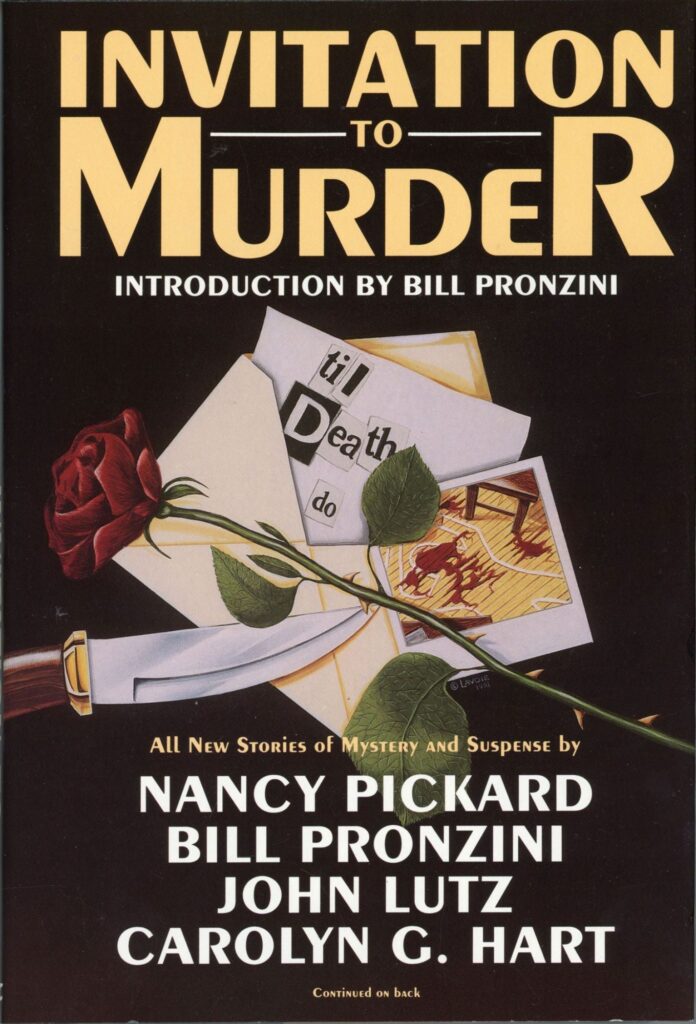
Invitation to Murder (1991). This is anthology or mystery stories, all with the same premise: a young woman is found dead in a room. Around this time (early 1990s), Dark Harvest appeared to switch from horror/dark fantasy to mystery. It didn’t work, and a couple of years later they closed shop. This anthology collects a few stories with noted mystery writers (as well as writers from other genres). I bought the trade edition, and have just started reading the stories, starting with the first one, by Nancy Pickard; I’ll admit that I didn’t expect the ending on this one. I guess the market for limed edition mystery books is not as sustainable as horror/sf/fantasy books, since a year or so later Dark Harvest stopped publishing anything at all.
Junius Podrug’s Frost of Heaven (1992). I have not yet read this book, nor have I seen any other books by Podrug. I was able to get this book as a limited edition, and my copy is number 4 of 250 signed and numbered copies. The cover is boring, though it does have a nice endorsement by Nancy Pickard. It’s on my To Read list, but I know nothing about it.
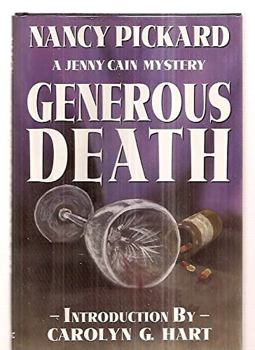
Nancy Pickard’s Generous Death is not listed as one of the books from Dark Harvest on ISFDB. It was reprinted by Dark Harvest in 1992, possibly as part of their failed foray into the mystery genre; after they abandoned the horror/dark fantasy books that made their name, they ceased to exist shortly thereafter. Maybe that switch wasn’t the direct cause of their demise, but it’s hard not to associate the switch to them stopping all books.
Generous Death is the first in a series of books about the main character, Jenny Cain. Packard had a significant career in the mystery/crime genre, but this is the first time I’ve encountered any of her books. My copy is signed and numbered 268 of 300 copies. After I bought this book I looked for her books elsewhere, but so far have not found any. Maybe that will chance, as now her books are on my radar.
Out of the ca. 52 books from Dark Harvest’s publication history, I now only need 12 (or so) more. Some of these might be tough to track down at acceptable prices (to me), and as evidenced by the Pickard books, there might be one or two not listed in the publication history. Althought I have a handful of the signed/limited variety of their books, I’ll probably look for the others in trade editions. If I manage to collect them all, that would be quite a feat, at least in my eyes.
The first Lucius Shepard book I ever bought and read was Green Eyes, which happened to be his first novel. This was probably around 1989-1990, when I vacuumed up any and all cheap SF books I could find at the time in new and used book stores in Austin, TX. Shepard (1943-2014) wrote fantasy and science fiction, and often was linked to the Cyberpunk movement in SF. He also was noted for writing about Central America and war from a leftist perspective. I bought his novella, Kalimantan, in the Strand Bookstore in New York City, back in 1992 or 1994. Then, a pair of novellas from Golden Gryphon, a publisher whose books of whom I attempted to collect a complete set. A few years later, I bought a collection of his stories published Arkham House, called The Jaguar Hunter. Many years passed until I came across another of Shepard’s books, but between 2023 and 2025 I amassed half a dozen of his books.
Several of the books I bought are novellas set in his Dragon Griaule “universe.” This is a fantasy world centered around a dragon that’s a mile long. While it appears to be dead, it still exerts influence in the world around it (usually malign). There’s also an entire ecosystem inside the dragon. Several of the novellas have been published in book form by Subterranean Press and other small press publishers. These include “The Scalehunter’s Beautiful Daughter,” “The Father of Stones,” “Liar’s House,” and “The Taborin Scale.” I have the first three, but as I’ve sort of picked up the books at random, have so far not seen any copies of the last one.
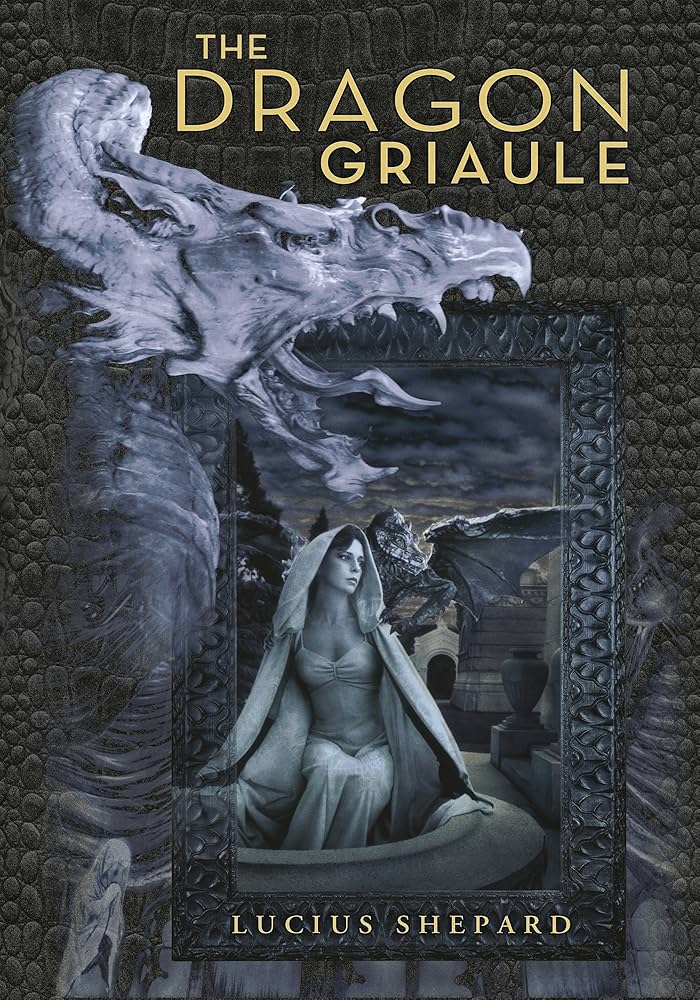
The Dragon Griaule, published by Subterranean Press in 2012, collects six Griaule stories, including the first one, “The Man Who Painted the Dragon Griaule,” as well as “Skull,” which appears to be his last story in this universe. Two years after the publication of this collection, Shepard died at the age of 70 from the complications of a stroke. “The Man Who Painted the Dragon Griaule” appears in his Arkham House collection, The Jaguar Hunter. I don’t know if it’s been published as a stand alone novella like some of the others. This edition also includes a section with story notes: short snippets about the origin of each of the stories. I enjoy reading these notes almost as much as the stories themselves.
Shepard led an interesting and peripatetic life, which he hints at in some of these story notes. Some of the locations and events at the time he wrote the stories influence the tales, which is inevitable.
I probably over-paid for my copy of the book, even though it’s signed by Shepard, but having read many of those Griaule stories recently, and, as it was in my hands in a book store, I could not put it down. The special signed edition states that it was limited to 300 copies, but there must have been an overlap, as mine is numbered “PC,” which means it was a presentation copy. The artwork is by J. K. Potter, a noted SF/Fantasy illustrator. Two of the stories are new to me, so I look forward to reading them. There are other Shepard books out there that I don’t have, but I expect that if I get them, they’ll be spur-of-the moment buys vs. deliberate actions.
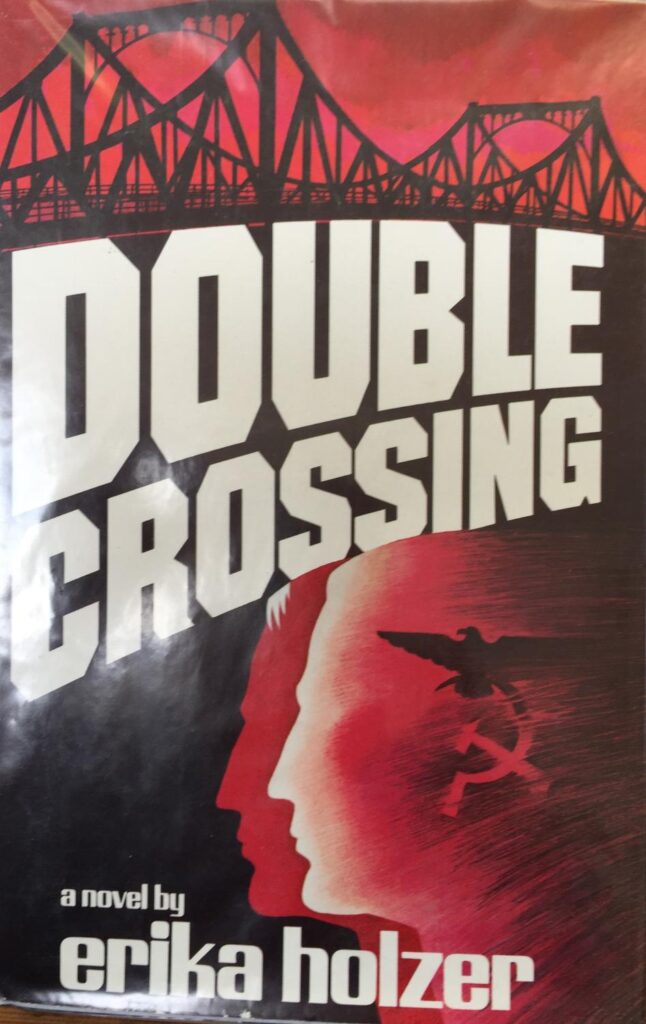
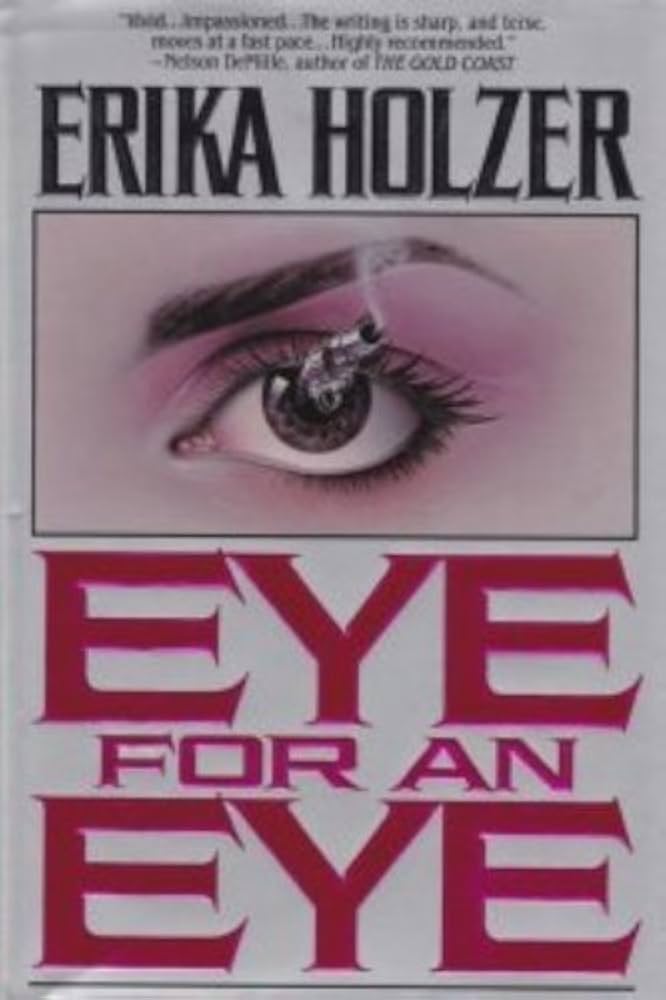
For the cheap price of $8 I recently bought a signed copy of Erika Holzer’s An Eye for an Eye, first published back in 1993 by Tor Books. This novel also was the basis for a major motion picture of the same name, thought I’d never come across it until now. Holzer apparently was a close associate of Ayn Rand. Erika Holzer was born Phyllis Tate, received her law degree and married Mark Holzer, also a lawyer, and at some point after her marriage changed her name to “Erika.” In the 1960s the Holzers were students of Rand’s philosophy of Objectivism, and Mark Holzer became Rand’s personal attorney. Erika Holzer’s first novel, Double Crossing (1984) was a finalist for the Prometheus Award in 1984 (although the publication date is 1980). She died in 2019 at the age of 83 or 84, but I’ve only found two novels under her name.
Her second novel, An Eye for an Eye (1993) is a vigilante story. Well, that’s according to the dust jacket. I’ll see how it goes, as I’ve not yet read the book. I do own Double Crossing, which I bought some time in the 1980s; my copy is battered, torn, and price clipped. I can’t remember from where I acquired it, nor much about it since I read it back then, but I recognized the name when I came across An Eye for an Eye.
My copy of An Eye for an Eye is signed by Holzer, dated May 1st, 1993. She appears to only have written two novels, with 13 years between them. If she switched careers from law to writing due to Rand’s influence, a couple of novels is not a significant result. I was disappointed to learn there were only two novels under her name, but sometimes that happens.
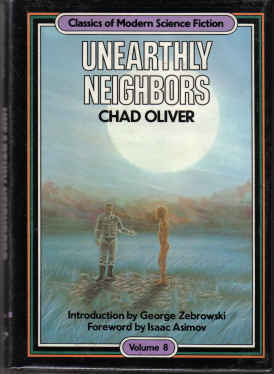
I don’t know much about Chad Oliver. Without looking up his information online, I simply recall this: In the 1990s, when I lived in Austin, Texas, some of the authors I knew, or knew about, or read (Bruce Sterlin, Lewis Shiner, Neal Barrett, Jr., Howard Waldrop) would name-drop Oliver. I don’t think I ever found any of his books in bookstores, although I think I saw one or two of them at SF conventions in Austin. A glance online shows that he died in 1993 (at the young age of 65), so I never met him. He was twice chairman of the department of anthropology of the University of Texas, where I got my undergrad degree (English and History) in 1995. I never took any anthropology courses, however, and I’ve never read any of his stories. An interesting tidbit that I just learned is that he “supported the Guadalupe River Chapter of Trout Unlimited and the cold water fishery downstream from Canyon Dam,” where once I fished and caught some trout. If only for that reason, I’ve become a huge fan of Chad Oliver. Then again, there are his books…
Unearthly Neighbors was first published in 1960. It was revised and published in 1984 as a “Classics of Modern Science Fiction” by Crown Publishers in New York. Recently I picked up a copy of this book at Book Gallery in Phoenix, for what seemed a high price of $20, but it’s the first Oliver book I’ve seen in forever. It has an introduction by George Zebrowski, and a foreword by Isaac Asimov, both now also dead (Asimov in 1992 and Zebrowski in 2024). The book is volume 8 in this series. I wonder if I’ll ever come across any of the other seven (or if there were additional books beyond this one).
Between 1983 and 1993, a small press from Arlington Heights, Illinois called Dark Harvest published close to 50 books. In that decade they released nine volumes in the seminal anthology, Night Visions, along with novels and story collections by such giants in the horror and SF field such as Fritz Leiber, Isaac Asimov, George R. R. Martin, Dean R. Koontz, Ray Garton, F. Paul Wilson, Dan Simmons, Robert R. McCammon, and many more. Toward the end of Dark Harvest’s run, they made a foray into the mystery genre. An anthology called Criminal Intent 1 appears to have been the last book they published. Perhaps the limited edition market collapsed in the early 1990s, or mystery readers didn’t care for small press editions as much as SF and horror readers. Or, maybe the publishers just decided to call it quits. At any rate, it’s a shame that Dark Harvest stopped publishing books.
I think I started buying Dark Harvest books with F. Paul Wilson’s books, then some of the Night Visions books and other anthologies, plus a few others here and there. Although I’m not aiming for a complete collection of Dark Harvest books, I recently picked up three books by this publisher from various locations.
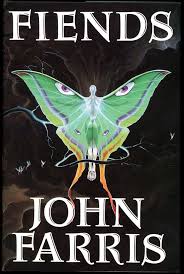
Fiends, by John Farris (1990). A horror novel by an author of whom I know next to nothing. I’ve started reading this book, and it looks intriguing.
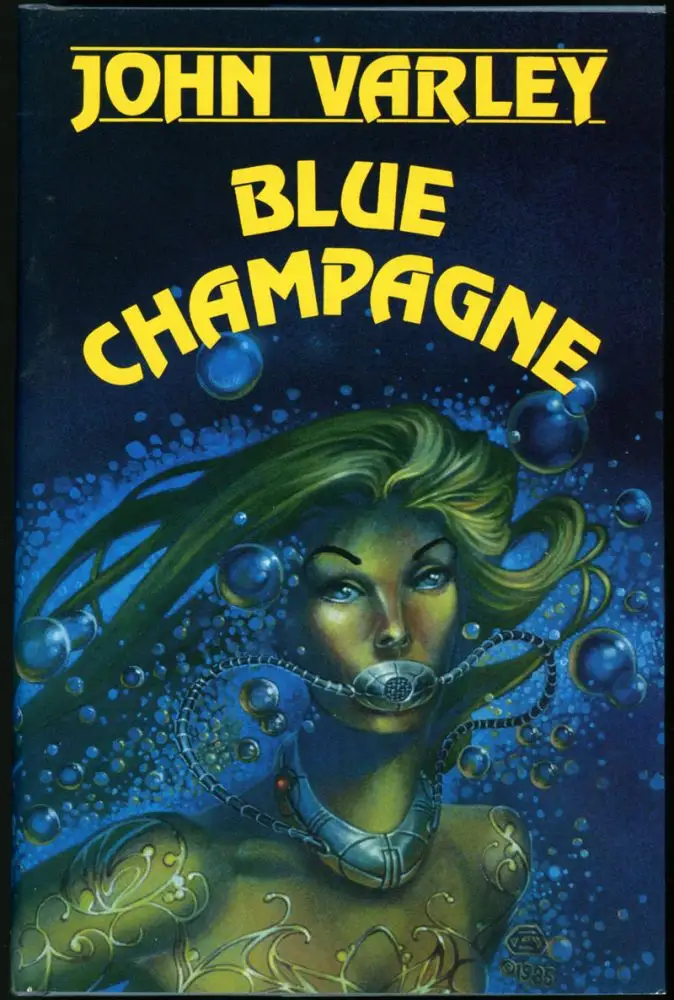
Blue Champagne, by John Varley (1986). A collection of short stories by this master of science fiction. I still have a vivid memory of seeing this book in the shelves at Austin Books on North Lamar in the late 1980s/early 1990s. I really wanted it, but back then was unable to afford the cover price. This year I paid a little bit more than cover price for this copy, but it’s in pristine condition and well-worth the price. Dark Harvest switching to SF is almost like Arkham House releasing SF books (oh, wait — they did release a few SF books), but the first story in the collection did make me a little nervous, almost like a horror story.
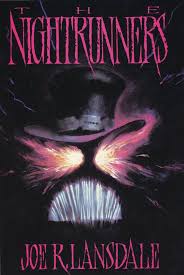
The Nightrunners, by Joe R. Lansdale (1987). An interesting book, and probably the only book that I’ve seen with this warning: “WARNING: Extreme violence, language and sexual situations may offend some readers.” Of course, that’s almost every Lansdale book, but it was strange to see this from one published back in 1987. I guess those were different times. Some of the pieces that make up this novel have appeared elsewhere as short stories or vignettes. One such episode I recently read, but I cannot remember where. I’m not about to hunt through all my books with Lansdale stories to find where I read it, but I do remember it was a disturbing piece, well worth that warning from the Dark Harvest edition.
There’s now a dozen of the 50 or so Dark Harvest books that I don’t own. I’m really only interested in six of these, but I won’t be surprised if I start looking for the rest. After all, they’re all a piece of history, at least in terms of genre fiction.
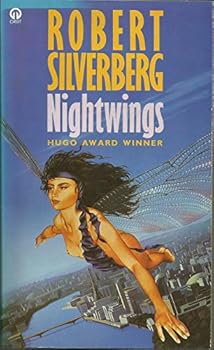
The first Robert Silverberg book I bought was a paperback copy of Nightwings, which I found in some bookstore in Norway in 1987 or 1988. The book I bought was a British edition published by Futura/Obit in 1987. Do I remember anything about it now, even though I still have that book? Not really. Since then I’ve picked up roughly a dozen of Silverberg’s books, mostly paperback editions published a long time ago. The top pages of my paperback ave yellowed over time
I really ought to have far many Silverberg books in my library. Silverberg is a legend in science fiction. Part of my issue is that there are few books by him in new book stores these days, and when I come across them in in used book stores, most copies are battered and broken, and I tend to put those back. I’ve found a copy or two here or there, but I’m always on the lookout for more.
Then there’s Centipede Press… This is a publisher whose books are nearly works of art. Almost always sold out shortly after publication, Centipede Press books are usually quite pricey. They also fetch a premium on the second hand market (I recently saw a set of Gene Wolfe books listed for $45,000!!!!! Their Frank Herbert books start at $600 or more each, while their series of Masters of Science Fiction and Library of Weird Fiction books ratchet up quickly on the second-hand market). I do own a few of their books, usually because I focus on buying specific authors; my edition of a Michael Shea collection, bought for $65 or so, now I see is listed for $1,400 or so online, which is insane.
A couple of years ago I bought the Centipede Press edition of Dying Inside. This was a book I never could find in paperback. My copy is one of 500 signed books (some actual, some facsimile). I don’t care too much about that, but as I wanted this book, I paid the list price. This edition does not disappoint.
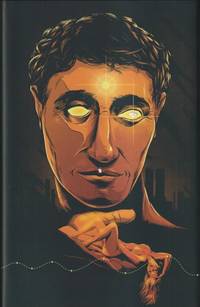
Then, in 2025, Centipede Press published a hardcover edition of Nightwings. Must, must have, I thought, and so I bought the book, also signed. As is almost always the case, the cover is beyond gorgeous, the binding superb. This book is a masterpiece to behold.
It’s a slim book; my paperback copy is 192 pages with no extra material, but the Centipede Press book adds an introduction and interview. The wrap-around cover by Joe Wilson is beautiful. Silverberg’s introduction gives some insight into when and why he wrote the book, which he originally did in three parts. This book embodies exactly what a limited edition should look and feel like.
When I’m in Half Price Books I glance through the SF section. I rarely find books that I want these days, as I tend to focus on specific authors. I usually already have almost all their books, with rare exceptions. I know that I won’t find those rare exceptions in a used book store, not in the age of the internet, anyway. Still, if I find some nice editions of books from the 1980s and early 1990s, I’ll reconsider. This time, I did see a few books that must have been offloaded from someone’s collection, possibly an estate sale. I honed in on two of these.
Frederick Pohl’s The Years of the City (Timescape Books, 1984). This is the first edition hardback of a book I’d bought in a paperback edition many years ago. The book was in pristine condition, had a nice mylar cover, and was irresistible, especially as my 1995 BAEN paperback pages were already yellowing. The cover is sort of bland, with Pohl’s name and the title of the book dominating a small image. Curiously, some of the fonts in the paperback mirror the hardcover, but it’s nice to read crisp white pages vs. brittle yellowing ones.
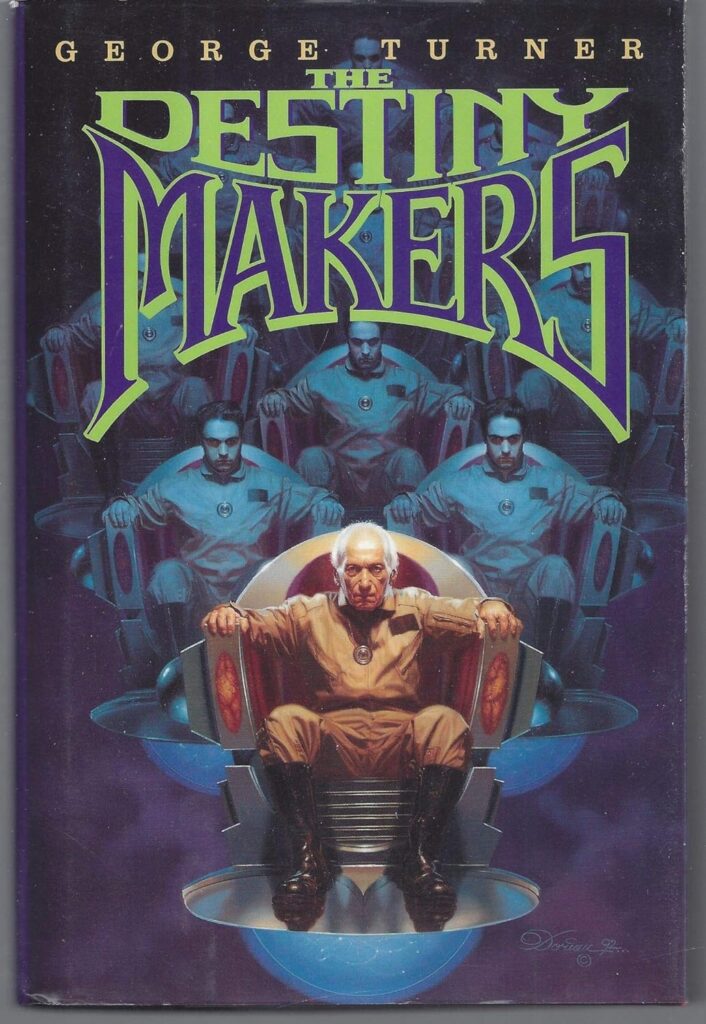
George Turner’s The Destiny Makers (AvoNova/Morrow, 1993). Years ago, a friend of mine—who coincidentally shares the same last name as this Australian author—gave me a couple of George Turner paperbacks. I can’t remember if I’ve read them, but when I come across hardcover editions of his books I feel compelled to buy them, as I rarely see books by this author in my area. Turner died a few years ago. His stories are focused on eco-disasters, but I’ll probably try to read this one some day, and maybe I’ll find his other books at some point.
Phoenix, Arizona apparently has quite a few used book stores. On a recent visit I hit up a trio of these stores. If I’m ever back I hope to visit more. On this trip I went to a Bookmans, a Half Price Books, and one of the Book Gallery locations. Along with a handful of nice-to-haves, I came away with some neat books.
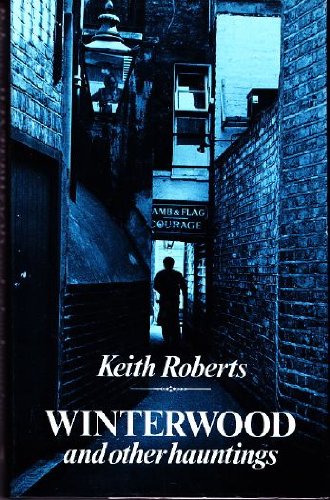
Winterwood and other hauntings, by Keith Roberts, Morrigan (1989). Bought for the reduced price of $15 (down from $30) from Half Price Books. A collection of short stories, with a neat introduction by Robert Holdstock. I had no idea that Roberts used to live in Henley, a small town near Reading. I’m sure Henley’s changed a great deal since his time there, although the regatta still runs every year along the Thames. Then again, in the introduction to his 1988 collection, Anita, his location was Amesbury, Wiltshire, so maybe he moved around a bit. Roberts died in 2000.
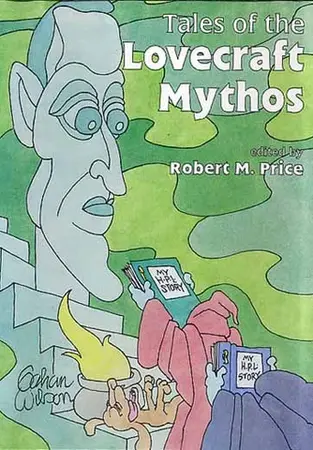
Tales of the Lovecraft Mythos, edited by Robert M Price, Fedogan & Bremer (1992). An anthology of tales set in Lovecraft’s fictional world, many from Lovecraft’s contemporaries. Only my fifth books by this publisher, and third acquired this year. I’m not usually a fan of Lovecraft’s works, but some of the authors in this book are of interest.
Not Less Than Gods, by Kage Baker, Subterranean Press (2010). A limited edition of only 474 copies, signed by Baker. Illustrated by J. K. Potter. Bought for almost half the $60 cover price. I passed on quite a few books that I wanted, as the prices seemed random in many cases and higher than I wanted to spend at times. I’ve read Baker’s stories in the Golden Gryphon edition, Black Projects, White Knights. Baker died in 2010 from cancer.
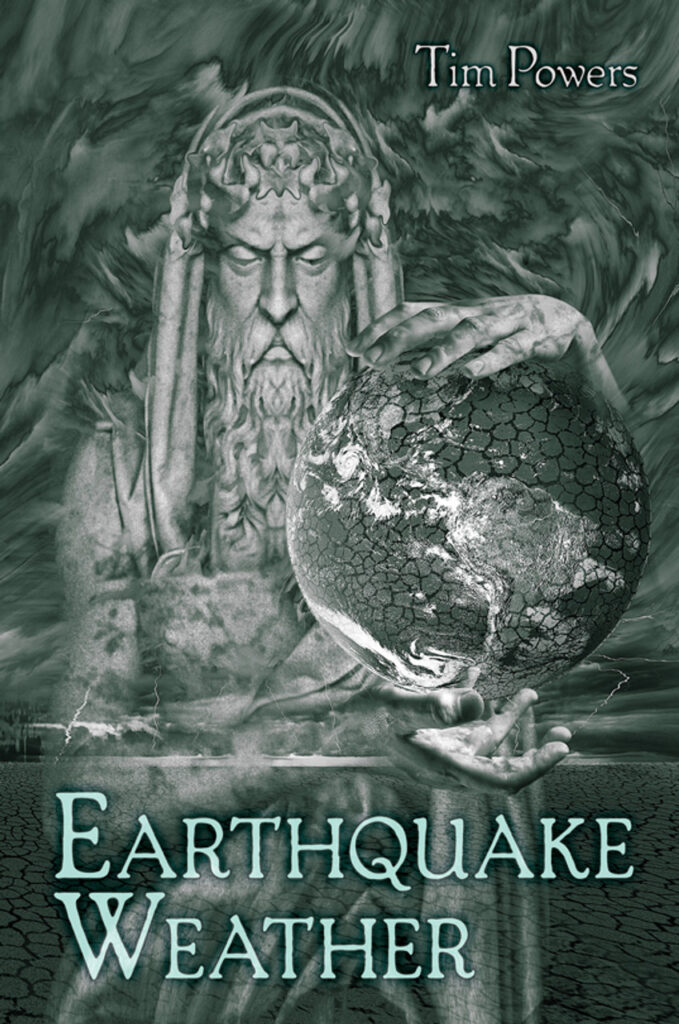
Earthquake Weather, by Tim Powers, Subterranean Press (2008). The deluxe limited edition, signed by Powers and the illustrator, J. K. Potter. Bought for a bit less than the cover price of $75. I’d read the Tor Books edition years ago; my copy is inscribed to me by Powers with the message, “This love-letter to wine.” I won’t give up that edition. Meeting Powers meant a lot to me, as I’m a huge fan. I debated whether or not to get the Sub Press edition of book, but after some indecision, I decided I had to have it. The store also had the NESFA edition of An Epitaph in Rust, but I skipped it for now. However, I do know that finding Sub Press editions of Expiration Date and Last Call, both set in the same universe as Earthquake Weather, will be pricy at best. So, call this an impulse buy.
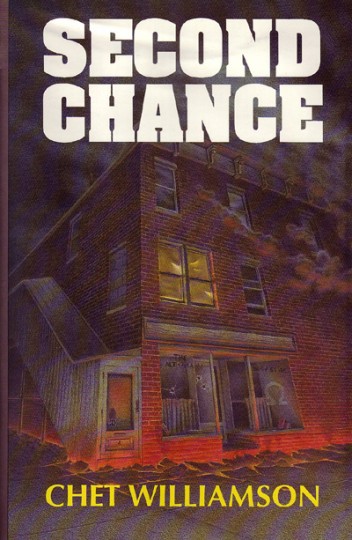
Second Chance, by Chet Williamson, Cemetery Dance (1994). I almost put this one back on the shelf, as there are three nasty tears in the dust jacket. Still, it’s a limited edition, signed by Williamson, and limited to 400 copies. Given the state of the dust jacket, or some obscure reason, it was priced at $11.24, a strange and almost random figure. Maybe one day I’ll be able to find a nice cover to replace this one. Williamson is still writing fiction, and I’ve read a couple of his books. They’re hard to find, at least in person, but worth it.
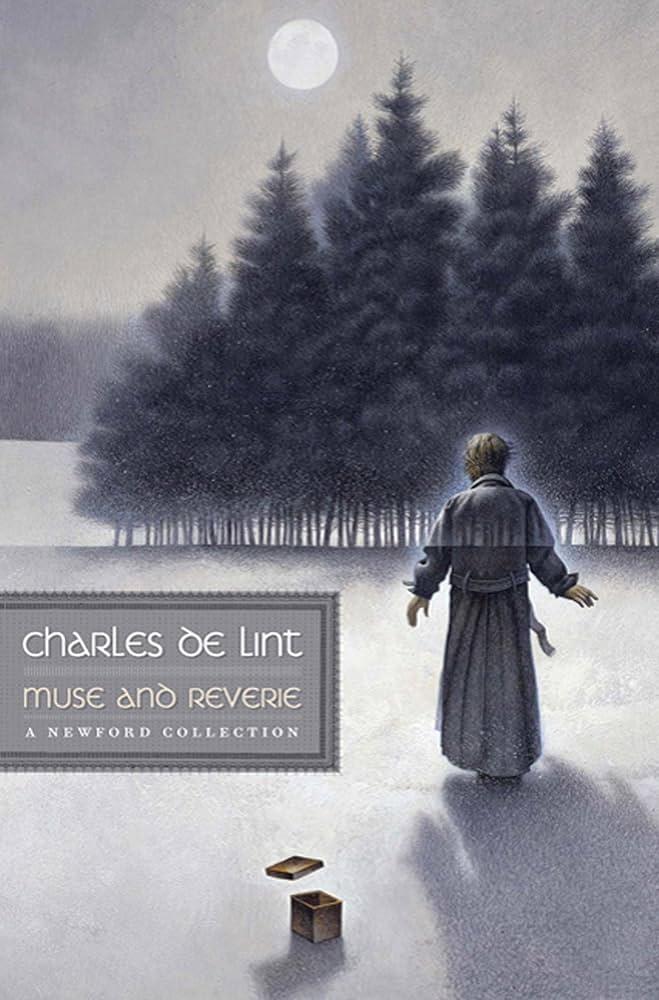
Muse and Reverie, by Charles de Lint, Tor Books (2009). A collection of stories set in de Lint’s fictional town of Newford. Despite having 33 of his books, I still lack a fair amount of de Lint’s nearly 60 published books, so I was happy to find this one.
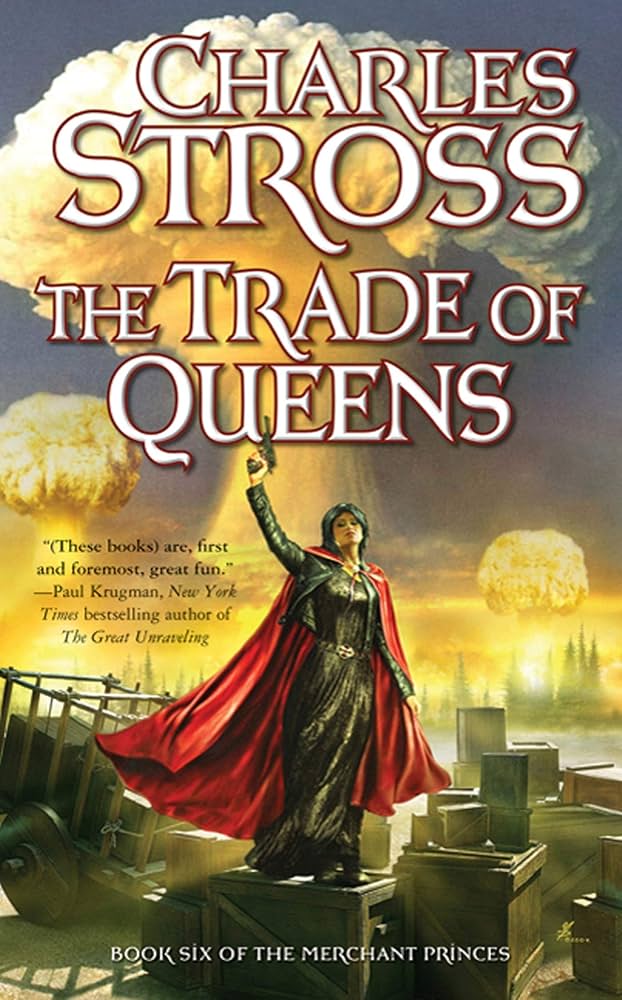
The Trade of Queens, by Charles Stross, Tor Books (2010). This is book six in Stross’ Merchant Princes series. I don’t really read SF any more, nor really buy any new Stross books, but as I have the first five, I supposed I had to get this one. I think I’ve only read the first two, or maybe three, books in the series.
I dimly remember that I read the first three of Ursula K. Le Guin’s Earthsea books in my pre-teen years. I’m fairly certain that I came across them in the library of The International School of Lusaka, possibly in sixth or seventh grade. Maybe I got them in a bookstore in Lusaka, but that seems unlikely, as I think that I would have kept the copies (or not, as I had to give up quite a few of my books from that time when leaving Zambia and beyond).
The content of those three books, The Wizard of Earthsea, The Tombs of Atuan, and The Farthest Shore, are lost in the mists of my memories. Occasionally I come across battered paperback copies of one or another of these books, but I’ve never bought them, not once in the intervening 40+ years since I first read them.
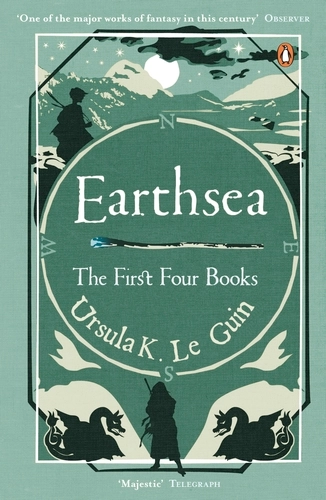
Then, by chance, I came across a pristine omnibus edition of the three books, as well as a fourth one, which I’d never read. It’s sub-titled “The first four books”; apparently there are two more set in this world. I think that I only read The Dispossessed by Le Guin. This is a UK edition, which somehow ended up in the USA.
The word “Earthsea” is a brilliant combination of two disparate words by Le Guin. There’s no preface, no introduction, no afterword. You simply dive into the book, into her world. The design from Penguin Books is brilliant. It even smells like a book is supposed to smell. I wonder, as I start the hourney to re-read these books, will they resonate the same way that they did those four plus decades ago? Likely not, but we shall see what happens.
*Brief note: The cover image here has a quote from Telegraph. My copy has a quote from Neil Gaiman, who I guess has been canceled these days.