The Libertarian Futurist Society just announced the winners of the 2026 Prometheus Award and the Hall of Fame Award. Founded way back in 1979, the Prometheus Award is meant to “honor libertarian science fiction.” This doesn’t meant libertarian authors, but fiction that embodies the spirit of liberty.
J. Kenton Pierce won the Best Novel for A Kiss for Damocles, and Aldous Huxley was entered into the Hall of Fame for Brave New World. The latter is way overdue, as it’s a powerful and important work of fiction. I have to confess, though, that at this time I have not read the former.
This is the 46th annual Prometheus Award, one of the longest running awards in science fiction. You can see the list of past winners here. The LFS has been involved in SF for nearly 50 years. It was founded in the early 1980s to keep the flame of the Prometheus Award burning, after this award first was created in 1979. There are so many great novels that have been nominated. Check out the LFS pages, if you care about liberty and read any works of science fiction.
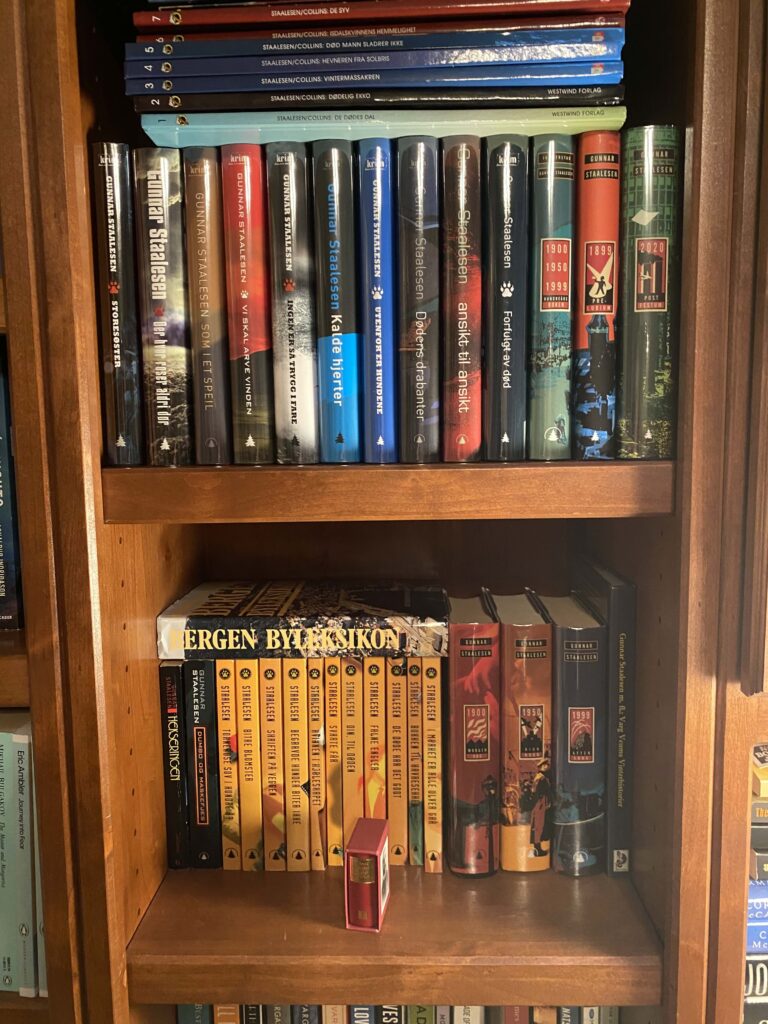
When I was in high school in Norway, we had to write a long essay on some literary topic for our Norwegian class. My teacher suggested I write a paper on Gunnar Staalesen, who was a relatively new writer from Bergen (at that time only six of his books had appeared in print). I’d not heard of Staalesen then, and chose an entirely different topic. A decade later, I finally read my first Staalesen novel, and from that point made it a personal quest to read as many of his books as I could find. As I look back, I think it was the right choice, as I’ve enjoyed his books a lot more as a reader, rather than a critic.
On a recent visit to Norway, where I was able to buy his latest novel in hardcover, my brother made an offhand comment about my Gunnar Staalesen “obsession.” He wasn’t far off the mark; the first store I checked, F. Beyer, had three copies of the book (1899: Preludium, published in 2025), but they refused to sell me any of them. Apparently the book was now out in paperback, and they had to return any other copies. I hastened across the street and bought the last hardcover copy from Norli, another bookstore, and the only one that still carried the hardcover (and had no issues selling it to me). I think I was quite lucky, as all other bookstores that I checked while in Norway only carried the paperback edition, which would clash with my existing copies. To say I was disappointed in Beyer is an understatement. This was the bookstore where I met Staalesen in person in 2001, and spent several minutes talking to him, something that remains a highlight in my life. This was the bookstore I spent time and money in while I lived in Bergen. I may never go back to that place now.
In truth, I have many literary obsessions. In some cases, I am fanatical about acquiring and reading books by certain authors: Jack Vance, Tim Powers, F. Paul Wilson, James P. Blaylock, Charles de Lint, Gunnar Staalesen, Alan Furst, Agatha Christie. In other cases, my OCD nature leads me to look for specific publishers: Golden Gryphon, Arkham House, Dark Harvest, Subterranean Press, Soho Crime. I’m sure there are others.
Gunnar Staalesen is known as a crime writer. Most of his books feature the private detective, Varg Veum. Many of the 20 books featuring Veum have been translated to English. I have all of them (I think), in Norwegian. Staalesen’s detective ages almost on part with the author. In 1997, with Veum pretty much a retiree by then, Staalesen turned to a trilogy of novels set in Bergen covering the years 1900 through 1999. Veum does make an appearance toward the end of the third novel, assigned the crime that opens the first book. Staalesen published a sequel in 2021, covering the first two decades in the 21st century. When I visited Norway this year I had no idea he’d written another novel, a prequel, covering the last decade of the 19th century, now the fifth book in this series.
I should have know about this latest novel. For many years my mother, and then brother and sister-in-law, had kept me abreast with Staalesen’s books, as I’d moved to the US a few decades ago. They even were able to get Staalesen to sign some of his books when they bought them for me; some books were signed or even inscribed to me, that distant fan.
Staalsen’s books are set in Bergen, a city that has deep meaning to me. My family is from Bergen, although older generations are from areas outside Bergen. I spent a couple of years after high school living in Bergen. I was too cheap and too poor to pay for public transport, so I spent hours walking throughout the city, crossing from one side to another to visit my grandparents, or just exploring streets and hiking in the mountains surrounding Bergen. And yet, I know only a fraction of that city, unlike Staalesen, who seems to know everything about Bergen.
Why Varg Veum? He introduces himself as a private detective, perhaps the only one in Bergen, maybe in all of Norway. He gets himself into dangerous situations, and mostly escapes these situations without violence. He experiences great personal tragedies, yet never seems to quit. There’s a statue of Varg Veum in Bergen. He’s a national treasure, as is Staalesen. If it’s an obsession to read his books, then so be it.
Ah, nostalgia. Such a great concept. In my case, as a haphazard book collector, it means acquiring books from the 1980s and 1990s that I missed out on back in the day. Thanks to the internet (far more than specialty SF bookstores, or even used book stores) there are always opportunities out there that exceed both my time and budget. Sometimes, however, it’s hard to resist certain books. In this case, three books published by Mark V. Ziesing Books.
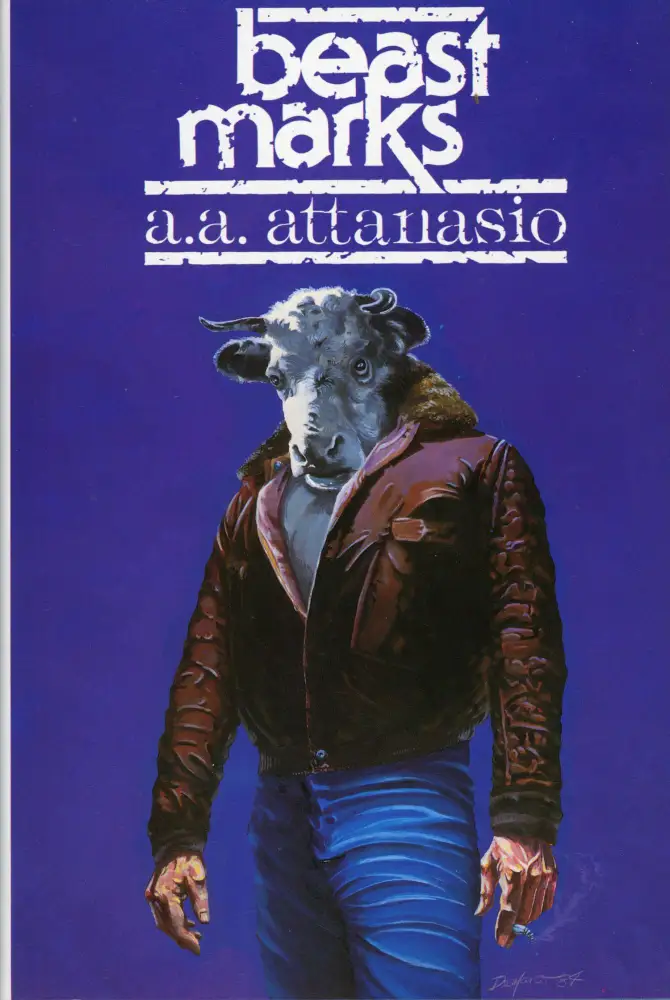
The first, a collection of short stories by A. A. Attanasio. Beastmarks was published in 1984, and collects seven stories of varying length. Years ago I read a couple of Attanasio’s books – Hunting the Ghost Dancer and Wyvern. I’d seen the Ziesing edition of Beastmarks somewhere back in the day, but never since, at least not in any physical location. But, there are online dealers who carry copies of these books, and this was one of the first ones I selected.
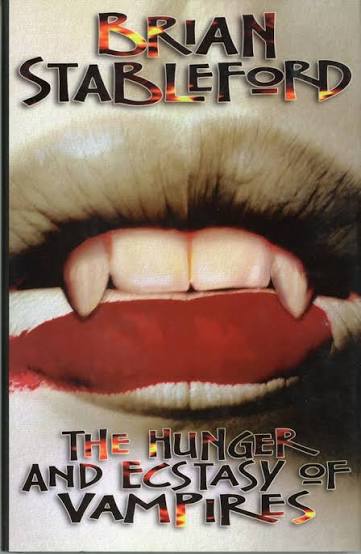
Next, Brian Stableford’s The Hunger and Ecstacy of Vampires. Another Ziesing book, this one from 1996. Set in 1985, this books incorporates real life people, such as Oscar Wilde, Bram Stoker, and others. I’ve never any of Stableford’s books, nor do I know much about him, but this novel does hook the reader almost from the first page. Stableford passed away in 2024 at the age of 75, with a hundred novels to his name, as well as a vast output of short stories. Woe to the collector who aims to gather all of his work, as he also translated many books from French, and his short stories appeared in nearly two dozen collections! Locus Magazine has a wonderful obituary of Stableford.
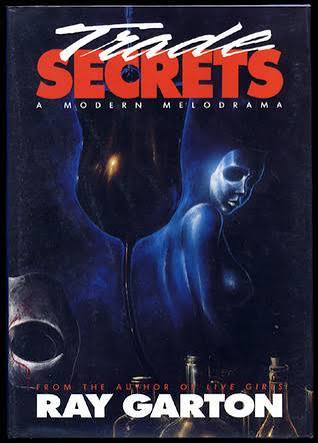
Lastly, Ray Garton’s Trade Secrets, published in 1990. Of these three, Garton’s name is the most familiar to me. I read a couple of his horror stories/novels decades ago, but that’s a tiny fraction of his output. Garton also died in 2024, at the young age of 61, and with almost 70 books to his name. Trade Secrets, to me, reads like a Dean Koontz thriller. He’s probably best known for Live Girls!, but his short stories also are superb. A few of these are collected in Borderlands Press “little book” series, under the title, A Little Gray Book of Grim Tales.
All these books were published in both trade and limited editions. I bought the trade editions, as I wanted books that I could and would read. There’s maybe around 20 or so other Ziesing books that I lack, and around 20 or so that I have. So, I sit at the halfway point. Acquiring these three books has whetted my appetite for more, so we’ll see what happens. Mark. V. Ziesing Books is just one more small press that rose in the 1980s and faded into oblivion a couple fo decades later. Such a shame.
From CIA-led incursions in Central America to a massive dead dragon whose mental powers still permeate everything around it, Lucius Shepard wrote stories with style and vision. Despite significant critical acclaim, Shepard never achieved major success, even within the SF world of the 1990s.
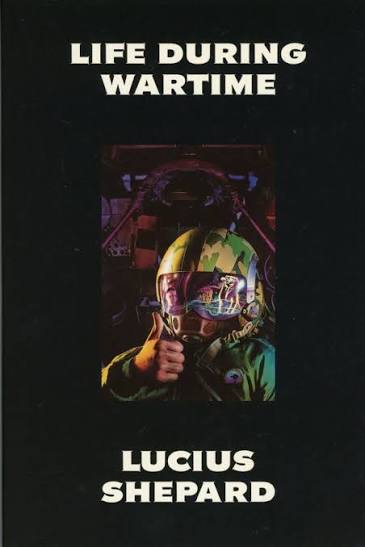
Shepard (1943-2014), published around 10 novels and several short stories. Some of the these short stories were collected in a pair of volumes published by Arkham House, back when they published SF and not just horror/dark fantasy. His first novel, Green Eyes, appeared in 1984. Life During Wartime, one of the “Central America” tales (like Green Eyes, plus some of the stories in the Arkham House books — The Jaguar Hunter and The Ends of the Earth), appeared in 1987. In 1988, Grafton published a hardcover edition in the United Kingdom. I recently acquired a copy of this book, in quite nice condition despite the slightly yellowing pages. The book is signed by Shepard, a bonus, I suppose. It joins a dozen of Shepard books that I already own, including novellas, collections, and novels. As always, I wonder how this British edition made its way over to the US, and somehow ended up in a bookstore there (in this case, in Phoenix, Arizona).
Although he started out with tales set in Central America, he’s perhaps best known for his Dragon Griaule stories, which include “The Scalehunter’s Beautiful Daughter,” “The Father of Stones,” “Liar’s House” and others. He also wrote a vampire novel, The Golden (Mark V. Ziesing, 1993), plus some interesting horror/dark fantasy stories. He was briefly linked to the Cyberpunk movement in SF in the 1990s, but always seemed to chart his own way.