Lost worlds and ports of call

Month: September 2026

Vance, Link, Sallee, Irvine — four vastly different books

Among some of the books I picked up on a recent trip out west are four quite different books and four quite different authors. There were other books as well in this trip that I bought; some simply fit into a group where I’ll buy them and someday hope to read them, while others were mere curiosities. These four, however, were notable, at least when I found them.

Writers of the 21st Century Series: Jack Vance, edited by Tim Underwood and Chuck Miller (Taplinger, 1980). Many, many years ago I came across this book in a store in Austin somewhere, but I wasn’t able to buy it as it was then outside what I could afford. Years passed, and it remained in the back of my mind as a book that I wanted to find. Then, by complete chance, I found one in a used book store in Prescott Valley, Arizona. The books in this store were shelved in strange ways. I put back quite a few copies of books because they were in bad shape, and I gave up looking for some authors and titles as it meant going from shelf to shelf. One shelf had random books, including this title. This copy has a few dings and tears in the dust jacket, but otherwise is in great shape. It’s an early commentary on the fiction of Jack Vance, my favorite author, so I had to have it. Featuring entries by Norman Spinrad, Poul Anderson, and Robert Silverberg, among others, there’s much to like and also much to dislike about some of the comments in these essays. I first read Vance in 1985, which was five years after this book was published. I’m glad I didn’t read this book first, but rather fell in love with Vance’s fiction, old and new, rough and polished.

Pretty Monsters, Kelly Link (Viking, 2008). I thought I had all of Link’s books, save the one with cats and dogs in the title, so it was a bit of surprise when I came across this title. The dust jacket has a few scrapes, but otherwise it’s an almost pristine copy. Link’s a modern writer with imagination and flair, and I look forward to reading the stories collected here. For some unknown reason, I’d bought a second edition of one of her recent books, rather than hunting for the first edition. Why does this irk me? I’m not sure, but in this case, the edition of Pretty Monsters is a first edition.

The Life of Riley, Alexander C. Irvine (Subterranean Press, 2005). Not a title I expected to buy, but for $15 I thought it was a good deal. It’s a slim novel, and my 98th Sub Press book. I’m fairly certain that I read one of Irvine’s books many years ago, but for the life of me, I can’t remember which book. According to my database, I no longer own any of Irvine’s books, so maybe I gave it away. The text in the dust jacket makes this book look like an outdated early 21st Century dystopia. I’ll have to see if that’s the case, as it features a curious cover with someone (Riley?) on a bicycle racing towards the reader.

The Holy Terror, Wayne Allen Sallee (Mark V. Ziesing, 1992). I picked up the deluxe slipcased edition of this book, #10 of 250 copies, for slightly less than half the original cover price. I don’t know much about Sallee, and he seems to have gone quiet in the past few years, with his blogspot account suspended and no much news anywhere, despite a publishing career spanning 25 or more years.

I’ve got a long way to go if I want to collect all the Ziesing books. Even though this publisher only was active between 1982 and 1993 (or possibly longer, as there are conflicting sources when it comes to these dates), I only have 21 of the close to 40 titles published by Ziesing. Although I probably won’t end up with all the books published by Ziesing, there are some interesting titles in their bibliography, and maybe four or five that I really want to try to find. As reasonably priced small press publishers seems to be vanishing these days, replaced by high-end ones, and Subterranean Press for years having been one of the gold standards of the accessible small press. It’s sad that in a couple of years they, too, will be history.

For those collectors out there, seek ye the good ones. Soon, there will be none.

Three Little Books

I’ve arrived relatively late to the party when it comes to the series of tiny hardcover books from Borderlands Press (BP). And so, I’ve missed out on a quintet of hard-to-find entries in this series. They’re now up to 69 (I think) books, ranging from modern writers to classic writers. The current series focuses on early twentieth century writers (yet, where is Clark Ashton Smith, I wonder?), and they just announced the next book, featuring W. W. Jacobs (!?).

Also, Borderlands Press recently announced plans to feature present writers of horror/dark fantasy at the same time as they reduced the number of copies from 500 to 350 for each book. Their past master series has featured some well-known and some relatively unknown writers, and this trend continues.

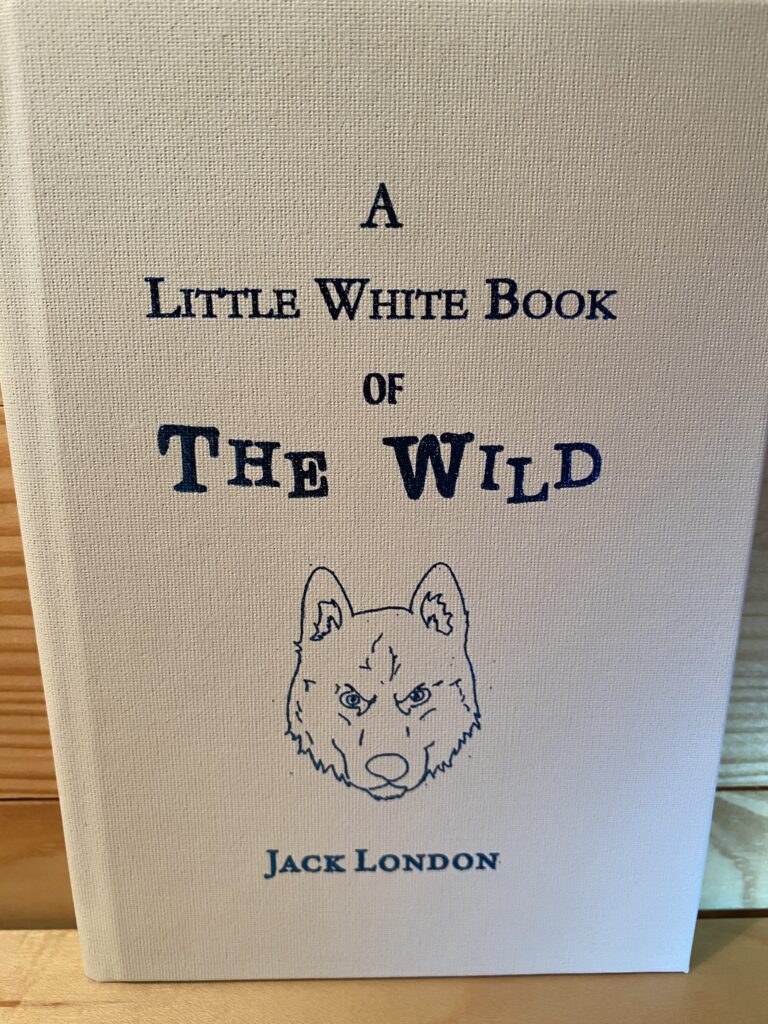
A Little White Book of the Wild, by Jack London (2026). Edited by John DeChancie, signed and numbered, my copy is #54 of 350 copies. Five stories are collected here, including perhaps London’s most famous short story, “To Build a Fire.” London is well-known for his novels set in Alaska – White Fang and The Call of the Wild. His dystopian novel, The Iron Heel, has largely been forgotten. DeChancie writes a crisp introduction, covering London’s life and politics, with a powerful final paragraph that cries out for more research and illumination. Regardless, London’s fiction is memorable and important. He was a force in American literature in the early twentieth century, and well-worth reading to this day.

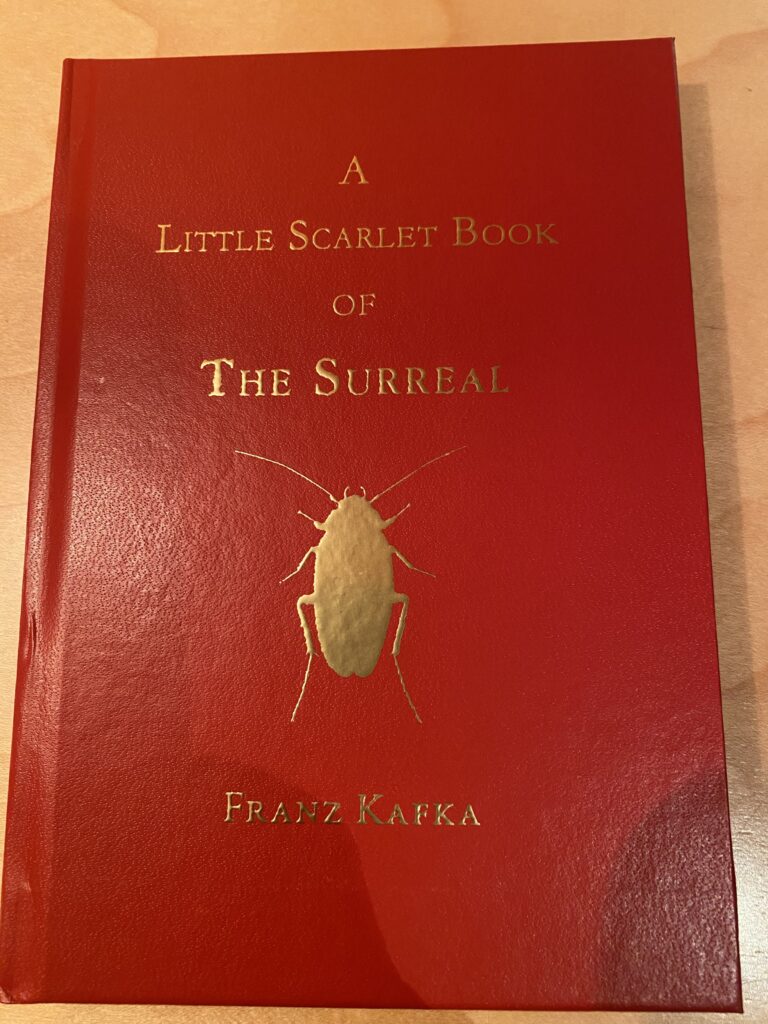
A Little Scarlet Book of the Surreal, by Franz Kafka (2026). Edited by Ben Keefe, signed and numbered, my copy is #65 of 350 copies. I was traveling when this book was released. It sold out quickly, and so I had to wait until it was listed by a dealer, in this case someone who had several copies for sale at a price just slightly above the original publisher’s price. Kafka is best-know for his cockroach story, “The Metamorphosis” (1915) as well as the novels The Trial (1924) and The Castle (1926). The term Kafkaesque is well-known, and I used it myself a few years ago in an essay or book review when I edited Prometheus, the Journal of the Libertarian Futurist Society. Kafka was a tortured person, and thankfully his works were not destroyed after his early death, as he wished. This collection gathers eight stories, including the memorable story he wrote shortly before his death, “The Hunger Artist.”

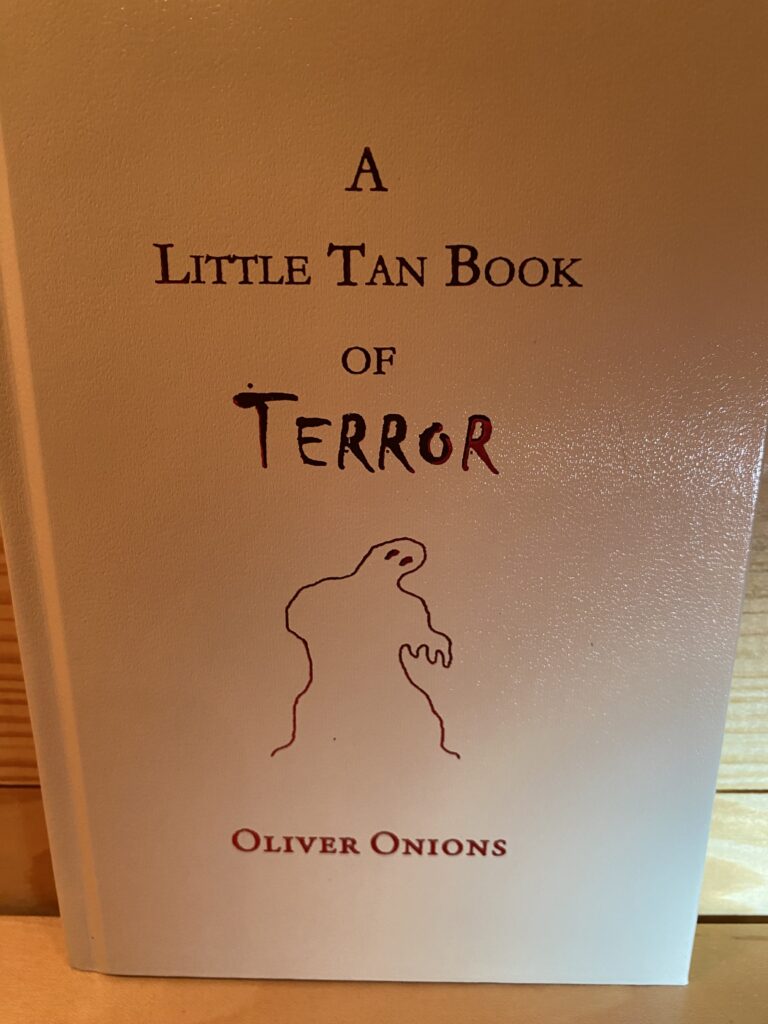
A Little Tan Book of Terror, by Oliver Onions (2026). Edited by Thomas F. Monteleone, signed and numbered, my copy of #33 of 350 copies. The cover’s ghost illustration is a near-duplicate of Rick Hatula’s book, A Little White Book of Ghost Stories, published in 2015, though the image is shrunk down from that book’s full-size image down to a modestly sized one that fits between the title and author. Only six of Onion’s stories appear here, and just one of his most famous one tales. Onions died in 1961, now largely forgotten. If recall, he’s mostly remembered for a handful of quiet ghost stories, such as “The Beckoning Fair One,” a tale of slow madness. Is “terror” the right word here? I’m not sure. “The Beckoning Fair One,” as an example doesn’t convey terror to me, but then I’ve read far darker horror than readers who first encountered Onion’s stories nearly a century ago.

As Borderlands Press wraps up it’s series on classic writers, it will be interesting to see who they feature from modern writers of horror. This would harken back to the days when they first started this series of Little Books, which featured writers such as Joe R. Lansdale, Peter Straub, F. Paul Wilson, and others. That was more than twenty years ago, and by then those writers were already famous. It’s a shame, though, that BP dropped the number of copies down from 500 to 350. For collectors and aficionados of horror and dark fantasy, one has to act quickly to get these books before they sell out. Maybe that’s the goal. Maybe there are other reasons. Anyway, as they say, “stay tuned.”

© 2026 Anders Monsen

Theme by Anders NorenUp ↑

css.php