Lost worlds and ports of call

Month: November 2026

A random Philip Roth book

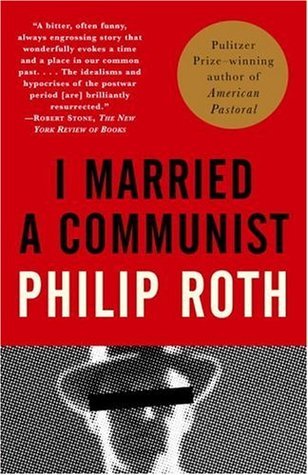
Recently, as I was perusing the shelves of a local used bookstore looking for something else entirely, I came across multiple Philip Roth books. I think the same person must have turned in these books, possibly as part of a box-load of items from a deceased relative. Many of these books were by the same publisher, but they also were in rough shape – broken spines, creases, folded covers. I put back all but one of them, the one with least damage. This book bore the title, I Married a Communist, which didn’t seem like a particularly inventive, or even compelling, title. Still, I thought, why not? Roth, after all, was one of the major American writers of the second half of the twentieth century. As I’ve been mining the past lately, this book was a prime candidate to continue that effort.
Inside the book, I found an airline boarding pass from 2008. That artifact, in itself, seemed both funny and tragic. That single printed page was more evidence that the original reader had owned multiple Roth books, and now those who went through his library and unloaded them to this particular used bookstore had no interest in Philip Roth’s fiction. The original reader, like myself, had apparently used any paper at hand as a bookmark, and so I felt some affinity toward this person.

I thought, as I started to read this book, that I’d never anything by Roth, but I was wrong. Back in college (so, so many years ago now) I’d read one of his short stories, “Goodbye, Columbus.” The memory of that story came back to me in a flash, as I read through Roth’s online bio. This single story was required reading in one my creative writing classes in college, back in the early 1990s. Now, decades later, I remember next to nothing about that story, aside from a snippet or two. Did I avoid Roth’s fiction because of this story, or because I gave up on modern fiction? I don’t know. It’s been thirty or more years, and the idea of Roth never crossed my mind until now.

The novel, I Married a Communist, features Roth’s alternate ego, Nathan Zuckerman, as its narrator. The books is a word-fest ( as I term it), as it doesn’t let up when it comes to focusing on any particular topic, spanning pages with commentary on that subject; any given person speaks for multiple pages without a break. Clearly, the author has never listened to a real person talk. That, or he’s the one talking, and has cornered someone and won’t let go. Is this normal fiction?

This book is now only the second Roth story I’ve read, and the first full-length novel. Roth, who died in 2018 at the age of 85, is supposedly one of the major writers in American fiction. He wrote over 30 books, yet I’ve skipped over all of them. Although I’ve seen his name many, many times when I perused fiction shelves, I don’t know why I avoided his name. Perhaps it was a reaction to “mainstream fiction,” or my aversion to current fiction.

At any rate, if I’m going to read his books, I have a lot of catching up ahead of me. Perhaps it’s too late; Roth didn’t see a future in novels, given the rise of various screens (TV and computer). I can sympathize, given that I’m writing this for my own sake. Some of his other titles look far more interesting.
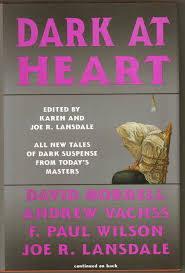
Acquiring a limited Dark Harvest anthology

Since around 1992 or so, I’ve owned a copy of the trade edition of Dark Harvest’s anthology, Dark at Heart. Edited by Joe R. Lansdale and Karen Lansdale, this book contains 20 stories by many of the masters of the genre in the 1980s and 1990s. My copy was signed by a handful of writers, picked up at Armadillcon (a convention in Austin, Texas), I think. It’s one of my treasured possessions, and I’ve read some of the stories multiple times. In my copy, I can make out signatures by both Lansdales, Ardath Mayhar, Bill Crider, plus two signatures whose names are indecipherable; one might be Andrew Vachss, the other – who knows.

I don’t usually buy different editions of books that I already have, unless it’s a hardback to accompany or replace a paperback or trade paperback edition. Still, coming across a limited edition of this book, signed by ALL contributors, was just too tempting, especially as it was offered at more than half-off the original cover price of $45. Side by side, there’s nothing to differentiate these two books. The limited edition offers nothing extra, save that it’s numbered and signed by all contributors. The “deluxe first edition,” as the book states, is limited to 400 individually signed and numbered copies. It comes with a nice slipcase. Looking at the signatures, I still can’t figure out which two authors signed my old trade edition. The price is a sticker on the inside flap of the dust jacket, possibly overlaid on top of the trade edition price.

This isn’t my first limited edition Dark Harvest book, but it’s my first such anthology. Back when I first started to buy hardcover books, and also ventured into the small press market because some of my favorite authors had stories and books published there, I knew nothing about trade vs. limited editions. Paying $45 for a book in the early 1990s, to me at least, was a luxury I never would have permitted myself. Today, some small presses sell limited editions for $150 or more (and in some cases around $500 or more). I’d never envision myself paying a price like that, but who knows what things will look like in ten years. Will $150 seem like a pittance then? Will physical books even exist in ten years, or will it just be a matter of luxury, given the rising cost of everything?

Many authors who appeared in the pages of Dark at Heart now are dead. Dark Harvest as a publisher is but a memory. It’s a shame there aren’t more anthologies like this one. I’ll treasure both books, I think, for different reasons.

Summiting Arizona’s Tallest Peak

Three down, 47 to go. Once you start, it’s hard to stop. Having summited the tallest peak in Texas (Guadalupe Peak), and California (Mount Whitney), the latter of which also is the tallest peak in the lower 48 states, the temptation now becomes to attempt summiting the tallest peak in all 50 states, or at least the lower 48.

So it was the case when I flew into Phoenix, Arizona, after many delays, looking to bag that state’s peak. Well after midnight I drove to Prescott to meet my son later that morning, before we headed to Flagstaff and the trailhead to Humphreys Peak. With multiple delays, and an early start, I was operating on just three hours of sleep, plus a late start (9am, far from ideal when heading to a place over 12,000 feet above sea level). Still, I’m in awe of the nature in northern Arizona; this isn’t my first trip here, but the nature never ceases to surprise me with what’s available in the high desert.

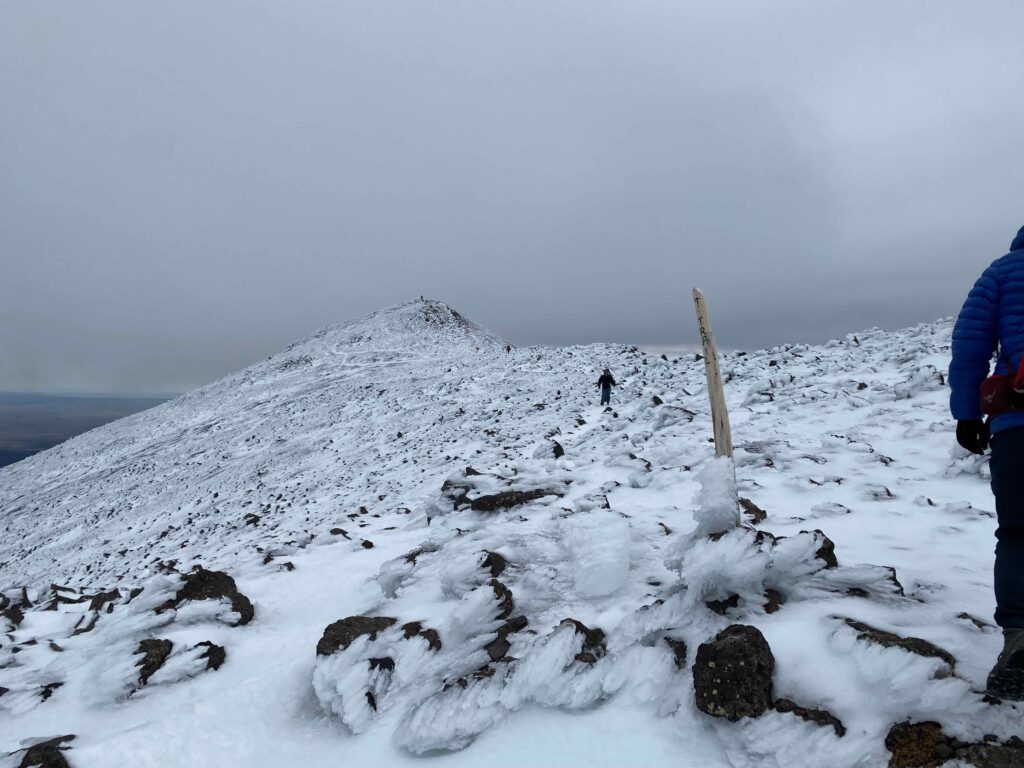
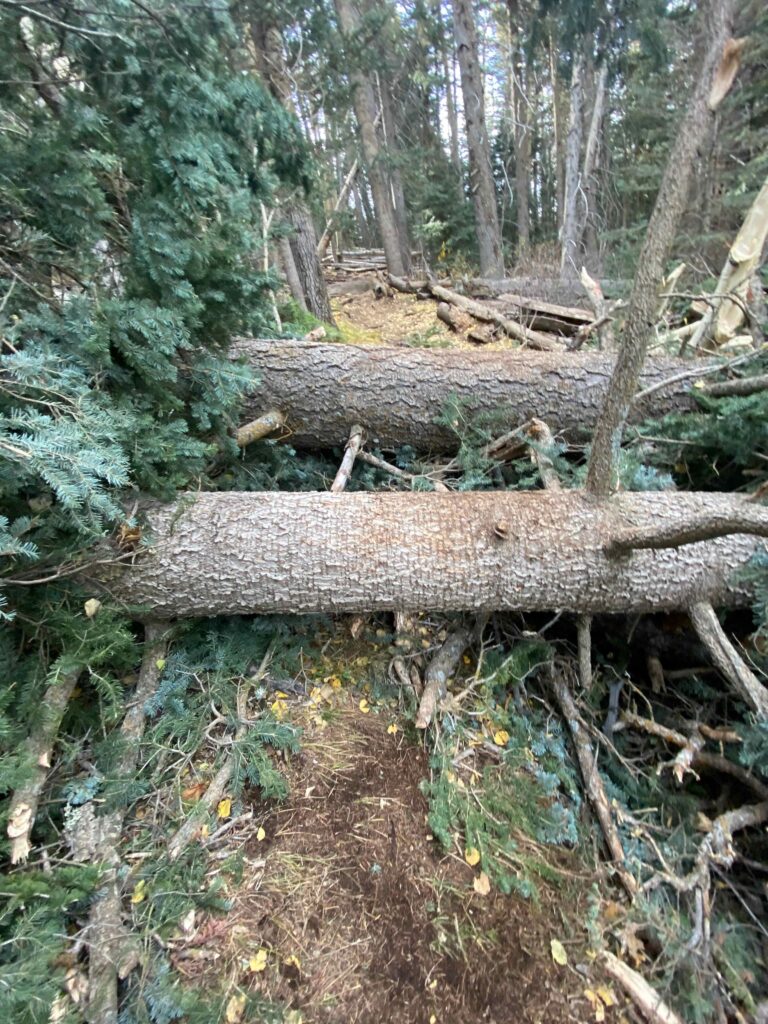
My weather report on the conditions for the peak apparently was severely outdated. I’d left the micro-spikes at home, only to learn a couple miles into the hike that there was a fair amount of snow and ice to deal with the last two miles. This bit of information was gleaned from another hiker who’d started at 2am, and was slowing descending many hours later. Another nugget of information, not available online, centered around the multiple blow-downs the first two and half miles through the forest. This entailed either going over massive logs, or crawling under heavy trees. We did a bit of both, but it took its toll, slowed us down, and left physical scars. I guess there were no trail crews cutting logs, or all these blow-downs were recent events. We counted at least 80 trees that covered the trail.

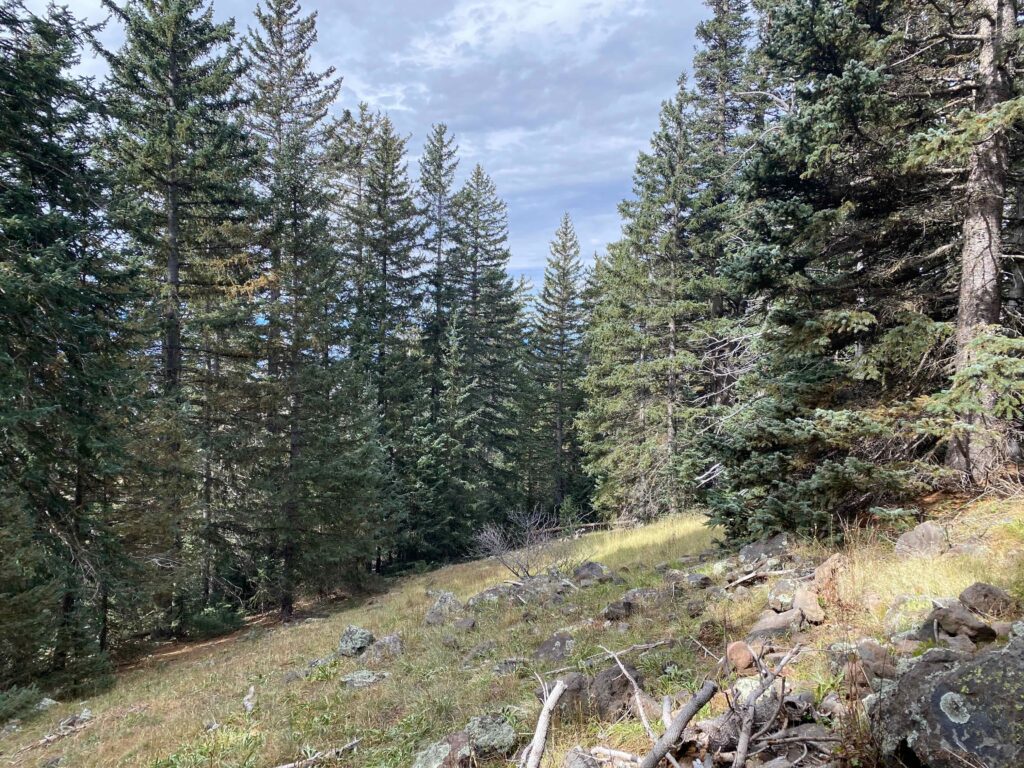
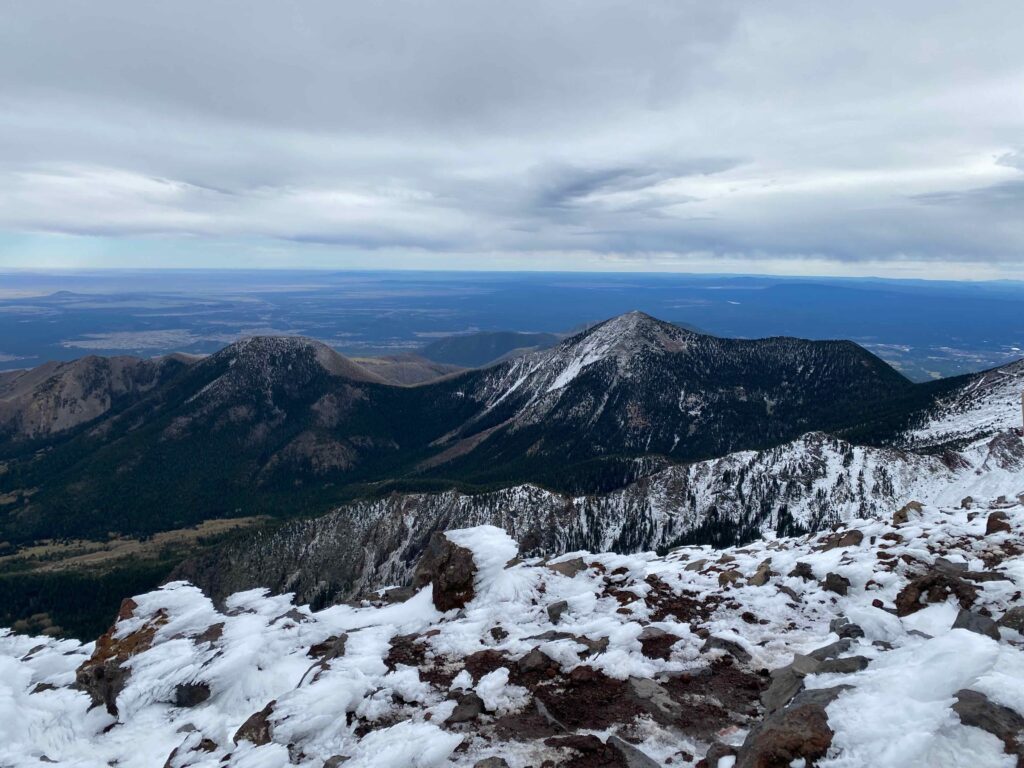
The trailhead for Humphreys Peak starts at the Arizona Snowbowl. You cross a wide open field, which during winter becomes the domain of skiers and show boarders. Fortunately, there was not a lick of snow on the ground here. After crossing that field, you enter a forest. The trail from here slowly winds its way upward. Once the blow-downs are conquered, you deal with falling snow and ice that’s accumulated on various trees. After that obstacle course, you reach an area known as “the saddle.” Here we took a break. The view was astounding, and gave no indication of what lay ahead. Many hikers turn around here. We, on the other hand, shouldered our day-packs and headed up the trail. From here, a thin layer of slushy snow covered the trail. The air was thin, and my lack of sleep and the altitude slowed me down. We met several groups that were heading down from the summit. At one point, while we were stopped to let me catch my breath, and group told us we were 45 minutes from the top. It seemed like hours away, with the various false summits we had to cover. Still, we persevered.

The final push to the peak is a straight uphill trek. Without a clear trail to follow, we veered to the left, and had to backtrack a bit. The summit itself that day was cold, with harsh and biting winds. I’ve seen various numbers, but I’m going with 12,633 feet above sea level as the official height of this peak. I think this make it my fifth peak above 12,000 feet, and first where I didn’t have at least some time to get used to an altitude above 800 feet.

We stayed at the summit for only a few minutes, then headed back down. Once passed the saddle, we pushed the pace, until once more we were slowed by the countless blow-downs. The trail, as tracked by my GPS watch, was just over 10.6 miles out and back, starting from the lower parking lot. I confess that it was a tough one, perhaps third or fourth in terms of toughest hikes, and that was all due to the lack of acclimating to the altitude, as well as the snow and ice and all the blowdowns.

Once completed, it was a long drive back to Prescott, where two slices of pizza at the Grumpy Sicilian was more than welcome, and then a blissful shower and well-earned rest.

Now, the question is which peak to tackle next? A few of them will require a summer trip, while others are far away from Texas. I’m not sure I’ll ever tackle Denali, and those over 12,000 feet make me nervous, but I look forward to the challenge. Onward and upward!

© 2026 Anders Monsen

Theme by Anders Noren — Up ↑

css.php