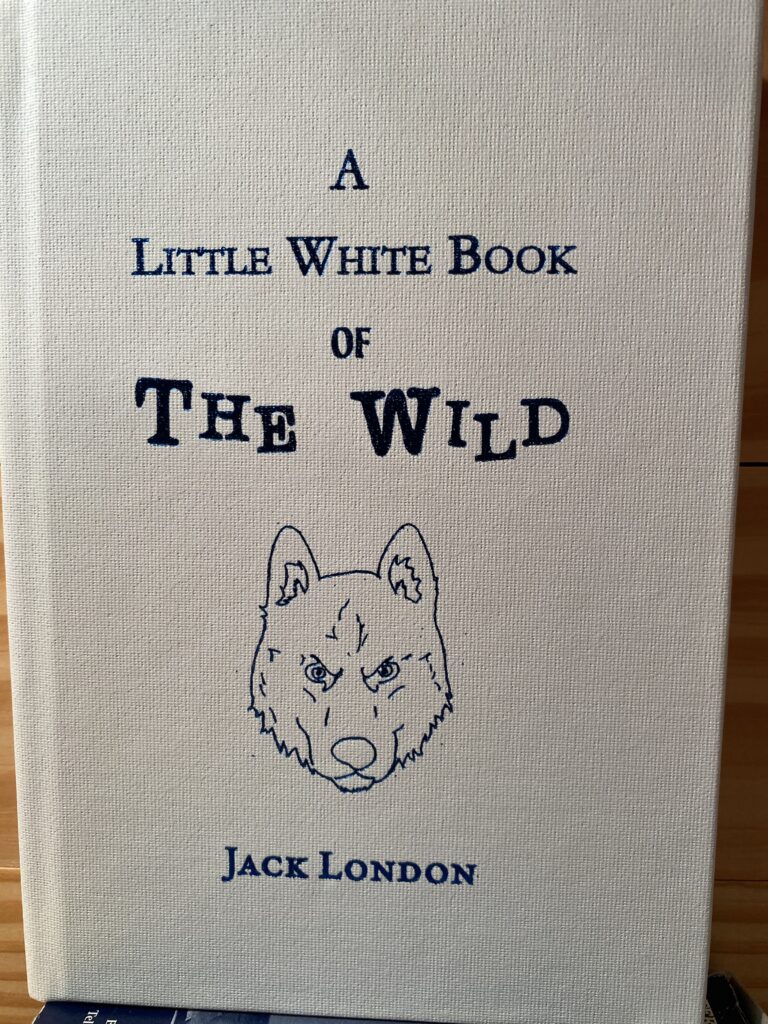
I’ve arrived relatively late to the party when it comes to the series of tiny hardcover books from Borderlands Press (BP). And so, I’ve missed out on a quintet of hard-to-find entries in this series. They’re now up to 69 (I think) books, ranging from modern writers to classic writers. The current series focuses on early twentieth century writers (yet, where is Clark Ashton Smith, I wonder?), and they just announced the next book, featuring W. W. Jacobs (!?).
Also, Borderlands Press recently announced plans to feature present writers of horror/dark fantasy at the same time as they reduced the number of copies from 500 to 350 for each book. Their past master series has featured some well-known and some relatively unknown writers, and this trend continues.
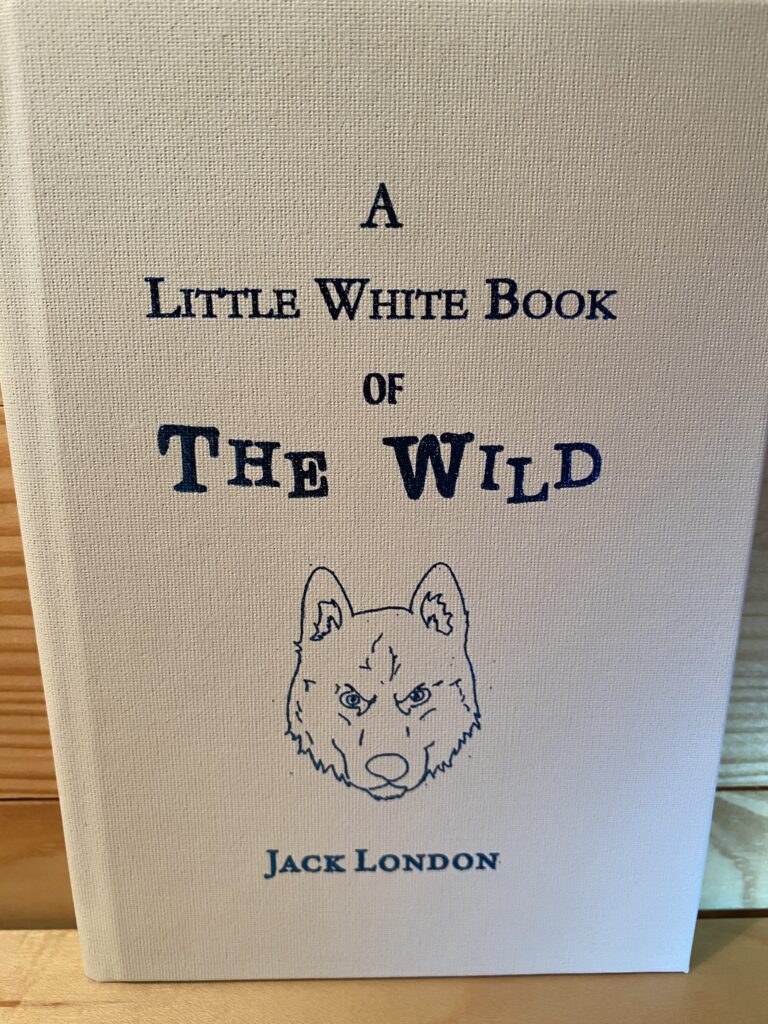
A Little White Book of the Wild, by Jack London (2026). Edited by John DeChancie, signed and numbered, my copy is #54 of 350 copies. Five stories are collected here, including perhaps London’s most famous short story, “To Build a Fire.” London is well-known for his novels set in Alaska – White Fang and The Call of the Wild. His dystopian novel, The Iron Heel, has largely been forgotten. DeChancie writes a crisp introduction, covering London’s life and politics, with a powerful final paragraph that cries out for more research and illumination. Regardless, London’s fiction is memorable and important. He was a force in American literature in the early twentieth century, and well-worth reading to this day.
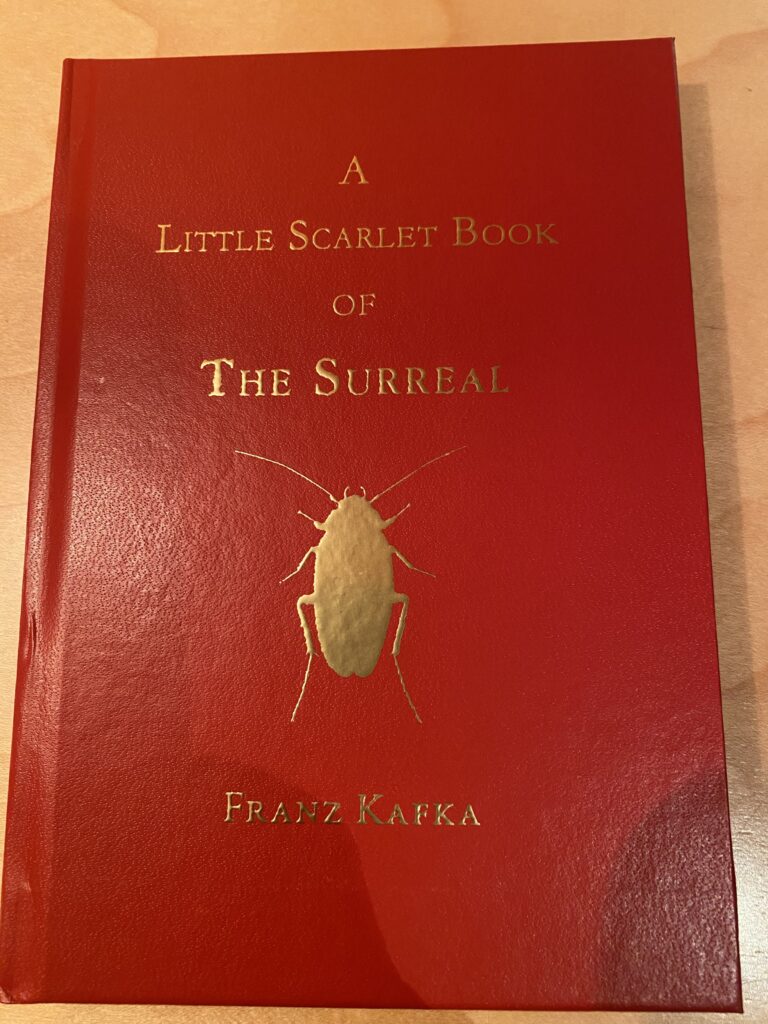
A Little Scarlet Book of the Surreal, by Franz Kafka (2026). Edited by Ben Keefe, signed and numbered, my copy is #65 of 350 copies. I was traveling when this book was released. It sold out quickly, and so I had to wait until it was listed by a dealer, in this case someone who had several copies for sale at a price just slightly above the original publisher’s price. Kafka is best-know for his cockroach story, “The Metamorphosis” (1915) as well as the novels The Trial (1924) and The Castle (1926). The term Kafkaesque is well-known, and I used it myself a few years ago in an essay or book review when I edited Prometheus, the Journal of the Libertarian Futurist Society. Kafka was a tortured person, and thankfully his works were not destroyed after his early death, as he wished. This collection gathers eight stories, including the memorable story he wrote shortly before his death, “The Hunger Artist.”
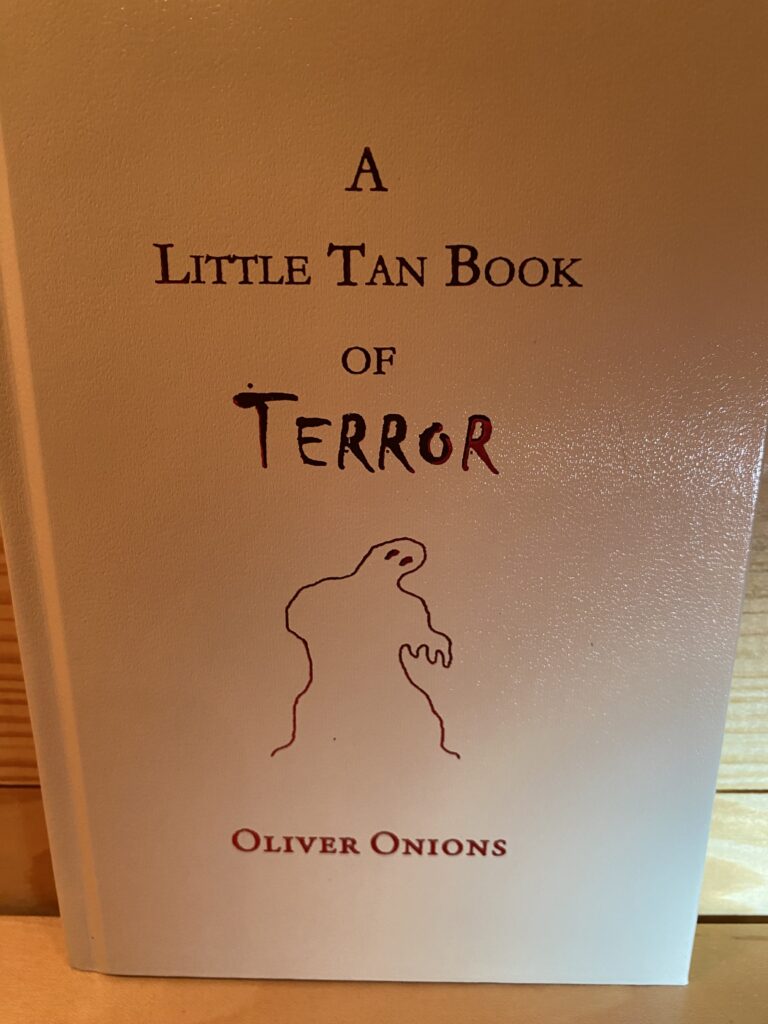
A Little Tan Book of Terror, by Oliver Onions (2026). Edited by Thomas F. Monteleone, signed and numbered, my copy of #33 of 350 copies. The cover’s ghost illustration is a near-duplicate of Rick Hatula’s book, A Little White Book of Ghost Stories, published in 2015, though the image is shrunk down from that book’s full-size image down to a modestly sized one that fits between the title and author. Only six of Onion’s stories appear here, and just one of his most famous one tales. Onions died in 1961, now largely forgotten. If recall, he’s mostly remembered for a handful of quiet ghost stories, such as “The Beckoning Fair One,” a tale of slow madness. Is “terror” the right word here? I’m not sure. “The Beckoning Fair One,” as an example doesn’t convey terror to me, but then I’ve read far darker horror than readers who first encountered Onion’s stories nearly a century ago.
As Borderlands Press wraps up it’s series on classic writers, it will be interesting to see who they feature from modern writers of horror. This would harken back to the days when they first started this series of Little Books, which featured writers such as Joe R. Lansdale, Peter Straub, F. Paul Wilson, and others. That was more than twenty years ago, and by then those writers were already famous. It’s a shame, though, that BP dropped the number of copies down from 500 to 350. For collectors and aficionados of horror and dark fantasy, one has to act quickly to get these books before they sell out. Maybe that’s the goal. Maybe there are other reasons. Anyway, as they say, “stay tuned.”