Lost worlds and ports of call

Tag: Small Press

A trio of Ziesing books

Ah, nostalgia. Such a great concept. In my case, as a haphazard book collector, it means acquiring books from the 1980s and 1990s that I missed out on back in the day. Thanks to the internet (far more than specialty SF bookstores, or even used book stores) there are always opportunities out there that exceed both my time and budget. Sometimes, however, it’s hard to resist certain books. In this case, three books published by Mark V. Ziesing Books.

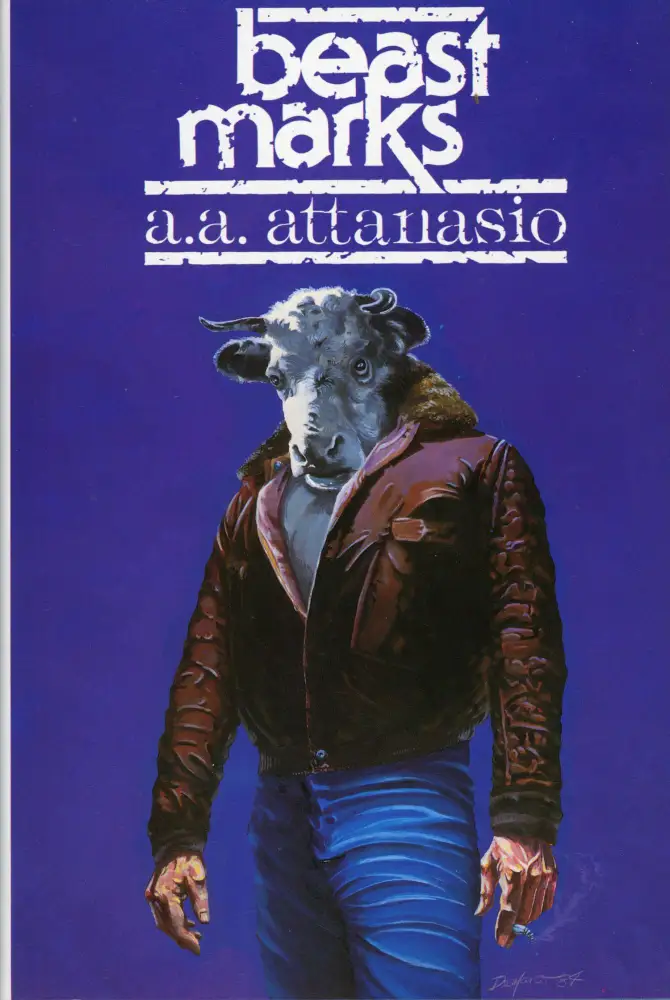
The first, a collection of short stories by A. A. Attanasio. Beastmarks was published in 1984, and collects seven stories of varying length. Years ago I read a couple of Attanasio’s books – Hunting the Ghost Dancer and Wyvern. I’d seen the Ziesing edition of Beastmarks somewhere back in the day, but never since, at least not in any physical location. But, there are online dealers who carry copies of these books, and this was one of the first ones I selected.
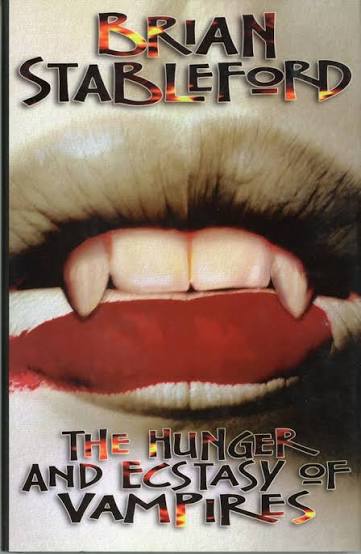
Next, Brian Stableford’s The Hunger and Ecstacy of Vampires. Another Ziesing book, this one from 1996. Set in 1985, this books incorporates real life people, such as Oscar Wilde, Bram Stoker, and others. I’ve never any of Stableford’s books, nor do I know much about him, but this novel does hook the reader almost from the first page. Stableford passed away in 2024 at the age of 75, with a hundred novels to his name, as well as a vast output of short stories. Woe to the collector who aims to gather all of his work, as he also translated many books from French, and his short stories appeared in nearly two dozen collections! Locus Magazine has a wonderful obituary of Stableford.
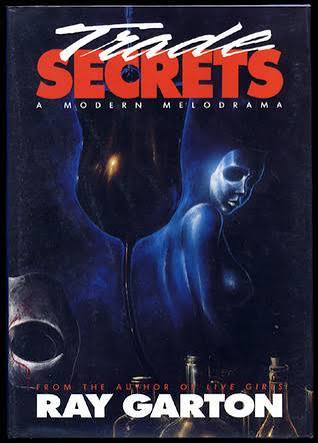
Lastly, Ray Garton’s Trade Secrets, published in 1990. Of these three, Garton’s name is the most familiar to me. I read a couple of his horror stories/novels decades ago, but that’s a tiny fraction of his output. Garton also died in 2024, at the young age of 61, and with almost 70 books to his name. Trade Secrets, to me, reads like a Dean Koontz thriller. He’s probably best known for Live Girls!, but his short stories also are superb. A few of these are collected in Borderlands Press “little book” series, under the title, A Little Gray Book of Grim Tales.
All these books were published in both trade and limited editions. I bought the trade editions, as I wanted books that I could and would read. There’s maybe around 20 or so other Ziesing books that I lack, and around 20 or so that I have. So, I sit at the halfway point. Acquiring these three books has whetted my appetite for more, so we’ll see what happens. Mark. V. Ziesing Books is just one more small press that rose in the 1980s and faded into oblivion a couple fo decades later. Such a shame.
Pulphouse: The Hardback Magazine

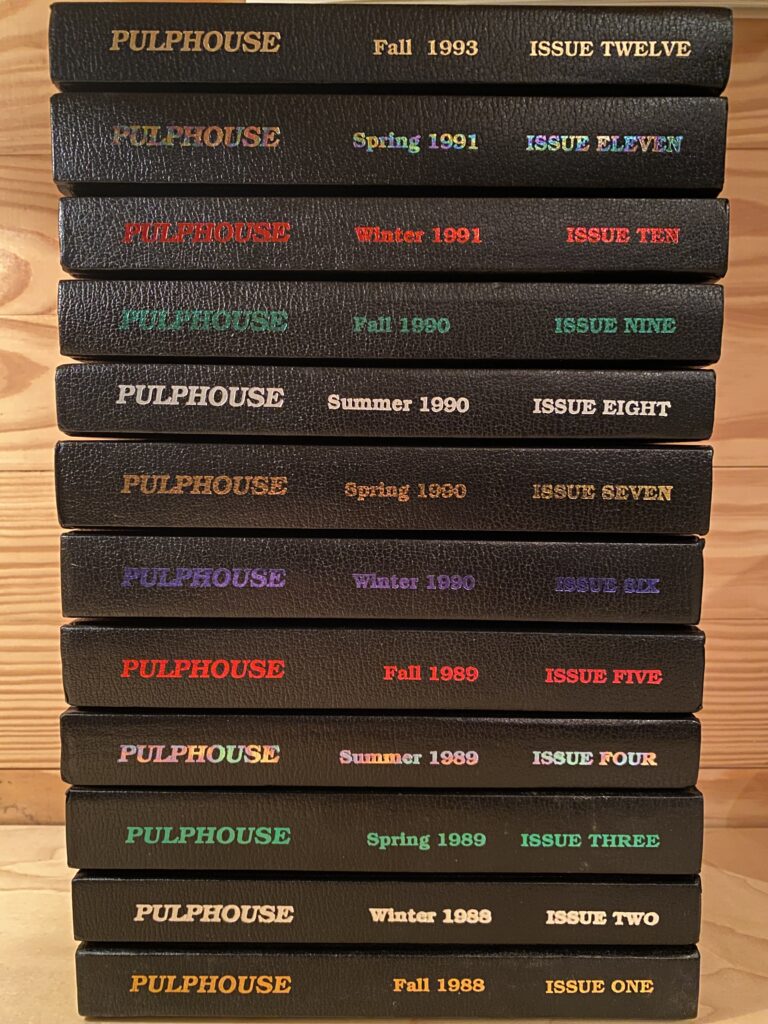
For many years I owned only three copies of this short-lived anthology series—issue #5—which I bought myself—plus issues #4 and #9, which were gifted to me one Christmas many years ago. When the books first came out, from 1988 through 1993, I was a poor college student and bought mostly cheap paperbacks, especially ones I found in the many used bookstores in Austin, Texas at that time (since then, most of those small stores are gone, leaving only the major used book store enterprises). A hardback collection like this series, generally available via mail, was out of my budget and knowledge. The one book I did buy I think I found at an SF convention in the mid-1990s.

While working on collecting another series from the same publisher, the 29 books in the Author’s Choice Monthly series, I came across a few of the hardback magazine books in online catalogs, and I slowly fleshed out my collection from three to 12. I bought the last two that I lacked (issue #1 and #3) at the very end of 2024.

In retrospect, this collection is one that should have worked, had the publishers in place succession plans and had the publishers not over-extended themselves and collapsed so spectacularly. Over the span of 12 issues, this hardback magazine published over 200 short stories (by over 140 individual writers) and slightly more than two dozen non-fiction essays. One writer—Nina Kiriki Hoffman—had a story in each issue, while two others almost shared the same honor—William F. Wu with 11 stories, and Charles de Lint with eight. A rough estimate shows that around half of the stories were by writers who had only one appearance. There’s a huge range of names, from the famous to ones who never quite made it to “the big time.” Short stories are a hard way on which to build your reputation as a writer. Only a few writers focus on the shorter form, and (I think) most readers also tend to read novels; hence anthologies and individual collections are rare and/or receive small print runs from most publishers (unless your name is Stephen King…).

Each issue also had a theme, from horror to science fiction, fantasy to speculative fiction. The issues were also deliberately aimed at the collector’s market, limited to 1,000 copies for the hardback, and a much smaller number for a leather bound edition. Would the series have survived longer without this format? Probably not. From what I’ve read, the publishers went on to try a variety of formats and ventures, from single-short story books, to the Author’s Choice Monthly collections (also in varied formats aimed at collectors), to a magazine. Would it have survived longer if the focus from the publisher was just on the one series, or maybe two? Perhaps. The publisher and editor (and some helpers) have since gone on to stellar careers in the genre, but had they a succession plan in place this might not have prevented the abrupt end.

A contrast to these sort of ventures might be the Little Book series from Borderlands Press. This series chugs along, with an output of maybe 4-6 books a year, each limited to around 500 copies (with a few small exceptions). The price is reasonable upon publication, though in a few cases it climbs quickly after the books are out of print. Other series, and other small press publishers, also have started out with great ambition, then fallen flat. Heck, even major publishers abandon projects. So, 12 is not a bad number.

That all being said, the dozen books in Pulphouse: The Hardback Magazine are a vital part of the history of the small press and genre fiction. I don’t know if it launched careers, but my goal now is to read each and every story in the 12 books this year. It might not happen sequentially within a volume, but I have already started with Volume I, and even averaging a story every day, I should be able to spread it out throughout most of the year. It’s a strange feeling, though, thumbing through the books and looking at the bylines and titles. Many of the authors are now gone, moved onto different worlds, or well-aged and either established writers or former writers. I don’t know if there will be the excitement of discovery in the act of reading these stories. I hope there’ll be some good ones in there, but with more than 30 years having passed since their appearance, it’s a bit like digging through the past, not looking ahead.

© 2026 Anders Monsen

Theme by Anders NorenUp ↑

css.php